ISBN:
9780323167604
Copyright:
2004
Publication Date:
12-08-2003
Page Count:
504
Imprint:
Mosby
List Price:
$93.99

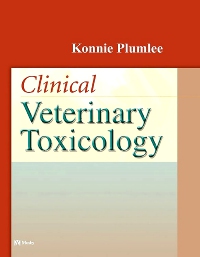
Clinical Veterinary Toxicology - Elsevier eBook on VitalSource, 1st Edition
by Konnie Plumlee, DVM, MS
Elsevier eBook on VitalSource
ISBN:
9780323167604
Copyright:
2004
Publication Date:
12-08-2003
Page Count:
504
Imprint:
Mosby
List Price:
$93.99
Was
$93.99
Now $65.79
Or $0.00 with a valid access code
This book covers all aspects of toxicology, including toxic diseases of large animals, small animals, and exotic pets. It provides key information on how poisons affect the body, how the body responds to a foreign substance, how poisonings are diagnosed, and how poisonings are treated.
Coverage includes every organ system of every species of animal with details on each body system’s susceptibility to poison. Poisons affect animals differently depending on species, breed, age, gender, health status, and reproductive status. This resource addresses these differences, allowing the veterinarian to determine the class of toxicant, the mechanism of action, and the proper course of treatment. If confronted with an unknown poison, the information in this book will assist the veterinarian in formulating a list of potential poisons based on the clinical signs that the animal is exhibiting, and in choosing the appropriate tests to narrow the list to one or a few possible poisons.
Coverage includes every organ system of every species of animal with details on each body system’s susceptibility to poison. Poisons affect animals differently depending on species, breed, age, gender, health status, and reproductive status. This resource addresses these differences, allowing the veterinarian to determine the class of toxicant, the mechanism of action, and the proper course of treatment. If confronted with an unknown poison, the information in this book will assist the veterinarian in formulating a list of potential poisons based on the clinical signs that the animal is exhibiting, and in choosing the appropriate tests to narrow the list to one or a few possible poisons.
-
- Most comprehensive toxicology book available
- Written in a user-friendly style that makes it easy to master the content
- Covers poisonings in both large and small domestic animals
- The Principles of Toxicology section provides comprehensive coverage of concepts & terminology, toxicokinetics, treatments, and regulatory information
- The Manifestations of Toxicoses section is devoted to differentiating between poisons based on lesions and clinical signs
- The Classes of Toxicants section offers detailed information on each poison, including sources, risk factors, pathophysiology, clinical signs and lesions, diagnostic testing, and treatment
- The author is board-certified in toxicology, and the contributors are all toxicologists and educators, ensuring authoritative, up-to-date clinical information
- Most comprehensive toxicology book available
-
Part One: Principles of Toxicology
1. Concepts and Terminology
2. Toxicokinetics
3. Treatment
4. Diagnostic Toxicology
5. Regulatory Toxicology
Part Two: Manifestations of Toxicoses
6. Cardiovascular System
7. Dermal System
8. Endocrine System
9. Gastrointestinal System
10. Hematic System
11. Hepatobiliary System
12. Musculoskeletal System
13. Nervous System
14. Renal System
15. Reproductive System
16. Respiratory System
17. Sudden Death
Part Three: Classes of Toxicants
18. Biotoxins
19. Feed-Associated Toxicants
20. Household and Industrial Products
21. Insecticides and Molluscicides
22. Metals and Minerals
23. Mycotoxins
24. Pharmaceuticals
25. Plants
26. Rodenticides and Avicides -
-
Ways of Reading
- The appearance of the text and page layout can be modified according to the capabilities of the reading system (font family and font size, spaces between paragraphs, sentences, words, and letters, as well as color of background and text)
- This e-publication is accessible to the full extent that the file format and types of content allow, on a specific reading device, by default, without necessarily including any additions such as textual descriptions of images or enhanced navigation
- All content can be read as read aloud speech or dynamic braille
-
Conformance
- For detailed accessibility information, see Elsevier's website at https://www.elsevier.com/about/accessibility
- For queries regarding accessibility information, contact [email protected]
- The publication was certified on 07-04-2026
-
Navigation
- Table of contents to all chapters of the text via links
- Page list to go to pages from the print source version
-
Rich Content
- No information is available
-
Hazards
- No information is available
-
Product Content
- No information is available
-
Legal Considerations
- Elsevier is committed to making our eBooks accessible and complying with applicable laws. Given our vast library of titles, there are some cases where making an eBook fully accessible presents unique challenges, and including full features could transform its nature to no longer serve its primary purpose or result in a disproportionate burden for the publisher. As a result this eBook may have limited accessibility. See more at https://www.elsevier.com/en-gb/about/accessibility.
- Please refer to our disproportionate burden or fundamental modification statements.
-
Additional Accessibility Information
- Page breaks included from the original print source
- E-publication includes basic navigation (usually less detailed than TOC-based navigation)
- All (or substantially all) textual matter is arranged in a single logical reading order (including text that is visually presented as separate from the main text flow, e.g., in boxouts, captions, tables, footnotes, endnotes, citations, etc.). Non-textual content is also linked from within this logical reading order. (Purely decorative non-text content can be ignored).
- The language of the text has been specified (e.g., via the HTML or XML lang attribute) to optimise text-to-speech (and other alternative renderings), both at the whole document level and, where appropriate, for individual words, phrases or passages in a different language.
-
Ways of Reading
Was
$93.99
Now $65.79
Or $0.00 with a valid access code

 as described in our