ISBN:
9780323167642
Copyright:
2003
Publication Date:
08-21-2003
Page Count:
720
Imprint:
Mosby
List Price:
$93.99

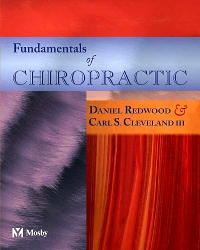
Fundamentals of Chiropractic - Elsevier eBook on VitalSource, 1st Edition
by Daniel Redwood, DC and Carl S. Cleveland, DC
Elsevier eBook on VitalSource
ISBN:
9780323167642
Copyright:
2003
Publication Date:
08-21-2003
Page Count:
720
Imprint:
Mosby
List Price:
$93.99
Was
$93.99
Now $65.79
Or $0.00 with a valid access code
Fundamentals of Chiropractic covers basic chiropractic philosophy and history, principles and practice. In addition to covering chiropractic care techniques, this textbook also provides a section on anatomy, biomechanics, and physiology, and a section on spinal analysis and diagnostic procedures. A variety of scientific and philosophical issues within the chiropractic community are addressed in this book so that it can easily be used as a core text for several introductory courses.Fundamentals of Chiropractic retains nine core chapters from Contemporary Chiropractic (with revision) and includes 24 new chapters, all focusing on grounding the beginning student in the practice of chiropractic. Additionally, chapter authors present material in a textbook type format, clearly defining all terms, explaining and illustrating concepts, providing key terms, and writing review/critical thinking questions. Scope and content is appropriate for and specifically tailored to first and second year chiropractic students taking introductory chiropractic courses, but still appeals to the chiropractic community in general because of its diverse subjects.
-
- Topics and content parallel the test plan outlines from the National Board of Chiropractic Examiners, ensuring that all material is relevant, up-to-date, and accurate.
- Well-known chapter contributors - some of the most respected and influential names in the field - give the book a balanced approach, reflecting the diversity within the profession on issues related to the science and philosophy of chiropractic.
- Well-referenced discussions include the most up-to-date research.
- Key terms and critical thinking/review questions in each chapter familiarize the reader with important concepts and promote a solid understanding of the material.
-
-
 Fundamentals of ChiropracticPaperback
-
-
Part 1: HISTORY, PHILOSOPHY AND SOCIOLOGY
1. Forerunners of the Chiropractic Adjustment
2. The Chiropractic Paradigm
3. Major Themes in Chiropractic History
Part 2: ANATOMY, BIOMECHANICS AND PHYSIOLOGY
4. Spinal Anatomy
5. Spinal Neurology
6. Basic Biomechanics
7. Vertebral Subluxation
8. Neurobiologic Relations and Chiropractic Applications
9. Nociceptors, Pain, and Chiropractic
Part 3: SPINAL ANALYSIS AND DIAGNOSTIC PROCEDURES
10. Palpation: The Art of Manual Assessment
11. Introduction to Diagnostic Imaging
Part 4: CHIROPRACTIC CARE
12. Chiropractic Manual Procedures
13. Manual Soft Tissue Procedures
14. Reactivation and Rehabilitation
15. Pediatrics
16. Caring for the Aging Patient
17. Adjusting the Aging Patient
18. Occupational Health
19. Sports Chiropractic
20. Wellness: A Lifestyle
21. A Patient's Introduction to Chiropractic
Part 5: RESEARCH
22. Research Essentials
23. Musculoskeletal Disorders Research
24. Headaches
25. Somatovisceral Research
Part 6: CONTEMPORARY ISSUES IN CHIROPRACTIC PRACTICE
26. The Comparative Safety of Chiropractic
27. Chiropractic and the Law
28. Appropriate Care, Ethics and Practice Guidelines
29. Managed Care
30. Pathways for an Evolving Profession
Appendix I. Statistical Methods for Determining Reliability
Appendix II. Relative Physical Invasiveness of Selected Techniques
Appendix III. The ACC Chiropractic Paradigm
Glossary
Index -
-
Ways of Reading
- The appearance of the text and page layout can be modified according to the capabilities of the reading system (font family and font size, spaces between paragraphs, sentences, words, and letters, as well as color of background and text)
- This e-publication is accessible to the full extent that the file format and types of content allow, on a specific reading device, by default, without necessarily including any additions such as textual descriptions of images or enhanced navigation
- All content can be read as read aloud speech or dynamic braille
-
Conformance
- For detailed accessibility information, see Elsevier's website at https://www.elsevier.com/about/accessibility
- For queries regarding accessibility information, contact [email protected]
- The publication was certified on 07-04-2026
-
Navigation
- Table of contents to all chapters of the text via links
- Page list to go to pages from the print source version
-
Rich Content
- No information is available
-
Hazards
- No information is available
-
Product Content
- No information is available
-
Legal Considerations
- Elsevier is committed to making our eBooks accessible and complying with applicable laws. Given our vast library of titles, there are some cases where making an eBook fully accessible presents unique challenges, and including full features could transform its nature to no longer serve its primary purpose or result in a disproportionate burden for the publisher. As a result this eBook may have limited accessibility. See more at https://www.elsevier.com/en-gb/about/accessibility.
- Please refer to our disproportionate burden or fundamental modification statements.
-
Additional Accessibility Information
- Page breaks included from the original print source
- E-publication includes basic navigation (usually less detailed than TOC-based navigation)
- All (or substantially all) textual matter is arranged in a single logical reading order (including text that is visually presented as separate from the main text flow, e.g., in boxouts, captions, tables, footnotes, endnotes, citations, etc.). Non-textual content is also linked from within this logical reading order. (Purely decorative non-text content can be ignored).
- The language of the text has been specified (e.g., via the HTML or XML lang attribute) to optimise text-to-speech (and other alternative renderings), both at the whole document level and, where appropriate, for individual words, phrases or passages in a different language.
-
Ways of Reading
Was
$93.99
Now $65.79
Or $0.00 with a valid access code

 as described in our