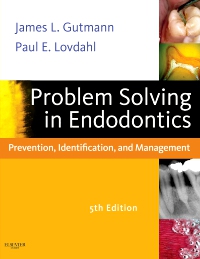

Problem Solving in Endodontics - Elsevier eBook on VitalSource, 5th Edition
Elsevier eBook on VitalSource
Thoroughly revised to bring today's students up to date with state-of-the-art techniques, Problem Solving in Endodontics, 5th Edition offers a new, evidence-based approach to the most common procedures performed at chairside. Ideal for students of both endodontics and general dentistry, this reference combines the precision of quality endodontic care with achievable and pain-free outcomes for the patient. Each chapter has been carefully designed so that readers will quickly grasp the anatomy, the instruments needed, and what procedures should be performed -- all supplemented by boxed clinical case examples and tips. Going beyond simple problem solving, it also addresses the major issues in diagnostic, anatomic, restorative, periodontic, orthodontic, traumatic, and surgical aspects of tooth retention.
-
- Every chapter has been completely rewritten, and concepts have been integrated for quick recognition, understanding and application to common, everyday challenges.
- The Surgery section has been expanded with new case studies, and more in-depth coverage of indications and applications for surgeries, such as crown-lengthening technique, periradicular surgery to manage perforations and resorptive defects, and other endodontically-related problems.
- The approach of this text is to teach the clinician how to recognize and analyze the problems encountered and to synthesize the data for realistic and successful outcomes.
- To help you make the best clinical decisions, this edition contains new chapters and new sections on diagnosis and treatment planning that presents crucial information on Radiographic Images, Differential Diagnosis of Bony Defects, Diagnosis of Treatment Failure, and Diagnosis of Non-odontogenic Pain.
- Retains a succinct, user-friendly format with a new design that includes hundreds of NEW high-quality clinical photos and art.
- Offers broader coverage of tooth trauma with established treatment planning outcomes.
- ALL references are updated and annotated in the text.
- Provides a practical, problem-solving approach with new chapters on: radiographic technique and interpretation; impact of pulp disease on the periodontium and vice versa; treatment failure and tooth retention; how to differentiate problems of pulp/periodontium from those that are non-odontogenic in nature; vital pulp therapy; and more.
-
- Every chapter has been completely rewritten, and concepts have been integrated for quick recognition, understanding and application to common, everyday challenges.
- The Surgery section has been expanded with new case studies, and more in-depth coverage of indications and applications for surgeries, such as crown-lengthening technique, periradicular surgery to manage perforations and resorptive defects, and other endodontically-related problems.
- The approach of this text is to teach the clinician how to recognize and analyze the problems encountered and to synthesize the data for realistic and successful outcomes.
- To help students make the best clinical decisions, this edition contains new chapters and new sections on diagnosis and treatment planning that presents crucial information on Radiographic Images, Differential Diagnosis of Bony Defects, Diagnosis of Treatment Failure, and Diagnosis of Non-odontogenic Pain.
- Retains a succinct, user-friendly format with a new design that includes hundreds of NEW high-quality clinical photos and art.
- Offers broader coverage of tooth trauma with established treatment planning outcomes.
- ALL references are updated and annotated in the text.
- Provides a practical, problem-solving approach with new chapters on: radiographic technique and interpretation; impact of pulp disease on the periodontium and vice versa; treatment failure and tooth retention; how to differentiate problems of pulp/periodontium from those that are non-odontogenic in nature; vital pulp therapy; and more.
-
-
 Problem Solving in EndodonticsHardcover
-
-
I. Problem Solving in Diagnosis and Treatment Planning
1. Problem Solving in Diagnosis and Treatment Planning
2. Problem Solving Techniques of Making Radiographic Images
3. Problem Solving in Interpretation of Dental Radiographic Images
4. Problem Solving in the Differential Diagnosis of Bony Defects Resulting From Pulpal and Periodontal Pathosis
5. Problem Solving in the Diagnosis of Treatment Failure
6. Problem Solving in the Diagnosis of Non-Odontogenic Pain
II. Problem Solving Treatment Procedures in Non-Surgical Root Canal Procedures
7. Problem Solving Challenges in Dentin Hypersensitivity and Vital Pulp Therapy
8. Problem Solving in Tooth Isolation, Access Openings and Identification of Orifice Locations
9. Problem Solving in Working Length Determination
10. Problem Solving Clinical Techniques in the Enlarging and Shaping of the Root Canal
11. Problem Solving in Cleaning and Disinfecting the Root Canal System
12. Problem Solving Challenges in Root Canal Obturation
13. Problem Solving Challenges in Compromised Roots, Root Canal Systems and Anatomical Deviations
14. Problem Solving Techniques for the Revision of Previous Root Canal Procedures
15. Problem Solving in the Management of Painful Tooth Emergencies
III. Problem Solving Treatment Procedures in Surgical Procedures
16. Problem Solving Challenges in Periapical Surgery
17. Problem Solving in the Management of Teeth with Subgingival Carious and Fractured Margins Including Radicular Defects
18. Problem Solving Challenges that Require Periradicular Surgical Intervention
IV. Problem Solving Issues in Adjunctive Dental Procedures
19. Problem Solving in the Management of Tooth Fractures and Traumatic Tooth Injuries
20. Problem Solving the Challenges Faced in the Restoration of Endodontically Treated Teeth
-
-
Ways of Reading
- The appearance of the text and page layout can be modified according to the capabilities of the reading system (font family and font size, spaces between paragraphs, sentences, words, and letters, as well as color of background and text)
- This e-publication is accessible to the full extent that the file format and types of content allow, on a specific reading device, by default, without necessarily including any additions such as textual descriptions of images or enhanced navigation
- All content can be read as read aloud speech or dynamic braille
-
Conformance
- For detailed accessibility information, see Elsevier's website at https://www.elsevier.com/about/accessibility
- For queries regarding accessibility information, contact [email protected]
- The publication was certified on 07-04-2026
-
Navigation
- Table of contents to all chapters of the text via links
- Page list to go to pages from the print source version
-
Rich Content
- No information is available
-
Hazards
- No information is available
-
Product Content
- No information is available
-
Legal Considerations
- Elsevier is committed to making our eBooks accessible and complying with applicable laws. Given our vast library of titles, there are some cases where making an eBook fully accessible presents unique challenges, and including full features could transform its nature to no longer serve its primary purpose or result in a disproportionate burden for the publisher. As a result this eBook may have limited accessibility. See more at https://www.elsevier.com/en-gb/about/accessibility.
- Please refer to our disproportionate burden or fundamental modification statements.
-
Additional Accessibility Information
- Page breaks included from the original print source
- E-publication includes basic navigation (usually less detailed than TOC-based navigation)
- All (or substantially all) textual matter is arranged in a single logical reading order (including text that is visually presented as separate from the main text flow, e.g., in boxouts, captions, tables, footnotes, endnotes, citations, etc.). Non-textual content is also linked from within this logical reading order. (Purely decorative non-text content can be ignored).
- The language of the text has been specified (e.g., via the HTML or XML lang attribute) to optimise text-to-speech (and other alternative renderings), both at the whole document level and, where appropriate, for individual words, phrases or passages in a different language.
-
Ways of Reading

 as described in our