ISBN:
9780323226578
Copyright:
2015
Publication Date:
03-31-2014
Page Count:
624
Imprint:
Saunders
List Price:
$235.99

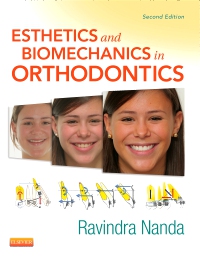
Esthetics and Biomechanics in Orthodontics - Elsevier eBook on VitalSource, 2nd Edition
by Ravindra Nanda, BDS, MDS, PhD
Elsevier eBook on VitalSource
ISBN:
9780323226578
Copyright:
2015
Publication Date:
03-31-2014
Page Count:
624
Imprint:
Saunders
List Price:
$235.99
Was
$235.99
Now $165.19
Or $0.00 with a valid access code
Esthetics and Biomechanics in Orthodontics, 2nd Edition provides everything you need to know to successfully apply biomechanics in clinical orthodontics. This edition features new content in the areas of tooth movement, treating Class III malocclusions, skeletal anchorage, Surgery First treatment plans, and space closure. In addition to comprehensive guidance on basic biomechanic principles, this state-of-the-art reference also shows how all techniques can apply biomechanical principles to improve the force delivery, understand and prevent side effects, and achieve predictable results.
-
- NEW! Content on the fundamentals that guide orthodontic tooth movement offers a clear understanding of how orthodontic appliances work and their role in designing treatment methodologies
- NEW! Content on procedures and indications for optimal space closure helps you define priorities in treatment planning and understand all the treatment alternatives
- NEW! Detailed information on biomechanics-based management of impacted canines provides treatment planning strategies and biomechanic techniques to achieve desired results without increasing treatment time
- NEW! Coverage on modalities for the treatment of Class III malocclusions offers insight into new treatment protocols — such as corticotomy-assisted facemask therapy and corticotomy-assisted maxillary protraction — that are available to effectively treat these occurrences
- NEW! Detailed information on the different forms of skeletal anchorage (including mini-implant technology) shows how certain challenges associated with types of tooth movement can now be overcome by applying sound biomechanical principles to skeletal anchorage
- NEW! In-depth coverage of the Surgery First (SF) treatment plan offers step-by-step examples to help explain the technique of Sendai SF and its benefits
-
- Highly regarded lead author, Dr. Ravindra Nanda, is a widely known and respected educator in the field of orthodontics
- Comprehensive coverage of diagnosis, treatment planning, and esthetics in tooth display provides a solid foundation in orthodontia and biomechanic problem solving
- Case reports include high-quality photographs, radiographs, and illustrations to better show biomechanical principles
- Radiographs and line drawings accompany clinical photographs to help illustrate the various stages of treatment
-
Part 1: DIAGNOSIS AND ESTHETIC CONCEPTS
1. Individualized Orthodontic Diagnosis
2. Individualized Orthodontic Treatment Planning
3. Esthetics in Tooth Display and Smile Design
Part 2: BIOMECHANICS
4. Mechanical Principles of Tooth Movement
5. Biologic Mechanisms in Orthodontic Tooth Movement
6. Biomechanic Basis of Extraction Space Closure
7. Biomechanics Based Management of Impacted Canines
Part 3: MANAGEMENT OF VERTICAL DIMENSION PROBLEMS
8. Management of Deep Overbite Malocclusion
9. Management of Open Bite Malocclusion
10. Molar and Incisor Positioning to Achieve Occlusal and Esthetic Objectives
Part 4: MANAGEMENT OF CLASS II MALOCCLUSION
11. Strategies for Treatment of Young Patients with Class II Malocclusions
12. Non Extraction Class II Correction
13. Class II Correction with an Intermaxillary Fixed Non Compliance Device: Twin Force Bite Corrector
Part 5: MANAGEMENT OF CLASS III MALOCCLUSION
14. Treatment Strategies for Developing and Non-Developing Class III Malocclusions
15. Clinical Practice Guidelines for Developing Class III Malocclusion
16. Biomechanical Aspects of a Modified Protraction Headgear
17. New Modalities for the Treatment of Class III Malocclusions NEW!
Part 6: ESTHETICS WITH TEMPORARY ANCHORAGE DEVICES
18. Achieving Optimal Esthetics with Palatal Mini Implants NEW!
19. Expanding the Limits for Esthetic Strategies by Skeletal Anchorage
20. A Bioefficient Skeletal Anchorage System
21. A Novel Approach in Developing Facial Esthetics in Cleft Lip and Palate Patients
Part 7: ORTHOGNATHIC SURGERY
22. Esthetics and New Approaches to Orthognathic Surgery NEW!
23. Surgery First: The Protocol of Innovative Surgical Orthodontics NEW!
24. Biomechanical Factors in Surgical Orthodontics
Part 8: INTERDISCIPLINARY MANAGEMENT
25. Interdisciplinary Management of Complex Dental Problems
26. Missing Lateral Incisors: New Procedures and Indications for Optimal Space Closure NEW!
27. Interrelationship of Orthodontics with Periodontics and Restorative Dentistry
Part 9: FINISHING
28. Biomechanics Strategies for Optimal Finishing -
-
Ways of Reading
- The appearance of the text and page layout can be modified according to the capabilities of the reading system (font family and font size, spaces between paragraphs, sentences, words, and letters, as well as color of background and text)
- This e-publication is accessible to the full extent that the file format and types of content allow, on a specific reading device, by default, without necessarily including any additions such as textual descriptions of images or enhanced navigation
- No information about nonvisual reading is available
-
Conformance
- No information is available
-
Navigation
- Table of contents to all chapters of the text via links
- Page list to go to pages from the print source version
-
Rich Content
- No information is available
-
Hazards
- No information is available
-
Product Content
- No information is available
-
Legal Considerations
- No information is available
-
Additional Accessibility Information
- Page breaks included from the original print source
- For readers with color vision deficiency, use of color (e.g., in diagrams, graphics and charts, in prompts, or on buttons inviting a response) is not the sole means of graphical distinction or of conveying information
- E-publication includes basic navigation (usually less detailed than TOC-based navigation)
- Where links, controls or buttons are included in the content, the purpose or functionality of each link, control or button is apparent from the associated text alone - or where it is unclear, separate link, control or button descriptions are provided
- All (or substantially all) textual matter is arranged in a single logical reading order (including text that is visually presented as separate from the main text flow, e.g., in boxouts, captions, tables, footnotes, endnotes, citations, etc.). Non-textual content is also linked from within this logical reading order. (Purely decorative non-text content can be ignored).
- The language of the text has been specified (e.g., via the HTML or XML lang attribute) to optimise text-to-speech (and other alternative renderings), both at the whole document level and, where appropriate, for individual words, phrases or passages in a different language.
-
Ways of Reading

Was
$235.99
Now $165.19
Or $0.00 with a valid access code

 as described in our