ISBN:
9780323294430
Copyright:
2016
Publication Date:
12-16-2015
Page Count:
432
Imprint:
Elsevier
List Price:
$79.99

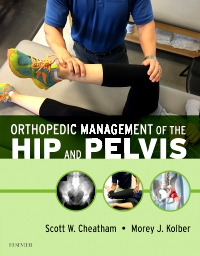
Orthopedic Management of the Hip and Pelvis - Elsevier eBook on VitalSource, 1st Edition
by Scott W. Cheatham, PT, DPT, PhD(c), OCS, ATC, CSCS and Morey J Kolber, PT, PhD, OCS, Cert. MDT, CSCS*D
Elsevier eBook on VitalSource
ISBN:
9780323294430
Copyright:
2016
Publication Date:
12-16-2015
Page Count:
432
Imprint:
Elsevier
List Price:
$79.99
Was
$79.99
Now $71.99
Or $0.00 with a valid access code
Provide effective treatment of hip and pelvic disorders! Orthopedic Management of the Hip and Pelvis offers evidence-based information on the care of non-surgical and surgical patients with common pathologies and injuries. Comprehensive guidelines cover a wide range of topics, from anatomy and assessment to strains, tears, and disorders that affect groups such as females, children, dancers, and patients with arthritis. Full-color illustrations and real-life case studies demonstrate how concepts can be applied in clinical practice. Written by physical therapy and orthopedics experts Scott Cheatham and Morey Kolber, this is the first book in the market to focus solely on disorders of the hip and pelvis region.
-
- Nearly 300 full-color photos and drawings provide a detailed, realistic view of the anatomy and pathologies of the hip and pelvic region.
- Case studies apply information to real-life patient scenarios.
- Anatomy of Lumbopelvic Hip Complex chapter reviews the lumbar spine, pelvis and hip joint with emphasis on the anatomy and biomechanics of each region, providing the background needed to effectively examine and treat common hip and pelvic disorders.
- Examination of the Hip and Pelvis chapter presents a systematic examination approach that focuses on the primary pathologies related to the pelvis and hip.
- Hip Pathologies chapter discusses common extra-articular hip pathologies, including snapping hip syndrome, meralgia paresthetica, adductor related groin pain, greater trochanteric pain syndrome, and proximal hamstring injuries — facilitating more accurate diagnosis with information on patient profiles, the clinical exam, differential diagnosis, rehabilitation, and possible surgical interventions.
- Acetabular Labral Tears and Femoral Acetabular Impingement chapter describes pathomechanical factors, common patient characteristics, and clinical findings relating to non-arthritic hip pain, discussing both conservative and surgical treatment along with considerations for postoperative rehabilitation.
- Musculoskeletal Sources of Abdominal and Groin Pain chapter focuses on three of the most common dysfunctions leading to lower abdominal or groin pain — abdominal strains, inguinal hernias, and sports hernias/athletic pubalgia — with guidelines to anatomy, presentation, imaging, and treatment.
- Hip Osteoarthrosis chapter helps you manage degenerative hip disorders with an overview of epidemiological risk factors, pathophysiology, differential diagnosis, and intervention options.
- The Pediatric and Adolescent Hip chapter focuses on four early disorders of the hip — developmental dysplasia of the hip (DDH), congenital femoral deficiency (CFD), slipped capital femoral epiphysis (SCFE), and Legg-Calvé-Perthes disease (LCPD) — exploring the epidemiology, client profile, assessment, common mechanisms, post-surgical considerations, and rehabilitation considerations.
- The Dancer’s Hip chapter addresses the differential diagnosis, evaluation, treatment, and prevention of hip injury in dancers.
- The Female Hip and Pelvis chapter helps you diagnose and implement treatment plans for gynecologic pelvic organ prolapse as well as pelvic myofascial dysfunction, and also helps you understand the hormonal, physiological, and anatomical changes that females experience with pregnancy, labor and delivery, and menopause.
- The Influence of Lumbosacral Pathology on Hip Pain chapter presents a reductionist approach to the differential diagnosis of hip pain for patients with a pathology of uncertain etiology, offering a primer for signs and symptoms, evidence-based symptom referral patterns and clinical predictors, and case studies.
- Traumatic Injuries chapter explores the common types of traumatic injuries of the hip and pelvis, including classification schemes as well as associated causes, complexities, and treatment plans that lead to positive long-term outcomes.
-
1. Anatomy of Lumbopelvic Hip Complex
2. Examination of the Hip and Pelvis
3. Hip Pathologies: Extra-Articular
4. Acetabular Labral Tears and Femoral Acetabular Impingement
5. Musculoskeletal Sources of Abdominal and Groin Pain: Athletic Pubalgia, Hernias and Abdominal Strains
6. Hip Osteoarthrosis
7. The Pediatric and Adolescent Hip
8. The Dancer’s Hip
9. The Female Hip and Pelvis
10. The Influence of Lumbosacral Pathology on Hip Pain: Differential Diagnosis
11. Traumatic injuries -
-
Ways of Reading
- The appearance of the text and page layout can be modified according to the capabilities of the reading system (font family and font size, spaces between paragraphs, sentences, words, and letters, as well as color of background and text)
- This e-publication is accessible to the full extent that the file format and types of content allow, on a specific reading device, by default, without necessarily including any additions such as textual descriptions of images or enhanced navigation
- No information about nonvisual reading is available
-
Conformance
- No information is available
-
Navigation
- Table of contents to all chapters of the text via links
- Page list to go to pages from the print source version
-
Rich Content
- No information is available
-
Hazards
- No information is available
-
Product Content
- No information is available
-
Legal Considerations
- No information is available
-
Additional Accessibility Information
- Page breaks included from the original print source
- For readers with color vision deficiency, use of color (e.g., in diagrams, graphics and charts, in prompts, or on buttons inviting a response) is not the sole means of graphical distinction or of conveying information
- E-publication includes basic navigation (usually less detailed than TOC-based navigation)
- Where links, controls or buttons are included in the content, the purpose or functionality of each link, control or button is apparent from the associated text alone - or where it is unclear, separate link, control or button descriptions are provided
- All (or substantially all) textual matter is arranged in a single logical reading order (including text that is visually presented as separate from the main text flow, e.g., in boxouts, captions, tables, footnotes, endnotes, citations, etc.). Non-textual content is also linked from within this logical reading order. (Purely decorative non-text content can be ignored).
- The language of the text has been specified (e.g., via the HTML or XML lang attribute) to optimise text-to-speech (and other alternative renderings), both at the whole document level and, where appropriate, for individual words, phrases or passages in a different language.
-
Ways of Reading

Was
$79.99
Now $71.99
Or $0.00 with a valid access code

 as described in our