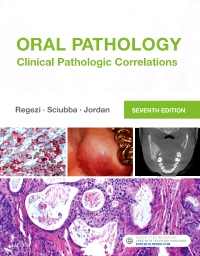

Oral Pathology - Elsevier eBook on VitalSource, 7th Edition
Elsevier eBook on VitalSource
Now $122.39
Diagnose oral diseases quickly and accurately! Oral Pathology: Clinical Pathologic Correlations, 7th Edition presents diseases and conditions by appearance and presentation, so that you can easily identify and plan treatment for common oral and paraoral problems. An atlas-style overview of pathologic conditions opens the book, and then each chapter describes pathologies in detail — depicting each with full-color clinical photos and photomicrographs. In addition to covering the latest advances in oral pathology, this edition includes new radiographic images demonstrating advanced imaging techniques. Expert educators Joseph Regezi, James Sciubba, and Richard Jordan provide a quick reference that’s ideal for the lab, board review, or chairside use!
-
UPDATED content reflects current information and the latest advances in oral and maxillofacial pathology.
-
- Organization of oral and maxillofacial diseases by clinical appearance — such as red-blue lesions or pigmented lesions — matches what you would expect to see upon a patient’s presentation, and provides a practical tool for developing differential diagnoses and planning treatment.
- Nearly 1,000 full-color clinical photographs, photomicrographs, radiographs, and drawings help you learn to identify lesions and disease states.
- An atlas-style Clinical Overview section makes it easy to find key information, with one page showing clinical photos of common conditions and the facing page listing symptoms, causes, and significance.
- Nearly 200 summary boxes and tables offer clear, at-a-glance information on the clinical features, diagnosis, and treatment for many conditions.
- Correlation of histopathology with clinical features of oral diseases assists the clinician in recognizing specific conditions and developing differential diagnoses and rational treatment approaches.
- Student resources on an Evolve companion website include a 150-question practice exam to prepare you for the board exam and for clinical practice.
-
-
 Evolve Resources for Oral PathologyResources
 -
 Oral PathologyHardcover
-
-
1. Vesiculobullous Diseases
2. Ulcerative Conditions
3. White Lesions
4. Red-Blue Lesions
5. Pigmented Lesions
6. Verrucal-Papillary Lesions
7. Connective Tissue Lesions
8. Salivary Gland Diseases
9. Lymphoid Lesions
10. Cysts of the Jaws and Neck
11. Odontogenic Tumors
12. Benign Nonodontogenic Tumors
13. Inflammatory Jaw Lesions
14. Malignancies of the Jaws
15. Metabolic and Genetic Diseases
16. Abnormalities of Teeth -
-
Ways of Reading
- The appearance of the text and page layout can be modified according to the capabilities of the reading system (font family and font size, spaces between paragraphs, sentences, words, and letters, as well as color of background and text)
- This e-publication is accessible to the full extent that the file format and types of content allow, on a specific reading device, by default, without necessarily including any additions such as textual descriptions of images or enhanced navigation
- No information about nonvisual reading is available
-
Conformance
- No information is available
-
Navigation
- Table of contents to all chapters of the text via links
- Page list to go to pages from the print source version
-
Rich Content
- No information is available
-
Hazards
- No information is available
-
Product Content
- No information is available
-
Legal Considerations
- No information is available
-
Additional Accessibility Information
- Page breaks included from the original print source
- For readers with color vision deficiency, use of color (e.g., in diagrams, graphics and charts, in prompts, or on buttons inviting a response) is not the sole means of graphical distinction or of conveying information
- E-publication includes basic navigation (usually less detailed than TOC-based navigation)
- Where links, controls or buttons are included in the content, the purpose or functionality of each link, control or button is apparent from the associated text alone - or where it is unclear, separate link, control or button descriptions are provided
- All (or substantially all) textual matter is arranged in a single logical reading order (including text that is visually presented as separate from the main text flow, e.g., in boxouts, captions, tables, footnotes, endnotes, citations, etc.). Non-textual content is also linked from within this logical reading order. (Purely decorative non-text content can be ignored).
- The language of the text has been specified (e.g., via the HTML or XML lang attribute) to optimise text-to-speech (and other alternative renderings), both at the whole document level and, where appropriate, for individual words, phrases or passages in a different language.
-
Ways of Reading

 as described in our