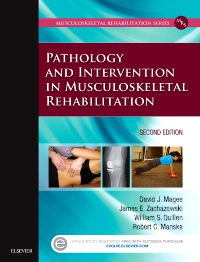

Pathology and Intervention in Musculoskeletal Rehabilitation - Elsevier eBook on VitalSource, 2nd Edition
Elsevier eBook on VitalSource
Now $90.89
Design and implement a rehab program on your own with Pathology and Intervention in Musculoskeletal Rehabilitation, 2nd Edition. Part of Magee’s popular Musculoskeletal Rehabilitation Series, this pathology text for physical therapists provides clear guidance on patient management relative to specific musculoskeletal pathology, injury, and illness — all based on a sound understanding of basic science and principles of practice. It focuses on the specific pathologies most often seen in the clinic, and discusses the best methods for intervention for the different areas of the body in the context of the tissue-healing model. Each intervention features a rationale, along with the pathology and problem presented; stage of healing; evidence in the literature; and clinical reasoning considerations.
-
- NEW! The Skin and Wound Healing chapter looks at the numerous tools available to assist in objectively monitoring and treating a patient with an acute or chronic wound.
- NEW! Rotator Cuff Pathology chapter highlights the anatomy, function, and etiology of the rotary cuff, and addresses rotary cuff injuries, physical examination, and non-operative and operative treatment.
- UPDATED! Substantially revised chapter on the Thoracic Ring Approach™ facilitates clinical reasoning for the treatment of the thoracic spine and ribs through the assessment and treatment of thoracic spine disorders and how they relate to the whole kinetic chain.
- UPDATED! Revised Lumbar Spine – Treatment of Motor Control Disorders chapter explores some of the research evidence and clinical reasoning pertaining to instability of the lumbar spine so you can better organize your knowledge for immediate use in the clinical setting.
- UPDATED! Significantly revised chapter on the treatment of pelvic pain and dysfunction presents an overview of specific pathologies pertaining to the various systems of the pelvis — and highlights how "The Integrated Systems Model for Disability and Pain" facilitates evidence-based management of the often complex patient with pelvic pain and dysfunction.
- NEW! Musculoskeletal Bone and Soft Tissue Tumors chapter covers common bones tumors, anatomic considerations and rehabilitation, pediatric patients, and amputation related to cancer.
- UPDATED! Thoroughly revised chapters with additional references ensure you get the most recent evidence and information available.
- NEW! Full color design and illustration program reflects what you see in the physical world to help you recognize and understand concepts more quickly.
-
- Dedicated and focused information on the specific pathologies most often seen in the clinic, as well as the best methods for intervention for the different areas of the body, minimizes duplication of information by referring you to other titles in the Musculoskeletal Rehabilitation Series for basic scientific information regarding inflammation, healing, tissue deformation, and the development of muscular strength and endurance.
- Trusted experts in musculoskeletal rehabilitation, along with internationally recognized contributors, present the best evidence behind contemporary interventions directed toward the treatment of the impairments and functional limitations associated with acute, chronic, and congenital musculoskeletal conditions occurring across the lifespan.
- Evidence-based content, with over 4,000 references, supports the scientific principles for rehabilitation interventions, providing the best evidence for the management of musculoskeletal pathology and injury.
-
1. Patient Education, Motivation, Compliance, and Adherence to Physical Activity, Exercise and Rehabilitation
2. NEW! The Skin and Wound Healing
3. Cervical Spine
4. Temporomandibular Disorders
5. Shoulder Trauma and Hypomobility
6. Shoulder Instability and Impingement Syndrome
7. NEW! Rotator Cuff Pathology
8. Shoulder Arthroplasty
9. Elbow
10. Wrist, Hand and Digit Injuries
11. The Thoracic Ring Approach™ - A Whole Person Framework to Assess and Treat the Thoracic Spine and Ribcage
12. Low Back Pain: Disability and Diagnostic Issues
13. Lumbar Spine – Treatment of Hypomobility and Disc Conditions
14. Lumbar Spine – Treatment of Motor Control Disorders
15. Spinal Pathology - Nonsurgical Intervention
16. Spinal Pathology, Conditions and Deformities - Surgical Intervention
17. Highlights from an Integrated Approach to the Treatment of Pelvic Pain and Dysfunction
18. Hip Pathologies - Diagnosis and Intervention
19. Physical Rehabilitation after Total Hip Arthroplasty
20. Knee – Ligamentous and Patellar Tendon Injuries
21. Injuries to the Meniscus and Articular Cartilage
22. Patellofemoral Joint
23. Physical Rehabilitation after Total Knee Arthroplasty
24. Leg, Ankle and Foot Injuries
25. Peripheral Nerve Injuries
26. Repetitive Stress Pathology - Bone
27. Repetitive Stress Pathology - Soft Tissue
28. Musculoskeletal Developmental Disorders
29. Pediatric and Adolescent Populations
30. Management of Osteoarthritis and Rheumatoid Arthritis
31. Systemic Bone Diseases - Medical and Rehabilitation Intervention32.Muscle Disease and Dysfunction
33. Fibromyalgia and Related Disorders
34. NEW! Musculoskeletal Bone and Soft Tissue Tumors -
-
Ways of Reading
- The appearance of the text and page layout can be modified according to the capabilities of the reading system (font family and font size, spaces between paragraphs, sentences, words, and letters, as well as color of background and text)
- This e-publication is accessible to the full extent that the file format and types of content allow, on a specific reading device, by default, without necessarily including any additions such as textual descriptions of images or enhanced navigation
- No information about nonvisual reading is available
-
Conformance
- No information is available
-
Navigation
- Table of contents to all chapters of the text via links
- Page list to go to pages from the print source version
-
Rich Content
- No information is available
-
Hazards
- No information is available
-
Product Content
- No information is available
-
Legal Considerations
- No information is available
-
Additional Accessibility Information
- Page breaks included from the original print source
- For readers with color vision deficiency, use of color (e.g., in diagrams, graphics and charts, in prompts, or on buttons inviting a response) is not the sole means of graphical distinction or of conveying information
- E-publication includes basic navigation (usually less detailed than TOC-based navigation)
- Where links, controls or buttons are included in the content, the purpose or functionality of each link, control or button is apparent from the associated text alone - or where it is unclear, separate link, control or button descriptions are provided
- All (or substantially all) textual matter is arranged in a single logical reading order (including text that is visually presented as separate from the main text flow, e.g., in boxouts, captions, tables, footnotes, endnotes, citations, etc.). Non-textual content is also linked from within this logical reading order. (Purely decorative non-text content can be ignored).
- The language of the text has been specified (e.g., via the HTML or XML lang attribute) to optimise text-to-speech (and other alternative renderings), both at the whole document level and, where appropriate, for individual words, phrases or passages in a different language.
-
Ways of Reading


 as described in our