ISBN:
9780323327510
Copyright:
2015
Publication Date:
12-17-2014
Page Count:
576
Imprint:
Saunders
List Price:
$82.99

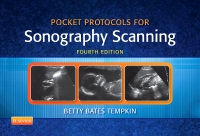
Pocket Protocols for Sonography Scanning - Elsevier eBook on VitalSource, 4th Edition
by Betty Bates Tempkin, BA
Elsevier eBook on VitalSource
ISBN:
9780323327510
Copyright:
2015
Publication Date:
12-17-2014
Page Count:
576
Imprint:
Saunders
List Price:
$82.99
Was
$82.99
Now $74.69
Or $0.00 with a valid access code
Take the guesswork out of image documentation with Pocket Protocols for Sonography Scanning, 4th Edition. This compact new edition provides protocols that follow the imaging guidelines of the American Institute of Ultrasound in Medicine (AIUM), including a universal method for documenting any type of pathology. Examples of the required images for the physician's diagnostic interpretation are included. Documentation specifics are provided for full and limited abdominal studies, gynecological and obstetric exams, and prostate evaluations. Also provided are protocols for small parts, vascular system, and echocardiography.
-
- NEW! Musculoskeletal protocols offer the images and information needed to properly scan musculoskeletal anatomy.
- NEW! 2-color streamlined design enhances readability.
- NEW! New images complete all the protocols approved by the AIUM.
- NEW! Smaller size makes the pocket guide easier to carry around.
- NEW! Part dividers with bleed allow for quick access to desired protocols.
-
- Protocols following guidelines provided by AIUM provide standardized scanning methods and image documentation.
- Step-by-step instructions for sonographic studies of various organs and body areas reinforce AIUM protocols while scanning.
- Over 700 images create a visual step-by-step scanning approach to the performance of scans and image documentation for physician diagnostic interpretation.
-
-
 Pocket Protocols for Sonography ScanningPaperback
-
-
PART I: Introduction: Purpose and Use
PART II: Image Protocol for Abnormal Sonographic Findings
PART III: The Abdomen
Section One: Image Protocols for Full Sonographic Studies of the Abdomen
Liver Study with Full Abdomen
Aorta Study with Full Abdomen
Inferior Vena Cava Study with Full Abdomen
Gallbladder and Biliary Tract Study with Full Abdomen
Pancreas Study with Full Abdomen
Renal Study with Full Abdomen
Spleen Study with Full Abdomen
Section Two: Image Protocols for Limited Sonographic Studies of the Abdomen
Aorta Study
Inferior Vena Cava Study
Right Upper Quadrant Study
Gallbladder and Biliary Tract Study
Pancreas Study
Renal Study
Spleen Study
PART IV: The Pelvis
Section One: Image Protocol for the Transabdominal Sonographic Study of the Female Pelvis
Transabdominal Female Pelvis Study
Section Two: Image Protocol for the Transvaginal Sonographic Study of the Female Pelvis
Transvaginal Female Pelvis Study
Section Three: Image Protocols for Sonographic Studies of the Male Pelvis
Transrectal Prostate Gland Study
Scrotum Study
Penis Study
PART V: Obstetrics
Section One: Image Protocol for the Sonographic Study of the Early First Trimester
Early First Trimester Study
Section Two: Image Protocol for the Sonographic Study of the Late First Trimester
Late First Trimester Study
Section Three: Image Protocol for Sonographic Studies of the Second and Third Trimesters
Second and Third Trimesters Study
Section Four: Image Protocol for the Sonographic Study of Multiple Gestations
Multiple Gestations Study
The Biophysical Profile
PART VI: Small Parts
Section One: Image Protocol for the Sonographic Study of the Musculoskeletal System
Section Two: Image Protocol for the Sonographic Study of the Thyroid Gland
Section Three: Image Protocols for the Sonographic Study of the Breast
Breast Lesion Characterization
Whole Breast Study
Section Four: Image Protocol for the Sonographic Study of the Neonatal Brain
PART VII: Vascular System
Section One: Image Protocols for Abdominal Doppler and Color Flow Studies
Mesenteric Arterial Study
Renal Arterial Study
Image Examples of Various Studies
Section Two: Image Protocol for Cerebrovascular Duplex Scanning
Section Three: Image Protocols for Peripheral Arterial and Venous Duplex Scanning
Lower Extremity Venous Duplex Study
Lower Extremity Peripheral Arterial Duplex Study
PART VIII: Echocardiography
Section One: Image Protocol for the Sonographic Study of the Adult Heart
Adult Heart Study
Section Two: Image Protocol for the Sonographic Study of the Pediatric Heart
Pediatric Heart Study
PART IX: Abbreviation Glossary -
-
Ways of Reading
- The appearance of the text and page layout can be modified according to the capabilities of the reading system (font family and font size, spaces between paragraphs, sentences, words, and letters, as well as color of background and text)
- This e-publication is accessible to the full extent that the file format and types of content allow, on a specific reading device, by default, without necessarily including any additions such as textual descriptions of images or enhanced navigation
- No information about nonvisual reading is available
-
Conformance
- No information is available
-
Navigation
- Table of contents to all chapters of the text via links
- Page list to go to pages from the print source version
-
Rich Content
- No information is available
-
Hazards
- No information is available
-
Product Content
- No information is available
-
Legal Considerations
- No information is available
-
Additional Accessibility Information
- Page breaks included from the original print source
- For readers with color vision deficiency, use of color (e.g., in diagrams, graphics and charts, in prompts, or on buttons inviting a response) is not the sole means of graphical distinction or of conveying information
- E-publication includes basic navigation (usually less detailed than TOC-based navigation)
- Where links, controls or buttons are included in the content, the purpose or functionality of each link, control or button is apparent from the associated text alone - or where it is unclear, separate link, control or button descriptions are provided
- All (or substantially all) textual matter is arranged in a single logical reading order (including text that is visually presented as separate from the main text flow, e.g., in boxouts, captions, tables, footnotes, endnotes, citations, etc.). Non-textual content is also linked from within this logical reading order. (Purely decorative non-text content can be ignored).
- The language of the text has been specified (e.g., via the HTML or XML lang attribute) to optimise text-to-speech (and other alternative renderings), both at the whole document level and, where appropriate, for individual words, phrases or passages in a different language.
-
Ways of Reading
Was
$82.99
Now $74.69
Or $0.00 with a valid access code

 as described in our