ISBN:
9780323378239
Copyright:
2017
Publication Date:
06-20-2016
Page Count:
456
Imprint:
Elsevier
List Price:
$31.99

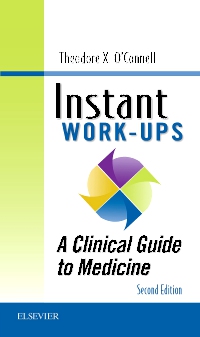
Instant Work-ups: A Clinical Guide to Medicine Elsevier eBook on VitalSource, 2nd Edition
by Theodore X. O'Connell, MD
Elsevier eBook on VitalSource
ISBN:
9780323378239
Copyright:
2017
Publication Date:
06-20-2016
Page Count:
456
Imprint:
Elsevier
List Price:
$31.99
Was
$31.99
Now $22.39
Or $0.00 with a valid access code
Pocket-sized and portable, Instant Work-ups: A Clinical Guide to Medicine, Second Edition offers all of the critical information physicians need to know in order to evaluate and diagnose a patient. The content is uniquely presented as a patient would present his or her case: with symptoms and abnormalities, as opposed to a diagnosis. Practical and easy to use, it provides clear work-up plans for the most commonly encountered medical conditions, providing quick, focused guidance with the flexibility to adapt to each unique patient.
-
- NEW! Nora AI - an AI-powered learning assistant exclusive to Elsevier ebooks on VitalSource's Bookshelf® platform - offers built-in AI learning support that provides personalized answers based on content from the Elsevier ebook
- Expert Consult eBook version included with purchase. This enhanced eBook experience allows you to search all of the text, figures, images, and references from the book on a variety of devices
- Pocket-sized design makes it perfect for quick reference in the clinical setting
- Covers approximately 80 of the most commonly encountered medical conditions
- Chapters are alphabetically organized by topic for easy reference
- Topics are presented as a sign, symptom, or abnormal lab reading as a patient would present his or her case
- Every topic includes a brief background discussion, a list of important related materials, and a detailed list of the next lab or radiographic tests
- Describes each diagnostic test and includes algorithms for each topic to help guide diagnosis
-
1. Acute kidney injury
2. Adrenal masses
3. Amenorrhea
4. Anemia
5. Arthritis and arthralgia
6. Ascites
7. Atrial fibrillation
8. Bleeding and bruising
9. Cerebrospinal fluid evaluation
10. Chronic cough
11. Chronic kidney disease
12. Chronic meningitis
13. Constipation
14. Delirium
15. Diarrhea
16. Dyspnea
17. Dysuria
18. Edema
19. Elevated alkaline phosphatase
20. Elevated amylase (Hyperamylasemia)
21. Erectile dysfunction
22. Fatigue
23. Fever of unknown origin
24. Fibromyalgia
25. Galactorrhea
26. Gallbladder polyps
27. Gynecomastia
28. Hair loss
29. Hearing loss
30. Hematospermia
31. Hematuria
32. Hemoptysis
33. Hirsutism
34. Hypercalcemia
35. Hypercoagulable states
36. Hyperkalemia
37. Hypernatremia
38. Hypertension
39. Hyperthyroidism
40. Hypocalcemia
41. Hypoglycemia
42. Hypokalemia
43. Hyponatremia
44. Hypothyroidism
45. Infertility, female
46. Infertility, male
47. Insomnia
48. Leukocytosis
49. Leukopenia
50. Memory loss and dementia
51. Muscle weakness
52. Myalgias
53. Nephrolithiasis
54. Night sweats
55. Osteoporosis
56. Palpitations
57. Peripheral neuropathy
58. Pituitary adenomas
59. Pleural effusion
60. Preoperative evaluation before noncardiac surgery
61. Proteinuria
62. Pruritus
63. Recurrent urinary tract infection
64. Renal cysts
65. Rhinitis
66. Scrotal masses
67. Seizure
68. Solitary pulmonary nodule
69. Syncope
70. Synovial fluid analysis
71. Thrombocytopenia
72. Thyroid nodule
73. Tinnitus
74. Transaminase elevation
75. Tremor
76. Urinary incontinence
77. Visual disturbances
78. Weight loss -
-
Ways of Reading
- The appearance of the text and page layout can be modified according to the capabilities of the reading system (font family and font size, spaces between paragraphs, sentences, words, and letters, as well as color of background and text)
- This e-publication is accessible to the full extent that the file format and types of content allow, on a specific reading device, by default, without necessarily including any additions such as textual descriptions of images or enhanced navigation
- No information about nonvisual reading is available
-
Conformance
- For detailed accessibility information, see Elsevier's website at https://www.elsevier.com/about/accessibility
- For queries regarding accessibility information, contact [email protected]
- The publication was certified on 18-11-2025
-
Navigation
- Table of contents to all chapters of the text via links
-
Rich Content
- No information is available
-
Hazards
- No information is available
-
Product Content
- No information is available
-
Legal Considerations
- No information is available
-
Additional Accessibility Information
- For readers with color vision deficiency, use of color (e.g., in diagrams, graphics and charts, in prompts, or on buttons inviting a response) is not the sole means of graphical distinction or of conveying information
- E-publication includes basic navigation (usually less detailed than TOC-based navigation)
- Where links, controls or buttons are included in the content, the purpose or functionality of each link, control or button is apparent from the associated text alone - or where it is unclear, separate link, control or button descriptions are provided
- All (or substantially all) textual matter is arranged in a single logical reading order (including text that is visually presented as separate from the main text flow, e.g., in boxouts, captions, tables, footnotes, endnotes, citations, etc.). Non-textual content is also linked from within this logical reading order. (Purely decorative non-text content can be ignored).
- The language of the text has been specified (e.g., via the HTML or XML lang attribute) to optimise text-to-speech (and other alternative renderings), both at the whole document level and, where appropriate, for individual words, phrases or passages in a different language.
-
Ways of Reading

Was
$31.99
Now $22.39
Or $0.00 with a valid access code

 as described in our