ISBN:
9780323389389
Copyright:
2017
Publication Date:
11-28-2016
Page Count:
560
Imprint:
Elsevier
List Price:
$53.99

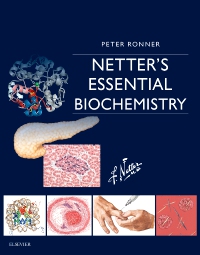
Netter's Essential Biochemistry Elsevier eBook on VitalSource, 1st Edition
by Peter Ronner, PhD
Elsevier eBook on VitalSource
ISBN:
9780323389389
Copyright:
2017
Publication Date:
11-28-2016
Page Count:
560
Imprint:
Elsevier
List Price:
$53.99
Most review copies are eBooks – how fast!
A review copy request is most likely to be fulfilled as an eBook on VitalSource rather than a print product, unless no eBook is available. eBooks become available in as little as a few hours. Print products will take between 7 and 10 days to arrive. To request a print copy, please contact us through the Evolve Support Center for further assistance or contact your Elsevier Sales Rep.
Concise writing, a focus on clinical applications, and superb illustrations make Netter’s Essential Biochemistry, by Peter Ronner, PhD, the perfect choice for a basic understanding of biochemistry.. A single expert voice, informed by the insights of a team of reviewers, provides continuity throughout the text, presenting essentials of biochemical principles step by step. Summary diagrams help you grasp key concepts quickly, and end-of-chapter questions reinforce key concepts.
-
- Provides a highly visual, reader-friendly approach to the challenging area of biochemistry
- Integrates the clinical perspective throughout the text, giving context and meaning to biochemistry
- Frames every chapter with helpful synopses and summaries, and ends each chapter with review questions that reinforce major themes
- Illustrates key concepts with beautifully clear drawings and diagrams of biochemical processes which are supplemented with art from the renowned Netter collection, bridging basic sciences with clinical practice
- Student Consult™ eBook version included with purchase. This enhanced eBook experience allows you to search all of the text, figures, and references from the book as well as new materials (outlined above) designed to produce a more rounded learning experience
- Evolve Instructor Resources, including a downloadable image bank, are available to instructors through their Elsevier sales rep or via request at: https://evolve.elsevier.com
-
-
 Netter's Essential BiochemistryPaperback
-
-
1. The Human Karyotype and the Structure of DNA
2. DNA Repair and Therapy of Cancer
3. DNA Replication
4. Clinical Tests Based on DNA or RNA
5. Basic Genetics for Biochemistry
6. Transcription and RNA processing
7. Protein Synthesis and Posttranslational Protein Processing
8. Cell Cycle and Cancer
9. The Structure of Proteins and Protein Aggregates in Degenerative Diseases
10. Enzymes and Consequences of Enzyme Deficiencies
11. Biological Membranes
12. Collagen, Collagenopathies, and Diseases of Mineralization
13. Pathologic Alterations of the Extracellular Matrix that Involve Fibrillin, Elastin, or Proteoglycans
14. Heme Metabolism, Porphyrias, and Hyperbilirubinemia
15. Iron Metabolism: Iron-Deficiency Anemia and Iron Overload
16. Erythropoiesis, Hemoglobin Function, and the CBC
17. Hemoglobinopathies
18. Carbohydrate Transport, Carbohydrate Malabsorption, and Lactose Intolerance
19. Glycolysis and its Regulation by Hormones and Hypoxia
20. Fructose and Galactose Metabolism: Hereditary Fructose Intolerance and Galactosemia
21. Pentose Phosphate Pathway, Oxidative Stress, and Glucose 6-Phosphate Dehydrogenase Deficiency
22. Citric Acid Cycle and Thiamine Deficiency
23. Oxidative Phosphorylation and Mitochondrial Diseases
24. Glycogen Metabolism and Glycogen Storage Diseases
25. Gluconeogenesis and Fasting Hypoglycemia
26. Insulin and Counterregulatory Hormones
27. Fatty acids, Ketone Bodies, and Ketoacidosis
28. Triglycerides and Hypertriglyceridemia
29. Cholesterol Metabolism and Hypercholesterolemia
30. Metabolism of Ethanol and the Consequences of Alcohol Dependence Syndrome
31. Steroid Hormones and Vitamin D
32. Eicosanoids
33. Signaling
34. Digestion of Dietary Protein and Net Synthesis of Protein in the Body
35. Protein degradation, Amino Acid Metabolism, and Nitrogen Balance
36. One-Carbon Metabolism, Folate Deficiency, and Cobalamin Deficiency
37. Pyrimidine Nucleotides and Chemotherapy
38. Gout and Other Diseases Related to the Metabolism of Purine Nucleotides
39. Diabetes -
-
Ways of Reading
- The appearance of the text and page layout can be modified according to the capabilities of the reading system (font family and font size, spaces between paragraphs, sentences, words, and letters, as well as color of background and text)
- This e-publication is accessible to the full extent that the file format and types of content allow, on a specific reading device, by default, without necessarily including any additions such as textual descriptions of images or enhanced navigation
- No information about nonvisual reading is available
-
Conformance
- No information is available
-
Navigation
- Table of contents to all chapters of the text via links
- Page list to go to pages from the print source version
-
Rich Content
- No information is available
-
Hazards
- No information is available
-
Product Content
- No information is available
-
Legal Considerations
- No information is available
-
Additional Accessibility Information
- Page breaks included from the original print source
- For readers with color vision deficiency, use of color (e.g., in diagrams, graphics and charts, in prompts, or on buttons inviting a response) is not the sole means of graphical distinction or of conveying information
- E-publication includes basic navigation (usually less detailed than TOC-based navigation)
- Where links, controls or buttons are included in the content, the purpose or functionality of each link, control or button is apparent from the associated text alone - or where it is unclear, separate link, control or button descriptions are provided
- All (or substantially all) textual matter is arranged in a single logical reading order (including text that is visually presented as separate from the main text flow, e.g., in boxouts, captions, tables, footnotes, endnotes, citations, etc.). Non-textual content is also linked from within this logical reading order. (Purely decorative non-text content can be ignored).
- The language of the text has been specified (e.g., via the HTML or XML lang attribute) to optimise text-to-speech (and other alternative renderings), both at the whole document level and, where appropriate, for individual words, phrases or passages in a different language.
-
Ways of Reading
Most review copies are eBooks – how fast!
A review copy request is most likely to be fulfilled as an eBook on VitalSource rather than a print product, unless no eBook is available. eBooks become available in as little as a few hours. Print products will take between 7 and 10 days to arrive. To request a print copy, please contact us through the Evolve Support Center for further assistance or contact your Elsevier Sales Rep.

 as described in our