ISBN:
9780323442176
Copyright:
2019
Publication Date:
07-06-2018
Page Count:
380
Imprint:
Elsevier
List Price:
$35.99

Graphic Guide to Infectious Disease Elsevier eBook on VitalSource, 1st Edition
by Brian Kloss, DO, JD, PA-C and Travis Bruce, BFA
Elsevier eBook on VitalSource
ISBN:
9780323442176
Copyright:
2019
Publication Date:
07-06-2018
Page Count:
380
Imprint:
Elsevier
List Price:
$35.99
Was
$35.99
Now $32.39
Or $0.00 with a valid access code
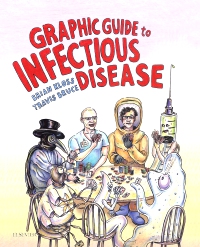
A unique mash-up of medical education and comic book-style illustration, Graphic Guide to Infectious Diseases uses memorable art and humorous text to provide a seriously effective way to enhance your knowledge of complex medical conditions and diseases. Emergency medicine physician Dr. Brian Kloss and illustrator Travis Bruce use pop culture references, nostalgia, and unconventional humor to bridge the gap between challenging microbiology content and clinical knowledge of infectious diseases.
-
- Offers an innovative, concise, and fun way to learn about diseases, their signs and symptoms, and how to treat them – perfect for the busy medical student
- Improves understanding and retention of complex information by using high-quality graphic illustrations mixed with solid educational content – ensuring a high-interest, high-yield resource with a large dose of humor and an innovative writing style
- Uses visual learning to boost memorization, long-term retention, and exam performance
- Student Consult™ eBook version included with purchase. This enhanced eBook experience allows you to search all of the text, figures, and references from the book on a variety of devices
-
-
 Graphic Guide to Infectious DiseasePaperback
-
-
Section 1: Viral Hepatitis
1.1. Hepatitis A
1.2. Hepatitis B
1.3. Hepatitis B—Serum Markers
1.4. Hepatitis C
1.5. Hepatitis D
1.6. Hepatitis E
Section 2: Infectious Diarrhea
2.1. Bacterial
2.1.1. Shigellosis
2.1.2. Salmonellosis
2.1.3. Cholera
2.1.4. Campylobacteriosis
2.1.5. Enterohemorrhagic Escherichia Coli
2.1.6. Enterotoxigenic Escherichia Coli
2.1.7. Yersiniosis
2.1.8. Clostridium Difficile Infection
2.1.9. Vibriosis
2.2. Viral
2.2.1. Norovirus
2.2.2. Rotavirus
2.3. Protozoan
2.3.1. Giardiasis
2.3.2. Cryptosporidiosis
2.3.3. Amebiasis
Section 3: Childhood Illness
3.1. Measles
3.2. Mumps
3.3. Rubella
3.4. Erythema Infectiousum
3.5. Examthum Subitum
3.6. Chickenpox
3.7. Congenital and Perinatal Infections
3.8. Pertussis
3.9. Hand, Foot, and Mouth Disease
3.10. Bronchiolitis
3.11. Kawasaki Disease
3.12. Croup
Section 4: Tick Borne Illness
4.1. Tick Borne Illness and Ticks as Vectors
4.2. Rocky Mountain Spotted Fever
4.3. Lyme Disease
4.4. Ehrlichiosis
4.5. Anaplasmosis
4.6. Babesiosis
4.7. Tularemia
4.8. Crimean-Congo Hemorrhagic Fever
4.9. Colorado Tick Fever
Section 5: Worms
5.1. Roundworms
5.1.1. Ascariasis
5.1.2. Filariasis
5.1.3. Onchocerciasis
5.1.4. Pinworms
5.1.5. Hookworm
5.1.6. Whipworm
5.1.7. Trichinosis
5.1.8. Dracunculiasis
5.1.9. Cutaneous Larva Migrans
5.1.10. Threadworm
5.2. Tapeworms
5.2.1. Pork Tapeworm and Cysticercosis
5.2.2. Broad Fish Tapeworm
5.2.3. Beef Tapeworm
5.2.4. Dog Tapeworm
5.2.5. Dwarf Tapeworm
5.3. Flatworms
5.3.1. Schistosomiasis
5.3.2. Liver Fluke
5.3.3. Lung Fluke
Section 6: Fungal
6.1. Sporotrichosis
6.2. Paracoccidiomycosis
6.3. Coccidiomycosis
6.4. Blastomycosis
6.5. Histoplasmosis
6.6. Tinea Infections of Skin
6.7. Tinea Versicolor
6.8. Aspergillosis
6.9. Mucormycosis
Section 7: Sexually Transmitted Diseases
7.1. Gonorrhea
7.2. Condyloma Acuminata
7.3. Pubic Lice
7.4. Syphilis
7.5. Chlamydia
7.6. Trachoma
7.7. Reactive Arthritis
7.8. Herpes Simplex
7.9. Trichomoniasis
7.10. Scabies
7.11. Chancroid
7.12. Donovanosis
7.13. Vaginitis
7.14. Molluscum Contagiosum
7.15. Lymphogranuloma Venereum
Section 8: Pulmonary
8.1. Middle Eastern Respiratory Syndrome
8.2. Tuberculosis
8.3. Legionnaires' Disease
8.4. Psittacosis
8.5. Avian Influenza
8.6. Influenza
8.7. Severe Acute Respiratory Syndrome
Section 9: Mosquito Borne Illness
9.1. Zika Fever
9.2. Dengue
9.3. Yellow Fever
9.4. Malaria
9.5. Encephalitis
9.6. Chikungunya
Section 10: Rat Borne Illness
10.1. Hanta Virus
10.1.1. Hemorrhagic Fever with Renal Syndrome
10.1.2. Hantavirus Pulmonary Syndrome
10.2. Plague
10.3. Leptospirosis
10.4. Rat Bite Fever
10.5. Trench Fever
10.6. Scrub Typhus
10.7. Epidemic Typhus
10.8. Endemic (Murine) Typhus
10.9. Arenaviridae
Section 11: Oropharyngeal
11.1. Peritonsillar Abscess
11.2. Diphtheria
11.3. Herpangina
11.4. Thrush
11.5. Streptococcal Pharyngitis
Section 12: Viral
12.1. Ebola
12.2. Rabies
12.3. AIDS: Opportunistic Infections
12.4. Smallpox
12.5. Mononucleosis
12.6. Polio
Section 13: Parasites and Prions
13.1. Chagas Disease
13.2. African Sleeping Sickness
13.3. Pediculosis
13.4. Naegleriasis
13.5. Prion Diseases
Section 14: Bacterial
14.1. Anthrax
14.2. Botulism
14.3. Brucellosis
14.4. Typhoid Fever
14.5. Cat Scratch Fever
14.6. Leprosy
14.7. Infective Endocarditis
14.8. Tetanus
14.9. Listeriosis
14.10. Q Fever
14.11. Melioidosis -
-
Ways of Reading
- The appearance of the text and page layout can be modified according to the capabilities of the reading system (font family and font size, spaces between paragraphs, sentences, words, and letters, as well as color of background and text)
- This e-publication is accessible to the full extent that the file format and types of content allow, on a specific reading device, by default, without necessarily including any additions such as textual descriptions of images or enhanced navigation
- No information about nonvisual reading is available
-
Conformance
- No information is available
-
Navigation
- Table of contents to all chapters of the text via links
- Page list to go to pages from the print source version
-
Rich Content
- No information is available
-
Hazards
- No information is available
-
Product Content
- No information is available
-
Legal Considerations
- No information is available
-
Additional Accessibility Information
- Page breaks included from the original print source
- For readers with color vision deficiency, use of color (e.g., in diagrams, graphics and charts, in prompts, or on buttons inviting a response) is not the sole means of graphical distinction or of conveying information
- E-publication includes basic navigation (usually less detailed than TOC-based navigation)
- Where links, controls or buttons are included in the content, the purpose or functionality of each link, control or button is apparent from the associated text alone - or where it is unclear, separate link, control or button descriptions are provided
- All (or substantially all) textual matter is arranged in a single logical reading order (including text that is visually presented as separate from the main text flow, e.g., in boxouts, captions, tables, footnotes, endnotes, citations, etc.). Non-textual content is also linked from within this logical reading order. (Purely decorative non-text content can be ignored).
- The language of the text has been specified (e.g., via the HTML or XML lang attribute) to optimise text-to-speech (and other alternative renderings), both at the whole document level and, where appropriate, for individual words, phrases or passages in a different language.
-
Ways of Reading
Was
$35.99
Now $32.39
Or $0.00 with a valid access code

 as described in our