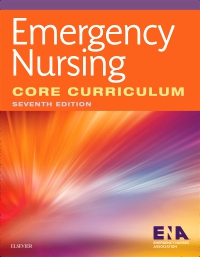

Emergency Nursing Core Curriculum - Elsevier eBook on VitalSource, 7th Edition
Elsevier eBook on VitalSource
Now $78.29
**Selected for Doody’s Core Titles® 2024 with "Essential Purchase" designation in Emergency Care**
Emergency Nursing Core Curriculum, 7th Edition, presents a clear, concise, and thorough overview of emergency nursing. Authored by the Emergency Nurses Association (ENA), this new edition includes updated information on cancer guidelines, diabetes, HIPAA information and more! Building upon the strengths of previous editions, new photographs and illustrations make content more accessible, bringing essential concepts to life This edition provides nurses with an invaluable resource for certification review. Used by practicing emergency nurses at all levels, this highly-respected resource is essential for gaining knowledge, developing practice standards, and improving quality of care.
New Edition Expected Availability: 03-13-2026

Emergency Nursing Core Curriculum - Elsevier E-Book on VitalSource
-
- NEW! Updated content incorporates the latest information about:
- New types of insulin
- Cancer statistics
- Stroke guidelines
- HIPAA information
- Healthy People 2020
- Sepsis protocols
- Forensic Aspects of Emergency Nursing
- Violence in the ED
- Palliative care
- ENA-authored ensures text is the most authoritative and up-to-date resource available.
- NEW! Reorganized unit on trauma emergencies makes facts more easy to find.
- Updated outline and alphabetical listing of the Clinical Emergencies chapters makes information quickly accessible.
- NEW! Additional illustrations and tables enhance your understanding of key information.
-
- Authored by ENA, you can rely on this text to be the most authoritative and up-to-date resource available
- The text's outline format and alphabetical listing of the Clinical Emergencies chapters mean you can find the information you need - fast!
-
Part One: Clinical Foundations
1. Nursing Assessment and Resuscitation
2. Triage
3. Abuse and Neglect
4. Complementary/Alternative Therapies
5. Palliative and End of Life Care
6. Invasive Hemodynamic Monitoring
7. Organ and Tissue Donation
8. Pain Management
9. Isolation and Personal Protective Equipment
10. Children with Special Health Needs (CSHN)
Part Two: Clinical Emergencies
11. Abdominal Emergencies
12. Cardiovascular Emergencies
13. Dental, Ear, Nose, and Throat Emergencies
14. Endocrine Emergencies
15. Environmental Emergencies
16. Facial and Ocular Emergencies
17. Fluid and Electrolyte Abnormalities
18. Genitourinary Emergencies
19. Hematologic/Oncologic Emergencies
20. Communicable and Infectious Disease Emergencies
21. Medical Emergencies
22. Neurologic Emergencies
23. Obstetric and Gynecologic Emergencies
24. Orthopedic Emergencies
25. Pre-and Post-Transplant Emergencies
26. Toxicologic Emergencies
27. Psychiatric/Psychosocial Emergencies
28. Respiratory Emergencies
29. Shock Emergencies
30. Wounds and Wound Management
Part Three: Trauma Emergencies
31. Mechanism of Injury
32. Nursing Assessment and Trauma Resuscitation
33. Abdominal and Urologic Trauma
34. Burn Trauma
35. Neurologic Trauma
36. Ocular and Maxillofacial Trauma
37. Obstetric Trauma
38. Orthopedic Trauma
39. Thoracic Trauma
40. Sexual Assault
Part Four: Professional Components
41. Disaster Preparedness and Response
42. Education; Professional, Patient, and Community
43. Emergency Patient Transfer and Transport
44. Forensic Aspects of Emergency Nursing
45. Legal and Regulatory Issues
46. Professionalism and Leadership
47. Research and Evidence-Based Practice
48. Violence in the Emergency Care Setting
Appendices
A. Coma Scales
B. Age-Specific Vital Signs
C. Infant Pain Scales
D. Revised Trauma Score -
-
Ways of Reading
- The appearance of the text and page layout can be modified according to the capabilities of the reading system (font family and font size, spaces between paragraphs, sentences, words, and letters, as well as color of background and text)
- This e-publication is accessible to the full extent that the file format and types of content allow, on a specific reading device, by default, without necessarily including any additions such as textual descriptions of images or enhanced navigation
- No information about nonvisual reading is available
-
Conformance
- No information is available
-
Navigation
- Table of contents to all chapters of the text via links
- Page list to go to pages from the print source version
-
Rich Content
- No information is available
-
Hazards
- No information is available
-
Product Content
- No information is available
-
Legal Considerations
- No information is available
-
Additional Accessibility Information
- Page breaks included from the original print source
- For readers with color vision deficiency, use of color (e.g., in diagrams, graphics and charts, in prompts, or on buttons inviting a response) is not the sole means of graphical distinction or of conveying information
- E-publication includes basic navigation (usually less detailed than TOC-based navigation)
- Where links, controls or buttons are included in the content, the purpose or functionality of each link, control or button is apparent from the associated text alone - or where it is unclear, separate link, control or button descriptions are provided
- All (or substantially all) textual matter is arranged in a single logical reading order (including text that is visually presented as separate from the main text flow, e.g., in boxouts, captions, tables, footnotes, endnotes, citations, etc.). Non-textual content is also linked from within this logical reading order. (Purely decorative non-text content can be ignored).
- The language of the text has been specified (e.g., via the HTML or XML lang attribute) to optimise text-to-speech (and other alternative renderings), both at the whole document level and, where appropriate, for individual words, phrases or passages in a different language.
-
Ways of Reading

 as described in our