ISBN:
9780323462310
Copyright:
2015
Publication Date:
05-02-2014
Page Count:
944
Imprint:
Elsevier
List Price:
$99.99

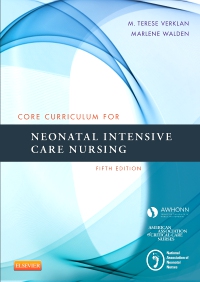
Core Curriculum for Neonatal Intensive Care Nursing - Elsevier eBook on VitalSource, 5th Edition
by AWHONN, M. Terese Verklan, PhD, CCNS, RNC, FAAN, Marlene Walden, PhD, RN, NNP-BC, CCNS, National Association of Neonatal Nurses and American Association of Critical-Care Nurses (AACN)
Elsevier eBook on VitalSource
ISBN:
9780323462310
Copyright:
2015
Publication Date:
05-02-2014
Page Count:
944
Imprint:
Elsevier
List Price:
$99.99
Most review copies are eBooks – how fast!
A review copy request is most likely to be fulfilled as an eBook on VitalSource rather than a print product, unless no eBook is available. eBooks become available in as little as a few hours. Print products will take between 7 and 10 days to arrive. To request a print copy, please contact us through the Evolve Support Center for further assistance or contact your Elsevier Sales Rep.
Perfect as a resource in the field or for exam preparation, this authoritative reference from the Association of Women’s Health, Obstetric, and Neonatal Nurses (AWHONN) includes in-depth coverage of the most common neonatal disorders and their management. The concise outline format highlights the essentials of each condition including definition, etiology, pathophysiology, signs and symptoms, diagnostic tests, treatments, and outcomes to help students find important information quickly. This new edition also features an increased focus on evidence-based practice, new CAMTS and AAMS guidelines, new techniques for PICC placement, and changes to the Neonatal Resuscitation Program.
New Edition Expected Availability: 04-06-2020

Core Curriculum for Neonatal Intensive Care Nursing Elsevier eBook on VitalSource
Elsevier eBook on VitalSource
ISBN: 9780323672344
-
- NEW! CAMTS and AAMS guidelines, techniques for PICC placement, and changes to the Neonatal Resuscitation Program are just a few of the updates that reveal the importance the new edition places on safety practices and procedures.
- NEW! Updated chapter on Patient Safety includes selected improvement strategies and resources for neonatal nurses to build a patient safety toolkit, discusses TeamSTEPPS (Team Strategies and Tools to Enhance Performance and Patient Safety), and recognizes human issues, such as shift work and fatigue.
- NEW! Increased focus on evidence-based practice for preterm infants, medications, and antepartum-intrapartum complications sets the standard for neonatal nursing practice.
- NEW! Strategies to promote inclusionary care better reflect nursing care today by focusing on family-centered care, comprehensive perinatal records, health care teams in the NICU, and best practices in the care of the late preterm infant.
- NEW! Comprehensively revised chapter on Immunology identifies risk factors for infection associated with term and preterm infants, distinguishes clinical symptoms and therapies associated with TORCHES CLAP spectrum infections, and includes prevention strategies for hospital-acquired infections.
- NEW! Thoroughly updated content and references reflect currency and technologic advances.
- NEW! Refocused chapter on Developmental Care guides the nurse to use assessment within the context of the environment and situation to initiate interventions in the moment or use patterns of responses for developing plans of care and presents core measures on evaluating developmental care practices in the NICU.
-
- NEW! Increased focus on evidence-based practice for preterm infants, medications, and antepartum-intrapartum complications sets the standard for neonatal nursing practice.
- Concise outline format provides access to important nursing considerations associated with the management of the most common conditions in the neonate.
- NEW! Strategies to promote inclusionary care better reflect nursing care today by focusing on family-centered care, comprehensive perinatal records, health care teams in the NICU, and best practices in the care of the late preterm infant.
- NEW! Updated chapter on Patient Safety includes selected improvement strategies and resources for neonatal nurses to build a patient safety toolkit, discusses TeamSTEPPS (Team Strategies and Tools to Enhance Performance and Patient Safety), and recognizes human issues, such as shift work and fatigue.
- NEW! CAMTS and AAMS guidelines, techniques for PICC placement, and changes to the Neonatal Resuscitation Program are just a few of the updates that reveal the importance the new edition places on safety practices and procedures.
- Information on families, ethics, legal issues, research, case management, and the transition to home acknowledge the full scope of neonatal nursing practice.
- Text provides a collaborative effort between the three most authoritative associations in neonatal intensive care nursing - AWHONN, AACN, and NANN.
- All necessary information to prepare for the neonatal intensive care nursing certification examination is included.
- NEW! Refocused chapter on Developmental Care guides the nurse to use assessment within the context of the environment and situation to initiate interventions in the moment or use patterns of responses for developing plans of care and presents core measures on evaluating developmental care practices in the NICU.
- NEW! Comprehensively revised chapter on Immunology identifies risk factors for infection associated with term and preterm infants, distinguishes clinical symptoms and therapies associated with TORCHES CLAP spectrum infections, and includes prevention strategies for hospital-acquired infections.
- NEW! Thoroughly updated content and references reflect currency and technologic advances.
-
ANTEPARTUM, INTRAPARTUM, AND TRANSITION TO EXTRAUTERINE LIFE
1. Uncomplicated Antepartum, Intrapartum, and Postpartum Care
2. Antepartum-Intrapartum Complications
3. Perinatal Substance Abuse
4. Adaptation to Extrauterine Life
5. Neonatal Delivery Room Resuscitation
CORNERSTONES OF CLINICAL PRACTICE
6. Thermoregulation
7. Physical Assessment
8. Fluid and Electrolyte Management
9. Glucose Management
10. Nutritional Management
11. Developmental Support
12. Pharmacology
13. Laboratory and Diagnostic Test Interpretation
14. Radiologic Evaluation
15. Common Invasive Procedures
16. Pain Assessment and Management
17. Families in Crisis
18. Patient Safety
19. Discharge Planning and Transition to Home Care
20. Genetics: From Bench to Bedside
21. Intrafacility and Interfacility Neonatal Transport
22. Care of the Extremely Low Birth Weight Infant
23. Care of the Late Preterm Infant
PATHOPHYSIOLOGY: MANAGEMENT AND TREATMENT OF COMMON DISORDERS
24. Respiratory Distress
25. Apnea
26. Assisted Ventilation
27. Extracorporeal Membrane Oxygenation
28. Cardiovascular Disorders
29. Gastrointestinal Disorders
30. Endocrine Disorders
31. Hematologic Disorders
32. Infectious Disease in the Neonate
33. Renal and Genitourinary Disorders
34. Neurologic Disorders
35. Congenital Anomalies
36. Neonatal Dermatology
37. Ophthalmologic and Auditory Disorders
PROFESSIONAL PRACTICE
38. Foundations of Neonatal Research
39. Ethical Issues
40. Legal Issues
APPENDIX A: Newborn Metric Conversion Tables -
-
Ways of Reading
- The appearance of the text and page layout can be modified according to the capabilities of the reading system (font family and font size, spaces between paragraphs, sentences, words, and letters, as well as color of background and text)
- This e-publication is accessible to the full extent that the file format and types of content allow, on a specific reading device, by default, without necessarily including any additions such as textual descriptions of images or enhanced navigation
- No information about nonvisual reading is available
-
Conformance
- The publication was certified on 27-05-2026
-
Navigation
- Table of contents to all chapters of the text via links
- Page list to go to pages from the print source version
-
Rich Content
- No information is available
-
Hazards
- No information is available
-
Product Content
- No information is available
-
Legal Considerations
- No information is available
-
Additional Accessibility Information
- Page breaks included from the original print source
- For readers with color vision deficiency, use of color (e.g., in diagrams, graphics and charts, in prompts, or on buttons inviting a response) is not the sole means of graphical distinction or of conveying information
- E-publication includes basic navigation (usually less detailed than TOC-based navigation)
- Where links, controls or buttons are included in the content, the purpose or functionality of each link, control or button is apparent from the associated text alone - or where it is unclear, separate link, control or button descriptions are provided
- All (or substantially all) textual matter is arranged in a single logical reading order (including text that is visually presented as separate from the main text flow, e.g., in boxouts, captions, tables, footnotes, endnotes, citations, etc.). Non-textual content is also linked from within this logical reading order. (Purely decorative non-text content can be ignored).
- The language of the text has been specified (e.g., via the HTML or XML lang attribute) to optimise text-to-speech (and other alternative renderings), both at the whole document level and, where appropriate, for individual words, phrases or passages in a different language.
-
Ways of Reading
Most review copies are eBooks – how fast!
A review copy request is most likely to be fulfilled as an eBook on VitalSource rather than a print product, unless no eBook is available. eBooks become available in as little as a few hours. Print products will take between 7 and 10 days to arrive. To request a print copy, please contact us through the Evolve Support Center for further assistance or contact your Elsevier Sales Rep.

 as described in our