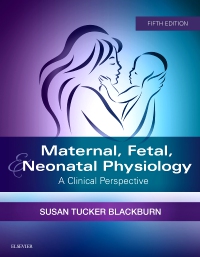

Maternal, Fetal, & Neonatal Physiology - Elsevier eBook on VitalSource, 5th Edition
Elsevier eBook on VitalSource
Now $115.19
**Selected for Doody’s Core Titles® 2024 in Perinatal**
Awarded first place in the 2018 AJN Book of the Year Awards in the Maternal-Child Health/Prenatal Nursing/ Childbirth category! Learn to provide the best prenatal, intrapartum, postpartum, and neonatal care possible. Maternal, Fetal, & Neonatal Physiology: A Clinical Perspective, 5th Edition includes expert insight and clinically relevant coverage of the physiologic changes that occur throughout all major periods of the perinatal experience. This classic reference gives you a solid foundation for assessment and therapeutic interventions, featuring an emphasis on the evolving interrelationships between mother, fetus, and neonate and adaptations of preterm and term infants to the extrauterine environment.
-
- NEW! Thoroughly updated content addresses the very latest practice issues and provides the basis for understanding physiologic adaptations in pregnant women, infants, and children.
- NEW! Expanded coverage of maternal, fetal, neonatal, and pediatric physiology.
- NEW! Soft cover and added color provide a contemporary look and feel.
-
- NEW! Nora AI - an AI-powered learning assistant exclusive to Elsevier ebooks on VitalSource's Bookshelf® platform - offers built-in AI learning support that provides personalized answers based on content from the Elsevier ebook
- Solid coverage of the physiologic bases for assessment and therapeutic interventions make this an ideal resource for maternity, neonatal, women’s health, or midwifery programs
- Synthesis of the latest research studies and evidence-based practice provides vital data on normal physiologic changes during the antepartum, intrapartum and postpartum periods; anatomic and functional development of the fetus; and developmental physiology of preterm and term neonates
- Coverage of pathophysiology and interventions for the pregnant woman, fetus, and newborn for selected abnormal events gives you a solid understanding of physiologic adaptations and developmental physiology relating to major body systems and metabolic processes
- Pharmacology tables offer quick access to key pharmacology information and drug effects with clinical examples
-
-
 Maternal, Fetal, & Neonatal Physiology - Elsevier eBook on VitalSourceElsevier eBook on VitalSource
 -
 Maternal, Fetal, & Neonatal PhysiologyPaperback
-
-
UNIT I: REPRODUCTIVE AND DEVELOPMENTAL PROCESSES
1. Biologic Basis for Reproduction
2. Physiologic Basis for Reproduction
3. Prenatal Period and Placental Physiology
4. Parturition and Uterine Physiology
5. Postpartum Period and Lactation Physiology
6. Fetal Assessment
7. Pharmacology and Pharmacokinetics During the Perinatal PeriodUNIT II: ADAPTATIONS IN MAJOR BODY SYSTEMS IN THE PREGNANT WOMAN, FETUS, AND NEONATE
8. Hematologic and Hemostatic Systems
9. Cardiovascular System
10. Respiratory System
11. Renal System and Fluid and Electrolyte Homeostasis
12. Gastrointestinal and Hepatic Systems and Perinatal Nutrition
13. Immune System and Host Defense Mechanisms
14. Integumentary System
15. Neurologic, Muscular, and Sensory Systems
UNIT III: ADAPTATIONS IN METABOLIC PROCESSES IN THE PREGNANT WOMAN, FETUS, AND NEONATE
16. Carbohydrate, Fat, and Protein Metabolism
17. Calcium and Phosphorus Metabolism
18. Bilirubin Metabolism
19. Pituitary, Adrenal, and Thyroid Function
20. Thermoregulation -
-
Ways of Reading
- The appearance of the text and page layout can be modified according to the capabilities of the reading system (font family and font size, spaces between paragraphs, sentences, words, and letters, as well as color of background and text)
- This e-publication is accessible to the full extent that the file format and types of content allow, on a specific reading device, by default, without necessarily including any additions such as textual descriptions of images or enhanced navigation
- No information about nonvisual reading is available
-
Conformance
- No information is available
-
Navigation
- Table of contents to all chapters of the text via links
- Page list to go to pages from the print source version
-
Rich Content
- No information is available
-
Hazards
- No information is available
-
Product Content
- No information is available
-
Legal Considerations
- No information is available
-
Additional Accessibility Information
- Page breaks included from the original print source
- For readers with color vision deficiency, use of color (e.g., in diagrams, graphics and charts, in prompts, or on buttons inviting a response) is not the sole means of graphical distinction or of conveying information
- E-publication includes basic navigation (usually less detailed than TOC-based navigation)
- Where links, controls or buttons are included in the content, the purpose or functionality of each link, control or button is apparent from the associated text alone - or where it is unclear, separate link, control or button descriptions are provided
- All (or substantially all) textual matter is arranged in a single logical reading order (including text that is visually presented as separate from the main text flow, e.g., in boxouts, captions, tables, footnotes, endnotes, citations, etc.). Non-textual content is also linked from within this logical reading order. (Purely decorative non-text content can be ignored).
- The language of the text has been specified (e.g., via the HTML or XML lang attribute) to optimise text-to-speech (and other alternative renderings), both at the whole document level and, where appropriate, for individual words, phrases or passages in a different language.
-
Ways of Reading

 as described in our