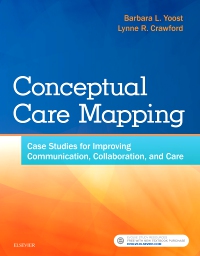

Conceptual Care Mapping - Elsevier eBook on VitalSource, 1st Edition
Elsevier eBook on VitalSource
Now $26.59
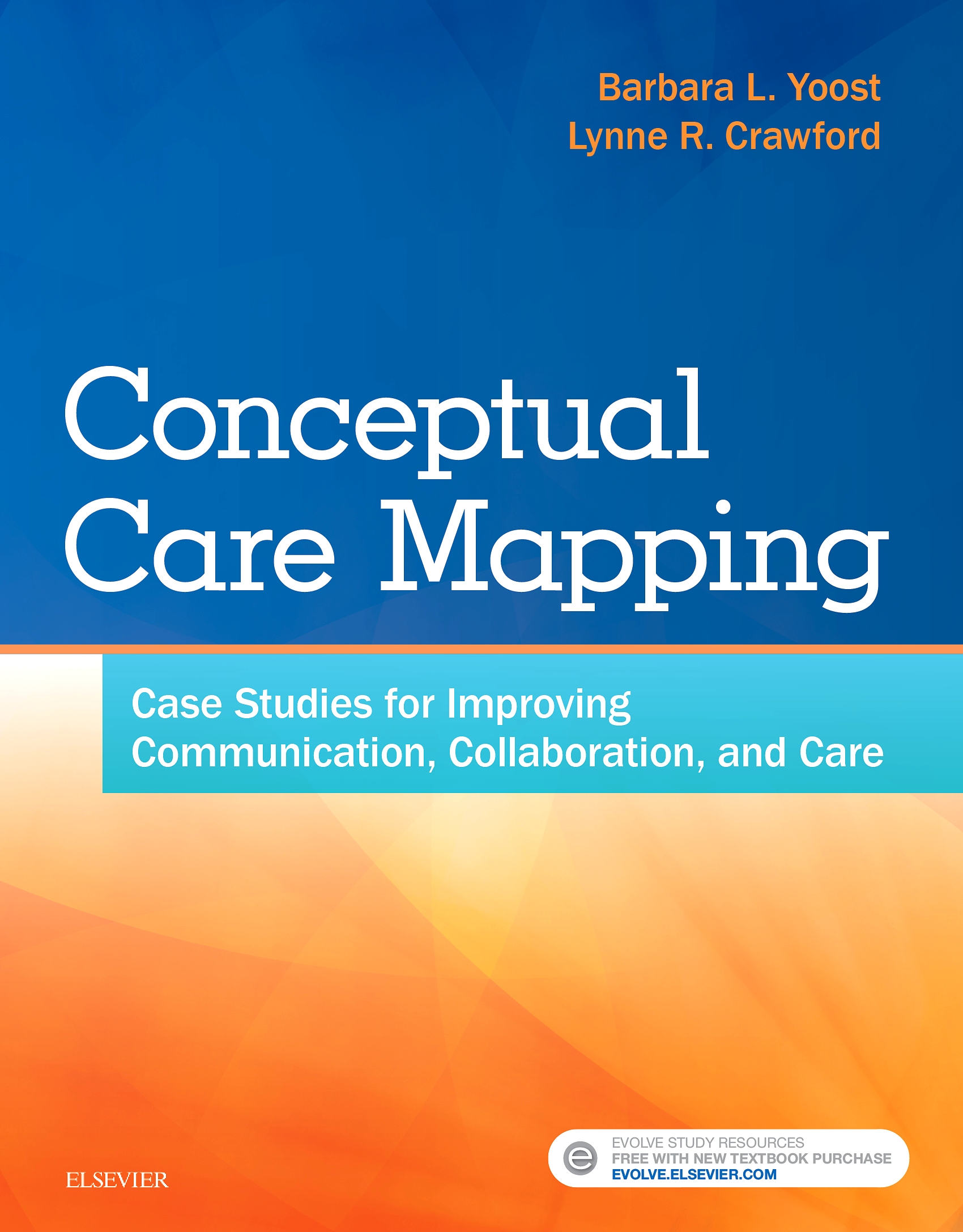
Learn to prioritize patient care quickly and effectively! Conceptual Care Mapping: Case Studies for Improving Communication, Collaboration, and Care uses a ‘two books in one’ approach to guide you through the most important aspects of patient care and critical thinking. The first section explores the title’s three C’s of care, communication, and collaboration within the healthcare team. The second section includes case studies that progress from simple clinical conditions to the more complex. Conceptual Care Mapping provides the tools you need to understand and implement effective patient care plans. With mapping practice both online and in the text, this unique book is the ideal resource for any first-year nursing student!
-
- NEW! Nora AI - an AI-powered learning assistant exclusive to Elsevier ebooks on VitalSource's Bookshelf® platform - offers built-in AI learning support that provides personalized answers based on content from the Elsevier ebook
- Unique! Conceptual Care Mapping guides your care — using templates and an online, interactive conceptual care map creator — from the author team who developed this new method of organizing care information
- Unique! 30 case studies focus on the patients you are most likely to see in clinical experience as a first-year student — and are organized from simple to complex, guiding you through prioritization and teaching you to think critically
- Unique! Elsevier’s Conceptual Care Map (CCM) creator helps you create, update, manage, and submit care maps quickly and effectively
- Unique! Answers and completed care maps are provided for selected cases to reinforce what you’ve learned
- Unique! Improving Patient Care section not only provides an overview of care mapping, but also focuses on three key elements of patient care: care, communication (both with other healthcare professionals and with patients), and collaboration
- Unique! Interprofessional Education (IPE) and collaboration are key elements in all of the case studies, helping you understand how you will work within the larger healthcare team
- Full-color design makes it easier to match up your online care mapping with content in the text
-
-
-
 Conceptual Care MappingPaperback
-
-
Section I: Improving Patient Care
1. Introduction to Conceptual Care Mapping
2. Assessment
3. Communication
4. Collaboration
5. Critical Thinking
Section II: Case Studies
Case Study 1 – Ellen Halstead
Case Study 2 – Jamaal Samatar
Case Study 3 – Rachelle Wagner
Case Study 4 – Victoria Litchfield
Case Study 5 – Beatrice Keifer
Case Study 6 – Danielle Hammond
Case Study 7 – James Robertson
Case Study 8 – George Carlton
Case Study 9 – Vera Rose
Case Study 10 – Cora Jenkins
Case Study 11 – Helen Williams
Case Study 12 – Thomas Middleton
Case Study 13 – Manuel Rodriguez
Case Study 14 – Nicole Kaiser
Case Study 15 – Jack Weingart
Case Study 16 – Michael Mills
Case Study 17 – Ronald Bailey
Case Study 18 – William Ruby
Case Study 19 – Donald Bergman
Case Study 20 – Catherine Abbott
Case Study 21 – Alice Chung
Case Study 22 – Broderick Winston
Case Study 23 – Mark Summerfield
Case Study 24 – Sarah Laurent
Case Study 25 – Karen Woodruff
Case Study 26 – Edward Moore
Case Study 27 – Caleb Nguyen
Case Study 28 – Taylor Collins
Case Study 29 – Erika Pratt
Case Study 30 – Kenneth Ventura
Appendix A: NANDA Diagnoses and Definitions
Appendix B: Lab Information
Appendix C: Checklist
Appendix D: Abbreviations
Index
-
-
Ways of Reading
- The appearance of the text and page layout can be modified according to the capabilities of the reading system (font family and font size, spaces between paragraphs, sentences, words, and letters, as well as color of background and text)
- This e-publication is accessible to the full extent that the file format and types of content allow, on a specific reading device, by default, without necessarily including any additions such as textual descriptions of images or enhanced navigation
- No information about nonvisual reading is available
-
Conformance
- No information is available
-
Navigation
- Table of contents to all chapters of the text via links
- Page list to go to pages from the print source version
-
Rich Content
- No information is available
-
Hazards
- No information is available
-
Product Content
- No information is available
-
Legal Considerations
- No information is available
-
Additional Accessibility Information
- Page breaks included from the original print source
- For readers with color vision deficiency, use of color (e.g., in diagrams, graphics and charts, in prompts, or on buttons inviting a response) is not the sole means of graphical distinction or of conveying information
- E-publication includes basic navigation (usually less detailed than TOC-based navigation)
- Where links, controls or buttons are included in the content, the purpose or functionality of each link, control or button is apparent from the associated text alone - or where it is unclear, separate link, control or button descriptions are provided
- All (or substantially all) textual matter is arranged in a single logical reading order (including text that is visually presented as separate from the main text flow, e.g., in boxouts, captions, tables, footnotes, endnotes, citations, etc.). Non-textual content is also linked from within this logical reading order. (Purely decorative non-text content can be ignored).
- The language of the text has been specified (e.g., via the HTML or XML lang attribute) to optimise text-to-speech (and other alternative renderings), both at the whole document level and, where appropriate, for individual words, phrases or passages in a different language.
-
Ways of Reading

 as described in our