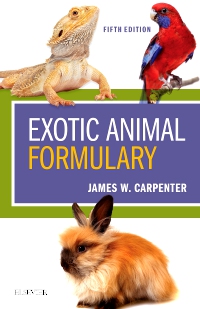

Exotic Animal Formulary - Elsevier eBook on VitalSource, 5th Edition
Elsevier eBook on VitalSource
Now $46.19
The only drug formulary on the market created solely for the treatment of exotic animals, Exotic Animal Formulary, 5th Edition addresses the most common questions and medical situations encountered in clinical practice. Using clear, current recommendations on drugs, indications, and dosages, this text helps you find the information you need fast. Written by clinical and research veterinarian James Carpenter, it includes biological tables with details on therapies and diets, normal blood parameters of common species, venipuncture sites, differential diagnosis, and medical protocols for common conditions. This thoroughly revised edition includes coverage of antimicrobial, antifungal, and antiparasitic agents, along with new chapters on invertebrates, backyard poultry and waterfowl, compound medications, and more!
New Edition Expected Availability: 08-22-2022

Exotic Animal Formulary - Elsevier eBook on VitalSource
-
- NEW! Chapter on backyard poultry and waterfowl, an increasingly popular pet in the U.S.
- UPDATED Chapter on wildlife includes new information on: considerations for developing a wildlife policy in private practice; recommendations for safe restraint of native wildlife; recommendations for meat withdrawal times in game species for select medications; agents used in wild mammal emergencies; and much more
- NEW! Information details the euthanasia agents used in fish
- NEW! Information on amphibians includes the blood collection sites and the selected disinfectants for equipment and cage furniture
- NEW! Information on hedgehogs includes common differential diagnoses based on physical examination findings and confirmed zoonotic diseases carried by hedgehogs
- NEW Information on the constant rate infusion (CRI) protocols used in rabbits
- NEW! Information on the protein electrophoresis values for ferrets
- NEW! Information on compounding pharmacies
-
- Nearly 200 drug tables provide clear, current recommendations on drugs, indications, and dosages used in treating exotic animals
- Biological tables provide details on therapies and diets, normal blood parameters of common species, venipunctures sites, and medical protocols for common conditions
- More than 20 expert authors contribute to this edition
- All drug information is reviewed for accuracy, ensuring that this reference remains authoritative and current
-
1. Invertebrates
2. Fish
3. Amphibians
4. Reptiles
5. Birds
6. Backyard Chickens
7. Sugar Gliders
8. Hedgehogs
9. Rodents
10. Rabbits
11. Ferrets
12. Miniature Pigs
13. Primates
14. Wildlife
15. Selected Topics for the Exotic Animal Veterinarian -
-
Ways of Reading
- The appearance of the text and page layout can be modified according to the capabilities of the reading system (font family and font size, spaces between paragraphs, sentences, words, and letters, as well as color of background and text)
- This e-publication is accessible to the full extent that the file format and types of content allow, on a specific reading device, by default, without necessarily including any additions such as textual descriptions of images or enhanced navigation
- No information about nonvisual reading is available
-
Conformance
- The publication was certified on 27-05-2026
-
Navigation
- Table of contents to all chapters of the text via links
- Page list to go to pages from the print source version
-
Rich Content
- No information is available
-
Hazards
- No information is available
-
Product Content
- No information is available
-
Legal Considerations
- No information is available
-
Additional Accessibility Information
- Page breaks included from the original print source
- For readers with color vision deficiency, use of color (e.g., in diagrams, graphics and charts, in prompts, or on buttons inviting a response) is not the sole means of graphical distinction or of conveying information
- E-publication includes basic navigation (usually less detailed than TOC-based navigation)
- Where links, controls or buttons are included in the content, the purpose or functionality of each link, control or button is apparent from the associated text alone - or where it is unclear, separate link, control or button descriptions are provided
- All (or substantially all) textual matter is arranged in a single logical reading order (including text that is visually presented as separate from the main text flow, e.g., in boxouts, captions, tables, footnotes, endnotes, citations, etc.). Non-textual content is also linked from within this logical reading order. (Purely decorative non-text content can be ignored).
- The language of the text has been specified (e.g., via the HTML or XML lang attribute) to optimise text-to-speech (and other alternative renderings), both at the whole document level and, where appropriate, for individual words, phrases or passages in a different language.
-
Ways of Reading

 as described in our