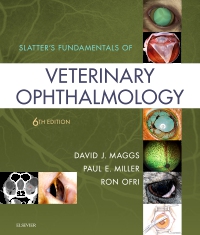

Slatter's Fundamentals of Veterinary Ophthalmology - Elsevier E-Book on VitalSource, 6th Edition
Elsevier eBook on VitalSource
Help students and practicing veterinarians recognize, diagnose, and manage a wide range of common ocular conditions with Slatter’s Fundamentals of Veterinary Ophthalmology, 6th Edition. This thoroughly updated text provides the latest, most practical information on structure and function of the eye, the ophthalmic examination and diagnostic techniques, medical and surgical management of ocular disease, and management of ocular emergencies. Enhanced and logically organized coverage includes dogs, cats, horses, livestock, birds, and exotic pets. In addition, over 1,000 color photos and illustrations accurately depict ocular conditions encountered in practice and demonstrate diagnostic and surgical techniques. Edited by three of the most revered authorities in the field of veterinary ophthalmology, this reference is an essential aid to successful veterinary practice and education.
-
- NEW! Chapter on ophthalmic surgical techniques describes instrument and suture choice, patient positioning, surgical preparation, and general techniques
- NEW! Additional drawings depict ophthalmic surgeries
- NEW! In-depth equine and livestock ophthalmology content
- NEW! Suggested reading lists included at the end of each chapter
-
- Clinical Tips boxes such as "The Controversy Remains", "Did You Know?", "Look Again", and "Note" offer helpful practice advice and facts
- NEW! Chapter on ophthalmic surgical techniques describes instrument and suture choice, patient positioning, surgical preparation, and general techniques.
- NEW! Additional drawings depict ophthalmic surgeries
- NEW! In-depth equine and livestock ophthalmology content
- NEW! Suggested reading lists included at the end of each chapter
- UPDATED Additional species added to the exotics chapter include birds, small mammals, and others
- NEW! Show Me the Evidence call-out boxes summarize and reference important studies
- Chapters on equine, livestock, and exotic animal ophthalmology written by specialists in these fields for the most clinically relevant coverage
- A team of internationally respected veterinary ophthalmologists provide comprehensive, clinical expertise in all areas needed to evaluate, diagnose, manage, and monitor a patient with ophthalmic disease
- Practical, clinically focused coverage provides a one-stop diagnostic guide to ophthalmic disease in a wide variety of species including dogs, cats, horses, cows, sheep, goats, birds, and exotic pets
-
1. The Eye and Vision
2. The Ophthalmic Examination and Diagnostic Testing
3. Ophthalmic Medications and Therapeutics
4. Principles of Ophthalmic Surgery
5. Diseases of the Orbit
6. Diseases of the Eyelids
7. Diseases of the Conjunctiva
8. Diseases of the Third Eyelid
9. Diseases of the Lacrimal System
10. Diseases of the Cornea and Sclera
11. Diseases of the Uvea
12. The Glaucomas
13. Diseases of the Lens
14. Diseases of the Vitreous
15. Diseases of the Retina
16. Neuroophthalmic Diseases
17. Ophthalmic Emergencies
18. Equine Ophthalmology
19. Livestock Ophthalmology
20. Exotic Pet and Avian Ophthalmology -
-
Ways of Reading
- The appearance of the text and page layout can be modified according to the capabilities of the reading system (font family and font size, spaces between paragraphs, sentences, words, and letters, as well as color of background and text)
- This e-publication is accessible to the full extent that the file format and types of content allow, on a specific reading device, by default, without necessarily including any additions such as textual descriptions of images or enhanced navigation
- No information about nonvisual reading is available
-
Conformance
- No information is available
-
Navigation
- Table of contents to all chapters of the text via links
- Page list to go to pages from the print source version
-
Rich Content
- No information is available
-
Hazards
- No information is available
-
Product Content
- No information is available
-
Legal Considerations
- No information is available
-
Additional Accessibility Information
- Page breaks included from the original print source
- For readers with color vision deficiency, use of color (e.g., in diagrams, graphics and charts, in prompts, or on buttons inviting a response) is not the sole means of graphical distinction or of conveying information
- E-publication includes basic navigation (usually less detailed than TOC-based navigation)
- Where links, controls or buttons are included in the content, the purpose or functionality of each link, control or button is apparent from the associated text alone - or where it is unclear, separate link, control or button descriptions are provided
- All (or substantially all) textual matter is arranged in a single logical reading order (including text that is visually presented as separate from the main text flow, e.g., in boxouts, captions, tables, footnotes, endnotes, citations, etc.). Non-textual content is also linked from within this logical reading order. (Purely decorative non-text content can be ignored).
- The language of the text has been specified (e.g., via the HTML or XML lang attribute) to optimise text-to-speech (and other alternative renderings), both at the whole document level and, where appropriate, for individual words, phrases or passages in a different language.
-
Ways of Reading


 as described in our