ISBN:
9780323523790
Copyright:
2050
Publication Date:
07-24-2020
Page Count:
1944
Imprint:
Churchill Livingstone
List Price:
$238.99

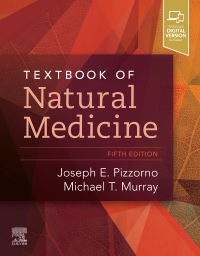
Textbook of Natural Medicine - Elsevier eBook on VitalSource, 5th Edition
by Joseph E. Pizzorno, ND and Michael T. Murray, ND
Elsevier eBook on VitalSource
ISBN:
9780323523790
Copyright:
2050
Publication Date:
07-24-2020
Page Count:
1944
Imprint:
Churchill Livingstone
List Price:
$238.99
Most review copies are eBooks – how fast!
A review copy request is most likely to be fulfilled as an eBook on VitalSource rather than a print product, unless no eBook is available. eBooks become available in as little as a few hours. Print products will take between 7 and 10 days to arrive. To request a print copy, please contact us through the Evolve Support Center for further assistance or contact your Elsevier Sales Rep.
-
- New chapters are included on hot topics such as female infertility, medicinal mushrooms, natural products and quality control, pregnancy health and primary prevention, and Vitamin K; new appendices include a supplier certification questionnaire and cervical escharotics treatment
- Thorough updates ensure that you use only the most current research and provide the most effective treatment of patients
- Tabs in Specific Health Problems section separate more than 70 alphabetized diseases/conditions
- One convenient volume replaces the cumbersome two-volume set for easy, convenient reference
- Electronic access is available via Pageburst, making it easy to search topics, drugs, herbs and supplements, and diseases and conditions. Sold separately
-
- NEW! Nora AI - an AI-powered learning assistant exclusive to Elsevier ebooks on VitalSource's Bookshelf® platform - offers built-in AI learning support that provides personalized answers based on content from the Elsevier ebook
- Comprehensive, unique coverage makes this book the gold standard in natural medicine
- A scientific presentation includes the science behind concepts and treatments, and discusses Western medical treatments and how they can work with natural medicine in a comprehensive treatment plan; if natural medicine is not effective, this book recommends the Western treatment
- Coverage of pharmacology of natural medicines includes the uses and potential dangers of nearly 80 herbal medicines, special nutrients, and other natural agents, addressing topics such as general information, chemical composition, history, pharmacology, clinical applications dosage, and toxicology
- In-depth, evidence-based coverage of 73 diseases and conditions includes key diagnostic criteria, pathophysiology of diseases, and therapeutic rationales.
- Coverage of potential interactions between drugs, herbs, and supplements ensures the safest possible use for each of 79 herbs and supplements
- Diagnostic procedures include practical, easy-to-follow descriptions of evidence-based techniques plus discussions of clinical application of diet analysis, food allergy testing, immune function assessment, fatty acid profiling, hair mineral analysis, and other diagnostic approaches
- Common therapeutic modalities are described and reviewed, including botanical medicine, nutritional therapy, therapeutic fasting, exercise therapy, hydrotherapy, counseling, acupuncture, homeopathy, and soft tissue manipulation
- Coverage of syndromes and therapies helps in understanding the underlying causes of diseases by discussing topics such as food reactions, functional toxicology, sports nutrition, stress management, and breathing pattern disorders
- Coverage of the philosophy of natural medicine includes its history and background, with discussions of toxicity, detoxification, and scientific documentation of the healing actions of nature and natural substances
- Internationally known authors Joseph Pizzorno and Michael Murray and more than 90 expert contributors provide material that is up to date, accurate, and informed
- More than 10,000 research literature citations show that the content is based on science rather than opinions or anecdotes
- 13 useful appendices offer quick lookup of frequently used charts, handouts, and information
-
SECTION I: INTRODUCTION
1. Eastern Origins of Integrative Medicine and Modern Applications
2. Functional Medicine: A 21st Century Model of Patient Care and Medical Education
3. A Hierarchy of Healing: The Therapeutic Order
4. History of Naturopathic Medicine
5. Philosophy of Naturopathic Medicine
6. Placebo and the Power to Heal
7. Positive Mental Attitude
8. Research in Natural Medicine
SECTION II: PHILOSOPHY OF NATURAL MEDICINE
9. Apoptosis Assessment
10. Bacterial Overgrowth of the Small Intestine Breath Test
11. Cell Signaling Analysis
12. Erythrocyte Sedimentation Rate
13. Fantus Test
14. Fatty Acid Profiling
15. Food Allergies
16. Genomics, Nutrigenomics, and the Promise of Personalized Medicine
17. Hair Mineral Analysis
18. Heidelberg pH Capsule Gastric Analysis
19. Immune Function Assessment
20. Intestinal Permeability Assessment
21. Laboratory Tests for the Determination of Vitamin Status
22. Lactose Intolerance Testing
23. Metal Toxicity: Assessment of Exposure and Retention
24. Mineral Status Evaluation
25. Oral Manifestations of Nutritional Status
26. Rapid Dark Adaptation Test
27. Stool Analysis
28. Urinary Organic Acids Profiling for Assessment of Functional Nutrient Deficiencies, Gut Dysbiosis, and Toxicity
29. Urinary Porphyrins for the Detection of Heavy Metal and Toxic Chemical Exposure
30. Urine Indican Test (Obermeyer Test)
SECTION III: THERAPEUTIC MODALITIES
31. Acupuncture
32. Ayurveda: The Science of Life and Mother of the Healing Arts
33. Botanical Medicine -- A Modern Perspective
34. Botanical Medicine -- Understanding Herbal Preparations
35. Environmental Medicine
36. The Exercise Prescription
37. Fasting
38. Glandular Therapy
39. Homeopathy
40. Hydrotherapy
41. Manipulation
42. Nonpharmacological Control of Pain
43. Nontransfusion Significance of ABO and ABO-Associated Polymorphisms
44. Nutritional Medicine
45. Peat Therapeutics and Balneotherapy
46. Rotation Diet: A Diagnostic and Therapeutic Tool
47. Soft Tissue Manipulation: Diagnostic and Therapeutic Potential
48. Spirituality and Healing
49. Unani Medicine
SECTION IV: SYNDROMES AND SPECIAL TOPICS
50. Cancer -- Integrated Naturopathic Support
51. Chronic Candidiasis
52. Dietary Fiber
53. Functional Toxicology
54. Homocysteine Metabolism: Nutritional Modulation and Impact on Health and Disease
55. Hyperventilation Syndrome/Breathing Pattern Disorders
56. Immune Support
57. Intestinal Protozoan Infestation and Systemic Illness
58. Maldigestion
59. Sports Nutrition
60. Stress Management
SECTION V: PHARMACOLOGY OF NATURAL MEDICINES
61. Alkylglycerols
62. Allium cepa (Onion)
63. Allium sativum (Garlic)
64. Aloe vera (Cape Aloe)
65. Angelica Species
66. Artemisia absinthium (Wormwood)
67. Artemisia annua (Sweet Wormwood)
68. Bee Products Ð Pollen, Propolis, and Royal Jelly
69. Beta-carotene and Other Carotenoids
70. Boron
71. Bromelain
72. Camellia sinensis (Green Tea)
73. Capsicum frutescens (Cayenne Pepper)
74. Carnitine
75. Centella asiatica (Gotu Kola)
76. Chinese Prepared Medicines
77. Cimicifuga racemosa (Black Cohosh)
78. Citicoline (CDP-Choline)
79. Coenzyme Q10
80. Coleus forskohlii
81. Commiphora mukul (Mukul Myrhh Tree)
82. Crataegus oxyacantha (Hawthorn)
83. Croton lechleri (Dragon's Blood)
84. Curcuma longa (Turmeric)
85. Dehydroepiandrosterone (DHEA)
86. Echinacea Species (Narrow-Leafed Purple Coneflower)
87. Eleutherococcus senticosus (Siberian Ginseng)
88. Ephedra Species
89. Epilobium Species (Fireweed)
90. Fatty Acid Metabolism
91. Fish Oils and Omega-3 Fatty Acids
92. Flavonoids Ð Quercetin, Citrus Flavonoids, and Hydroxyethylrutosides
93. Ginkgo biloba (Ginkgo Tree)
94. Glucosamine
95. Glutamine
96. Glycyrrhiza glabra (Licorice)
97. Hydrastis canadensis (Goldenseal) and Other Berberine-Containing Botanicals
98. 5-Hydroxytryptophan
99. Hypericum perforatum (St John's Wort)
100. Lobelia inflata (Indian Tobacco)
101. Medicinal Mushrooms
102. Melaleuca alternifolia (Tea Tree)
103. Melatonin
104. Melissa officinalis (Lemon Balm)
105. Mentha piperita (Peppermint)
106. Microbial Enzyme Therapy
107. Natural Products and Quality Control
108. Naturally Occurring Antioxidants
109. Opuntia Species (Prickly Pear)
110. Panax ginseng (Korean Ginseng)
111. Pancreatic Enzymes
112. Phage Therapy: Bacteriophages as Natural, Self-limiting Antibiotics
113. Phosphatidylserine
114. Piper methisticum (Kava)
115. Prebiotics
116. Probiotics
117. Procyanidolic Oligomers
118. Pygeum africanum (Bitter Almond)
119. Ruscus aculeatus (Butcher's Broom)
120. SAMe (S-Adenosylmethionine)
121. Sarsparilla Species
122. Serenoa repens (Saw Palmetto)
123. Silybum marianum (Milk Thistle)
124. Soy Isoflavones and Other Constituents
125. Tabebuia avellanedae (LaPacho, Pau D'Arco, Ipe Roxo)
126. Tanacetum parthenium (Feverfew)
127. Taraxacum officinale (Dandelion)
128. Taxus brevifolia (Pacific Yew)
129. Urtica dioica (Stinging Nettle)
130. Uva ursi (Bearberry)
131. Vaccinium macrocarpon (Cranberry)
132. Vaccinium myrtillus (Bilberry)
133. Valeriana officinalis (Valerian)
134. Viscum album (European Mistletoe)
135. Vitamin A
136. Vitamin K
137. Vitamin Toxicities and Therapeutic Monitoring
138. Vitex agnus castus (Chaste Tree)
139. Water: The Most Basic Nutrient and Therapeutic Agent
140. Zingiber officinale (Ginger)
SECTION VI: SPECIFIC HEALTH PROBLEMS
141. Acne Vulgaris and Acne Conglobata
142. Affective Disorders
143. Alcohol Dependence
144. Alzheimer's Disease
145. Angina
146. Aphthous Stomatitis
147. Asthma
148. Atherosclerosis
149. Atopic Dermatitis (Eczema)
150. Attention Deficit Hyperactivity Disorder in Children
151. Bacterial Sinusitis
152. Benign Prostatic Hyperplasia
153. Bronchitis and Pneumonia
154. Carpal Tunnel Syndrome
155. Celiac Disease
156. Cervical Dysplasia
157. Chronic Fatigue Syndrome
158. Congestive Heart Failure
159. Cystitis and Interstitial Cystitis/Painful Bladder Syndrome
160. Dermatitis Herpetiformis
161. Diabetes Mellitus
162. Endometriosis
163. Epilepsy
164. Erythema Multiforme
165. Fibrocystic Breast Disease
166. Fibromyalgia Syndrome
167. Gallstones
168. Glaucoma
169. Gout
170. Hair Loss in Women
171. Hepatitis
172. Herpes Simplex
173. HIV/AIDS: Naturopathic Medical Principles and Practice
174. Hypertension
175. Hyperthyroidism
176. Hypoglycemia
177. Hypothyroidism
178. Infectious Diarrhea
179. Infertility, Female
180. Infertility, Male
181. Inflammatory Bowel Disease (Crohn's Disease and Ulcerative Colitis)
182. Insomnia
183. Irritable Bowel Syndrome
184. Kidney Stones
185. Leukoplakia
186. Lichen Planus
187. Macular Degeneration
188. Menopause
189. Menorrhagia
190. Migraine Headache
191. Multiple Sclerosis
192. Obesity
193. Osteoarthritis
194. Osteoporosis
195. Otitis Media
196. Parkinson's Disease
197. Pelvic Inflammatory Disease
198. Peptic Ulcer -- Duodenal and Gastric
199. Periodontal Disease
200. Porphyrias
201. Pregnancy Health and Primary Prevention
202. Premenstrual Syndrome
203. Proctologic Conditions
204. Psoriasis
205. Rheumatoid Arthritis
206. Rosacea
207. Seborrheic Dermatitis
208. Senile Cataracts
209. Streptococcal Pharyngitis
210. Trichomoniasis
211. Urticaria
212. Uterine Fibroids
213. Vaginitis and Vulvovaginitis
214. Varicose Veins
APPENDICES
Candida Questionnaire
Cervical Escharotic Treatment
Crohn's Disease Activity Index
Fasting -- Patient Guidelines
Gluten and Gliadin Content of Selected Foods
Glycemic Index, Carbohydrate Content, and Glycemic Load of Selected Foods
Hydrochloric Acid Supplementation: Patient Instructions
The Optimal Food Pyramid
Patient Instructions for Measuring Basal Body Temperature
Rotation Diet Master Chart and Plan
Seligman's Attributional Style Questionnaire
Supplier Certification: Compliance Guide and Questionnaire
Vaginal Depletion Pack -
-
Ways of Reading
- The appearance of the text and page layout can be modified according to the capabilities of the reading system (font family and font size, spaces between paragraphs, sentences, words, and letters, as well as color of background and text)
- This e-publication is accessible to the full extent that the file format and types of content allow, on a specific reading device, by default, without necessarily including any additions such as textual descriptions of images or enhanced navigation
- No information about nonvisual reading is available
-
Conformance
- For detailed accessibility information, see Elsevier's website at https://www.elsevier.com/about/accessibility
- For queries regarding accessibility information, contact [email protected]
- The publication was certified on 05-11-2025
-
Navigation
- Table of contents to all chapters of the text via links
-
Rich Content
- No information is available
-
Hazards
- No information is available
-
Product Content
- No information is available
-
Legal Considerations
- No information is available
-
Additional Accessibility Information
- For readers with color vision deficiency, use of color (e.g., in diagrams, graphics and charts, in prompts, or on buttons inviting a response) is not the sole means of graphical distinction or of conveying information
- E-publication includes basic navigation (usually less detailed than TOC-based navigation)
- Where links, controls or buttons are included in the content, the purpose or functionality of each link, control or button is apparent from the associated text alone - or where it is unclear, separate link, control or button descriptions are provided
- All (or substantially all) textual matter is arranged in a single logical reading order (including text that is visually presented as separate from the main text flow, e.g., in boxouts, captions, tables, footnotes, endnotes, citations, etc.). Non-textual content is also linked from within this logical reading order. (Purely decorative non-text content can be ignored).
- The language of the text has been specified (e.g., via the HTML or XML lang attribute) to optimise text-to-speech (and other alternative renderings), both at the whole document level and, where appropriate, for individual words, phrases or passages in a different language.
-
Ways of Reading
Most review copies are eBooks – how fast!
A review copy request is most likely to be fulfilled as an eBook on VitalSource rather than a print product, unless no eBook is available. eBooks become available in as little as a few hours. Print products will take between 7 and 10 days to arrive. To request a print copy, please contact us through the Evolve Support Center for further assistance or contact your Elsevier Sales Rep.

 as described in our