ISBN:
9780323524575
Copyright:
2019
Publication Date:
11-01-2018
Page Count:
400
Imprint:
Mosby
List Price:
$48.99

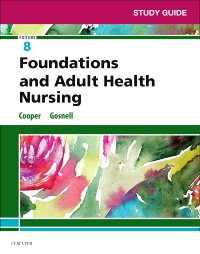
Study Guide for Foundations and Adult Health Nursing - Elsevier eBook on VitalSource, 8th Edition
by Kim Cooper, MSN, RN and Kelly Gosnell, MSN, RN
Elsevier eBook on VitalSource
ISBN:
9780323524575
Copyright:
2019
Publication Date:
11-01-2018
Page Count:
400
Imprint:
Mosby
List Price:
$48.99
Was
$48.99
Now $41.64
Or $0.00 with a valid access code
Corresponding to the chapters in Cooper and Gosnell’s Foundations and Adult Health Nursing, 8th Edition, this study guide helps you learn, understand, and apply the concepts of LPN/LVN nursing. Hundreds of labeling, matching, and fill-in-the-blank questions are included. It also includes critical thinking questions based on clinical scenarios, and multiple-choice and alternate-format questions to help you review for the NCLEX-PN® examination. From anatomy and physiology to nursing interventions and maternity, neonatal, pediatric, adult, geriatric, mental health, and community health care, this guide covers the skills essential to clinical practice.
New Edition Expected Availability: 07-07-2022

Study Guide for Foundations and Adult Health Nursing - Elsevier eBook on VitalSource
Elsevier eBook on VitalSource
ISBN: 9780323827164
-
- NEW! Updated and reworked content corresponds to the latest edition of Foundations and Adult Health Nursing
-
- An increased emphasis on critical thinking and clinical scenarios prepares you more effectively for the NCLEX-PN® examination, with more NCLEX-style alternate-format type questions and more critical thinking activities.
- Learning activities help you meet content objectives, and includes crossword puzzles, labeling, matching, and completion activities.
-
UNIT I: Fundamentals of Nursing
1. The Evolution of Nursing
2. Legal and Ethical Aspects of Nursing
3. Documentation
4. Communication
5. Nursing Process and Critical Thinking
6. Cultural and Ethnic Considerations
UNIT II: Fundamentals of Clinical Practice
7. Asepsis and Infection Control
8. Body Mechanics and Patient Mobility
9. Hygiene and Care of the Patient’s Environment
10. Safety
11. Admission, Transfer, and Discharge
UNIT III: Introduction to Nursing Interventions
12. Vital Signs
13. Physical Assessment
14. Oxygenation
15. Elimination
16. Care of Patients Experiencing Urgent Alterations in Health
17. Dosage Calculation and Medication Administration
18. Fluids and Electrolytes
19. Nutritional Concepts and Related Therapies
20. Complementary and Alternative Therapies
21. Pain Management, Comfort, Rest, and Sleep
22. Surgical Wound Care
23. Specimen Collection and Diagnostic Testing
UNIT IV: Nursing Care Across the Life Span
24. Lifespan Development
25. Loss, Grief, Dying, and Death
26. Health Promotion and Pregnancy
27. Labor and Delivery
28. Care of the Mother and Newborn
29. Care of the High-Risk Mother, Newborn, and Family with Special Needs
30. Health Promotion for the Infant, Child, and Adolescent
31. Basic Pediatric Nursing Care
32. Care of the Child with a Physical and Mental or Cognitive Disorder
33. Health Promotion and Care of the Older Adult
UNIT V: Fundamentals of Mental Health Nursing
34. Concepts of Mental Health
35. Care of the Patient with a Psychiatric Disorder
UNIT VI: Fundamentals of Community Health Nursing
36. Care of the Patient with an Addictive Personality
37. Home Health Nursing
38. Long-Term Care
39. Rehabilitation Nursing
40. Hospice Care
UNIT VII: Adult Health Nursing
41. Introduction to Anatomy and Physiology
42. Care of the Surgical Patient
43. Care of the Patient with an Integumentary Disorder
44. Care of the Patient with a Musculoskeletal Disorder
45. Care of the Patient with a Gastrointestinal Disorder
46. Care of the Patient with a Gallbladder, Liver, Biliary Tract, or Exocrine Pancreatic Disorder
47. Care of the Patient with a Blood or Lymphatic Disorder
48. Care of the Patient with a Cardiovascular or a Peripheral Vascular Disorder
49. Care of the Patient with a Respiratory Disorder
50. Care of the Patient with a Urinary Disorder
51. Care of the Patient with an Endocrine Disorder
52. Care of the Patient with a Reproductive Disorder
53. Care of the Patient with a Visual or Auditory Disorder
54. Care of the Patient with a Neurological Disorder
55. Care of the Patient with an Immune Disorder
56. Care of the Patient with HIV/AIDS
57. Care of the Patient with Cancer
UNIT: VIII: From Graduate to Professional
58. Professional Roles and Leadership -
-
Ways of Reading
- The appearance of the text and page layout can be modified according to the capabilities of the reading system (font family and font size, spaces between paragraphs, sentences, words, and letters, as well as color of background and text)
- This e-publication is accessible to the full extent that the file format and types of content allow, on a specific reading device, by default, without necessarily including any additions such as textual descriptions of images or enhanced navigation
- No information about nonvisual reading is available
-
Conformance
- The publication was certified on 27-05-2026
-
Navigation
- Table of contents to all chapters of the text via links
- Page list to go to pages from the print source version
-
Rich Content
- No information is available
-
Hazards
- No information is available
-
Product Content
- No information is available
-
Legal Considerations
- No information is available
-
Additional Accessibility Information
- Page breaks included from the original print source
- For readers with color vision deficiency, use of color (e.g., in diagrams, graphics and charts, in prompts, or on buttons inviting a response) is not the sole means of graphical distinction or of conveying information
- E-publication includes basic navigation (usually less detailed than TOC-based navigation)
- Where links, controls or buttons are included in the content, the purpose or functionality of each link, control or button is apparent from the associated text alone - or where it is unclear, separate link, control or button descriptions are provided
- All (or substantially all) textual matter is arranged in a single logical reading order (including text that is visually presented as separate from the main text flow, e.g., in boxouts, captions, tables, footnotes, endnotes, citations, etc.). Non-textual content is also linked from within this logical reading order. (Purely decorative non-text content can be ignored).
- The language of the text has been specified (e.g., via the HTML or XML lang attribute) to optimise text-to-speech (and other alternative renderings), both at the whole document level and, where appropriate, for individual words, phrases or passages in a different language.
-
Ways of Reading
Was
$48.99
Now $41.64
Or $0.00 with a valid access code

 as described in our