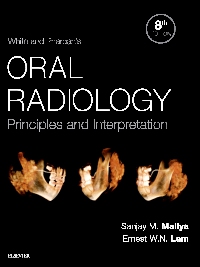

White and Pharoah's Oral Radiology Elsevier eBook on VitalSource, 8th Edition
Elsevier eBook on VitalSource
Now $132.29
Written specifically for dentists, White and Pharoah’s Oral Radiology: Principles and Interpretation 8th Edition incorporates over 1,500 high-quality radiographic images and illustrations to demonstrate core concepts and essential principles and techniques of oral and maxillofacial radiology. The new edition of this bestselling book delivers with state-of-the-art information on oral radiology principles and techniques, and image interpretation. Dental student will gain a solid foundation in radiation physics, radiation biology, and radiation safety and protection before introducing including specialized techniques such as MRI and CT. As well, students will learn how to recognize the key radiographic features of pathologic conditions and interpret radiographs accurately. The 8th edition also includes new chapters on Radiologic Anatomy, Beyond 3D Imaging, and Diseases Affecting the Structure of Bone. A practical guide to using today’s technology, this unique text helps your students provide state-of-the-art care!
New Edition Expected Availability: 11-22-2024

White and Pharoah's Oral Radiology Elsevier eBook on VitalSource
-
- NEW! New editors Sanjay Mallya and Ernest Lam along with new contributors bring a fresh perspective on oral radiology
- NEW! Chapter! Beyond 3D Imaging introduces applications of 3D imaging such as stereolithic models
- NEW! Chapter Radiological Anatomy includes all radiological anatomy content allowing you to better visualize and understand normal appearances of structures on conventional and contemporary imaging, side-by-side
- NEW! Coverage of Diseases Affecting the Structure of Bone consolidated into one chapter to simplify foundational basic science information and its applications to radiologic interpretation
-
- Over 1,500 high quality dental radiographs, full color photos, and illustrations clearly demonstrate core concepts and reinforce the essential principles and techniques of oral and maxillofacial radiology
- Updated Extensive coverage of all aspects of oral and maxillofacial radiology includes the entire predoctoral curriculum
- A wide array of radiographic images including advanced imaging such as MRI and CT
- An easy-to-follow format simplifies the key radiographic features of each pathologic condition, including location, periphery, shape, internal structure, and effects on surrounding structures — placed in context with clinical features, differential diagnosis, and management
- Expert contributors include many authors with worldwide reputations
- Case studies apply imaging concepts to real-world scenarios
-
Part I: Foundations
1. Physics
2. Biological Effects of Ionizing Radiation
3. Safety and Protection
Part II: Imaging
4. Digital Imaging
5. Film Imaging
6. Projection Geometry
7. Intraoral Projections
8. Cephalometric and Skull Imaging
9. Panoramic Imaging
10. Cone Beam Computed Tomography: Volume Acquisition
11. Cone Beam Computed Tomography: Volume Preparation
12. Radiologic Anatomy
13. Other Imaging Modalities
14. Beyond Three-Dimensional Imaging
15. Dental Implants
16. Quality Assurance and Infection Control
17. Prescribing Diagnostic Imaging
Part III: Interpretation
18. Principles of Radiographic Interpretation
19. Dental Caries
20. Periodontal Diseases
21. Dental Anomalies
22. Inflammatory Disease
23. Cysts
24. Benign Tumors and Neoplasms
25. Diseases Affecting the Structure of Bone
26. Malignant Neoplasms
27. Trauma
28. Paranasal Sinus Diseases
29. Craniofacial Anomalies
30. Temporomandibular Joint Abnormalities
31. Soft Tissue Calcifications and Ossifications
32. Salivary Gland Diseases
Part IV : Other Applications
33. Forensics -
-
Ways of Reading
- The appearance of the text and page layout can be modified according to the capabilities of the reading system (font family and font size, spaces between paragraphs, sentences, words, and letters, as well as color of background and text)
- This e-publication is accessible to the full extent that the file format and types of content allow, on a specific reading device, by default, without necessarily including any additions such as textual descriptions of images or enhanced navigation
- No information about nonvisual reading is available
-
Conformance
- No information is available
-
Navigation
- Table of contents to all chapters of the text via links
- Page list to go to pages from the print source version
-
Rich Content
- No information is available
-
Hazards
- No information is available
-
Product Content
- No information is available
-
Legal Considerations
- No information is available
-
Additional Accessibility Information
- Page breaks included from the original print source
- For readers with color vision deficiency, use of color (e.g., in diagrams, graphics and charts, in prompts, or on buttons inviting a response) is not the sole means of graphical distinction or of conveying information
- E-publication includes basic navigation (usually less detailed than TOC-based navigation)
- Where links, controls or buttons are included in the content, the purpose or functionality of each link, control or button is apparent from the associated text alone - or where it is unclear, separate link, control or button descriptions are provided
- All (or substantially all) textual matter is arranged in a single logical reading order (including text that is visually presented as separate from the main text flow, e.g., in boxouts, captions, tables, footnotes, endnotes, citations, etc.). Non-textual content is also linked from within this logical reading order. (Purely decorative non-text content can be ignored).
- The language of the text has been specified (e.g., via the HTML or XML lang attribute) to optimise text-to-speech (and other alternative renderings), both at the whole document level and, where appropriate, for individual words, phrases or passages in a different language.
-
Ways of Reading


 as described in our