ISBN:
9780323551052
Copyright:
2019
Publication Date:
12-28-2018
Page Count:
450
Imprint:
Elsevier
List Price:
$62.99

Gray's Clinical Photographic Dissector of the Human Body Elsevier eBook on VitalSource, 2nd Edition
by Marios Loukas, MD, PhD, Brion Benninger, MD, MSc and R. Shane Tubbs, PhD, MSc, PA-C
Elsevier eBook on VitalSource
ISBN:
9780323551052
Copyright:
2019
Publication Date:
12-28-2018
Page Count:
450
Imprint:
Elsevier
List Price:
$62.99
Was
$62.99
Now $56.69
Or $0.00 with a valid access code
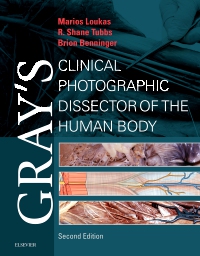
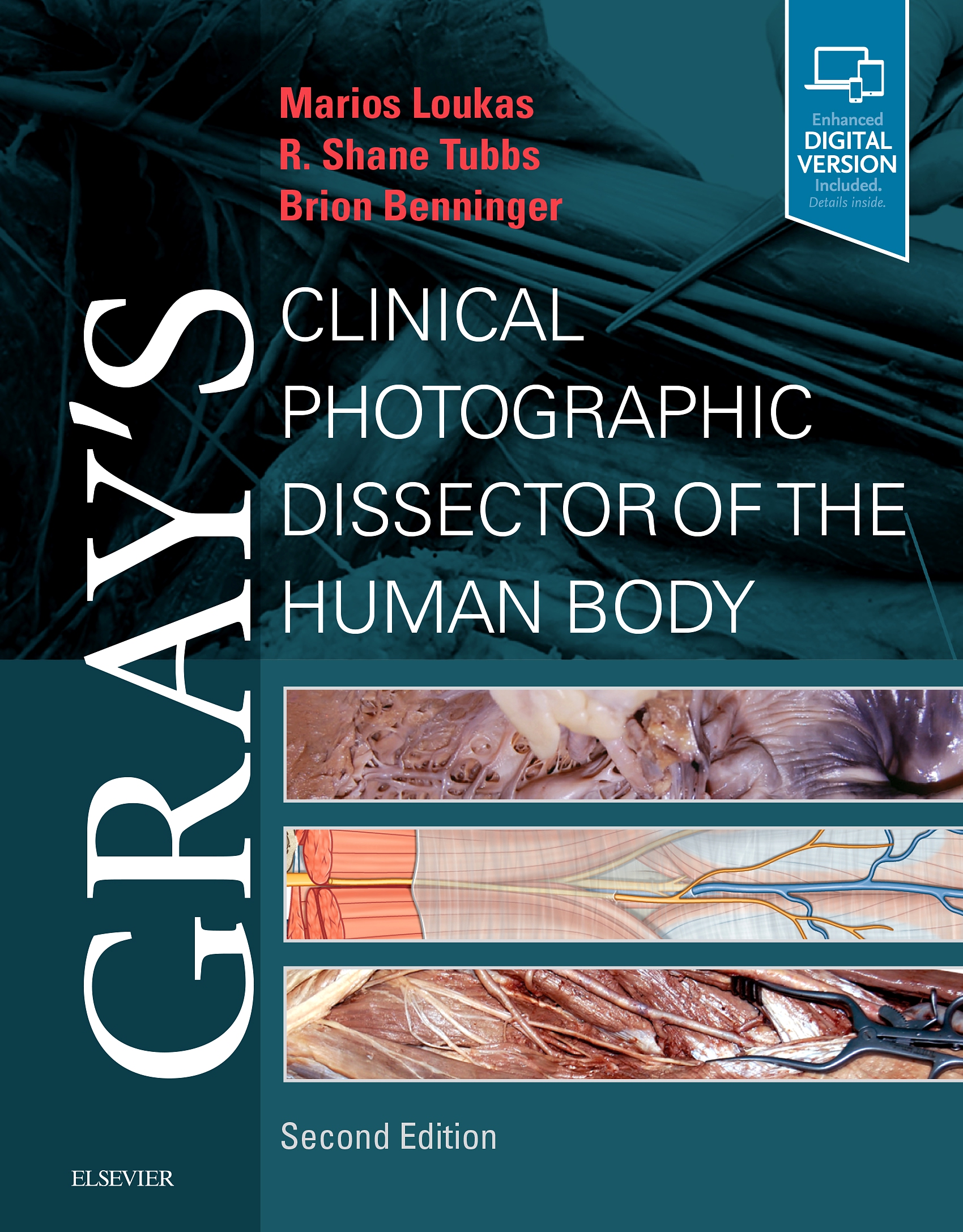
Perfect for hands-on reference, Gray's Clinical Photographic Dissector of the Human Body, 2nd Edition is a practical resource in the anatomy lab, on surgical rotations, during clerkship and residency, and beyond! The fully revised second edition of this unique dissection guide uses superb full-color photographs to orient you more quickly in the anatomy lab, and points out the clinical relevance of each structure and every dissection.
-
- Perform dissections with confidence by comparing the 1,098 full-color photographs to the cadavers you study
- Easily relate anatomical structures to clinical conditions and procedures
- Understand the pertinent anatomy for more than 30 common clinical procedures such as lumbar puncture and knee aspiration, including where to make the relevant incisions
- Depend on the same level of accuracy and thoroughness that have made Gray’s Anatomy the defining reference on this complex subject, thanks to the expertise of the author team - all leading authorities in the world of clinical anatomy
- New and improved photographs guide you through each dissection step-by-step
- All-new page design, incorporating explanatory diagrams alongside photographs to more easily orientate you on the cadaver
- Corresponding Gray’s illustrations added to aid understanding and add clarity to key anatomical structures
- New coverage of the pelvis and perineum added to this edition
- Enhanced eBook version included with purchase. Your enhanced eBook allows you to access all of the text, figures, and references – including 68 bonus dissection videos – from the book on a variety of devices
-
Section I Introduction
1. Dissection Laboratory Materials, Tools and Techniques
Section II Back
2. Muscles of the Back and Scapula
3. Suboccipital Triangle and Spinal Cord
Section III Thorax
4. Pectoral Region and Breast
5. Lungs, Removal of Heart, and Posterior Mediastinum
6. Heart
Section IV Upper Limb
7. Axilla and Arm
8. Forearm (Antebrachium)
9. Hand
Section V Abdomen
10. Anterior Abdominal Wall and Inguinal Region
11. Peritoneal Cavity
12. Gastrointestinal Tract
13. Posterior Abdominal Wall
Section VI Pelvis and Perineum
14. Pelvis
15. Perineum
Section VII Lower Limb
16. Gluteal Region
17. Thigh and Leg
18. Leg and Ankle
19. Foot
Section VIII Head and Neck
20. Neck
21. Face
22. Infratemporal Fossa
23. Calvaria, Dural Venous Sinuses, Brain, and Cranial Nerves
24. Orbit
25. Ear
26. Nasal Cavity
27. Pharynx and Oral Cavity
28. Larynx
29. Retropharyngeal Region and Pharynx
Clinical Applications -
-
Ways of Reading
- The appearance of the text and page layout can be modified according to the capabilities of the reading system (font family and font size, spaces between paragraphs, sentences, words, and letters, as well as color of background and text)
- This e-publication is accessible to the full extent that the file format and types of content allow, on a specific reading device, by default, without necessarily including any additions such as textual descriptions of images or enhanced navigation
- No information about nonvisual reading is available
-
Conformance
- No information is available
-
Navigation
- Table of contents to all chapters of the text via links
- Page list to go to pages from the print source version
-
Rich Content
- No information is available
-
Hazards
- No information is available
-
Product Content
- No information is available
-
Legal Considerations
- No information is available
-
Additional Accessibility Information
- Page breaks included from the original print source
- For readers with color vision deficiency, use of color (e.g., in diagrams, graphics and charts, in prompts, or on buttons inviting a response) is not the sole means of graphical distinction or of conveying information
- E-publication includes basic navigation (usually less detailed than TOC-based navigation)
- Where links, controls or buttons are included in the content, the purpose or functionality of each link, control or button is apparent from the associated text alone - or where it is unclear, separate link, control or button descriptions are provided
- All (or substantially all) textual matter is arranged in a single logical reading order (including text that is visually presented as separate from the main text flow, e.g., in boxouts, captions, tables, footnotes, endnotes, citations, etc.). Non-textual content is also linked from within this logical reading order. (Purely decorative non-text content can be ignored).
- The language of the text has been specified (e.g., via the HTML or XML lang attribute) to optimise text-to-speech (and other alternative renderings), both at the whole document level and, where appropriate, for individual words, phrases or passages in a different language.
-
Ways of Reading
Was
$62.99
Now $56.69
Or $0.00 with a valid access code

 as described in our