ISBN:
9780323554770
Copyright:
2020
Publication Date:
05-01-2019
Page Count:
784
Imprint:
Elsevier
List Price:
$89.99

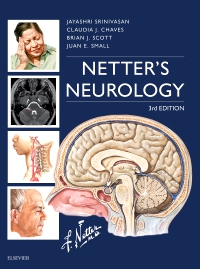
Netter's Neurology Elsevier eBook on VitalSource, 3rd Edition
by Jayashri Srinivasan, Claudia Chaves, Brian Scott and Juan E. Small, MD, MSc
Elsevier eBook on VitalSource
ISBN:
9780323554770
Copyright:
2020
Publication Date:
05-01-2019
Page Count:
784
Imprint:
Elsevier
List Price:
$89.99
Was
$89.99
Now $62.99
Or $0.00 with a valid access code
Perfect for residents, medical students, generalists, nurses, and other healthcare professionals who need a practical, working knowledge of neurology, Netter's Neurology, 3rd Edition, provides a concise overview highlighted by unique, memorable Netter illustrations. This award-winning visual resource showcases the well-known work of Frank H. Netter, MD, and his successor, Carlos Machado, MD, a physician who has created clear, full-color illustrations in the Netter tradition.
-
- NEW! Nora AI - an AI-powered learning assistant exclusive to Elsevier ebooks on VitalSource's Bookshelf® platform - offers built-in AI learning support that provides personalized answers based on content from the Elsevier ebook
- Offers a quick and memorable summary of general neurology and its intersection with internal medicine, neurosurgery, ophthalmology, psychiatry, and orthopaedics Concise text is presented in a templated format for fast, easy access to information.
- Features more than 450 Netter and Netter-style images that highlight anatomy, pathophysiology, and clinical presentation related to neuroanatomical and neurologic concepts
- Helps you make correlations between anatomy, pathology, physiology, and pharmacology in a clinical setting. Clinical vignettes throughout provide real-world applications to each topic
- Includes access to 25 printable patient education brochures in the enhanced eBook version
- Features new chapters on Laboratory Evaluation in Neurology; Neuroimaging in Neurologic Disorders; and Neurologic Emergencies and Critical Care
- Presents the underlying anatomy in living patients through neuroimaging coverage, including MR, CT, and PET
- NEW! Enhanced eBook version included with purchase. Your enhanced eBook allows you to access all of the text, figures, and references from the book on a variety of devices
-
-
 Netter's NeurologyHardcover
-
-
SECTION I - Clinical Evaluation
Clinical Neurologic Evaluation
Laboratory Testing in Neurology
Neuroimaging in Neurologic Disorders
SECTION II - Cranial Nerves
Cranial Nerve I: Olfactory
Cranial Nerve II: Optic Nerve and Visual System
Cranial Nerves III, IV, and VI: Oculomotor, Trochlear, and Abducens Nerves: Ocular Mobility and Pupils
Cranial Nerve V: Trigeminal
Cranial Nerve VII: Facial
Cranial Nerve VIII: Auditory and Vestibular
Cranial Nerves IX and X: Glossopharyngeal and Vagus
Cranial Nerves XI and XII: Accessory and Hypoglossal
SECTION III - Neurologic Emergencies and Critical Care
Neurologic Emergencies and Neurocritical Care
Coma, Vegetative State, and Brain Death
SECTION IV - Cerebrovascular Diseases
Anatomic Aspects of Cerebral Circulation
Ischemic Stroke
Intracerebral Hemorrhage
Subarachnoid Hemorrhage
Cerebral Venous Thrombosis
SECTION V - Trauma
Trauma to the Brain
Trauma to the Spine and Spinal Cord
SECTION VI - Headache and Pain
Primary and Secondary Headache
Pain Pathophysiology and Management
SECTION VII - Epilepsy and Sleep Disorders
Epilepsy
Sleep Disorders
SECTION VIII - Cognitive and Behavioral Disorders
Neurocognitive Examination
Delirium and Acute Encephalopathies
Dementia: Mild Cognitive Impairment, Alzheimer Disease, Lewy Body Dementia, Frontotemporal Lobar Dementia, Vascular Dementia
SECTION IX - Movement Disorders and Gait
Hypokinetic Movement Disorders
Parkinson Disease
Atypical Parkinsonian Syndromes
Tremors
Dystonia
Chorea
Myoclonus
Tic Disorders
Miscellaneous Movement Disorders and Therapy
Medication-Induced Movement Disorders
Psychogenic Movement Disorders
Surgical Treatment of Movement Disorders
Gait Disorders
SECTION X - Multiple Sclerosis and Other Demyelinating Disorders
Multiple Sclerosis
Other Central Nervous System Demyelinating Disorders
SECTION XI - Psychiatric Disorders
Mood and Psychotic Disorders
Other Psychiatric Disorders
SECTION XII - Nutritional Disorders, Alcohol and Drug Dependency
Alcohol and Drug Abuse and Dependence
SECTION XIII - Infectious Diseases
Bacterial Diseases
Viral Diseases
Parasitic and Fungal Disorders and Neurosarcoidosis
Neurosarcoidosis
Infections in the Immunocompromised Host
SECTION XIV - Neuro-Oncology
Brain Tumors
Spinal Cord Tumors
Paraneoplastic Neurologic Disorders
SECTION XV - Disorders of the Autonomic Nervous System
Autonomic Disorders
Syncope
SECTION XVI - Spinal Cord Disorders
Anatomic Aspects of Spinal Cord Disorders
Myelopathies
SECTION XVII - Radiculopathies and Plexopathies
Cervical Radiculopathy
Lumbar Radiculopathy
Back Pain
Brachial and Lumbosacral Plexopathies
SECTION XVIII - Mononeuropathies
Mononeuropathies of the Upper Extremities
Mononeuropathies of the Lower Extremities
SECTION XIX - Motor Neuron Disorders
Amyotrophic Lateral Sclerosis
Other Motor Neuron Diseases and Motor Neuropathies
SECTION XX - Neuromuscular Hyperactivity Disorders
Stiff-Person Syndrome
Other Peripheral Hyperexcitability Syndromes
SECTION XXI - Polyneuropathies
Hereditary Polyneuropathies
Acquired Polyneuropathies
SECTION XXII - Neuromuscular Transmission Disorders
Myasthenia Gravis
Other Neuromuscular Transmission Disorders
SECTION XXIII - Myopathies
Hereditary Myopathies
Acquired Myopathies -
-
Ways of Reading
- The appearance of the text and page layout can be modified according to the capabilities of the reading system (font family and font size, spaces between paragraphs, sentences, words, and letters, as well as color of background and text)
- This e-publication is accessible to the full extent that the file format and types of content allow, on a specific reading device, by default, without necessarily including any additions such as textual descriptions of images or enhanced navigation
- No information about nonvisual reading is available
-
Conformance
- No information is available
-
Navigation
- Table of contents to all chapters of the text via links
- Page list to go to pages from the print source version
-
Rich Content
- No information is available
-
Hazards
- No information is available
-
Product Content
- No information is available
-
Legal Considerations
- No information is available
-
Additional Accessibility Information
- Page breaks included from the original print source
- For readers with color vision deficiency, use of color (e.g., in diagrams, graphics and charts, in prompts, or on buttons inviting a response) is not the sole means of graphical distinction or of conveying information
- E-publication includes basic navigation (usually less detailed than TOC-based navigation)
- Where links, controls or buttons are included in the content, the purpose or functionality of each link, control or button is apparent from the associated text alone - or where it is unclear, separate link, control or button descriptions are provided
- All (or substantially all) textual matter is arranged in a single logical reading order (including text that is visually presented as separate from the main text flow, e.g., in boxouts, captions, tables, footnotes, endnotes, citations, etc.). Non-textual content is also linked from within this logical reading order. (Purely decorative non-text content can be ignored).
- The language of the text has been specified (e.g., via the HTML or XML lang attribute) to optimise text-to-speech (and other alternative renderings), both at the whole document level and, where appropriate, for individual words, phrases or passages in a different language.
-
Ways of Reading
Was
$89.99
Now $62.99
Or $0.00 with a valid access code

 as described in our