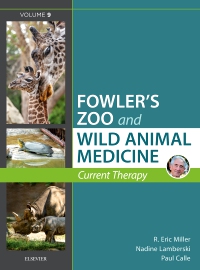

Miller - Fowler's Zoo and Wild Animal Medicine Current Therapy, Volume 9 Elsevier eBook on VitalSource, 1st Edition
Elsevier eBook on VitalSource
Now $134.39
Bringing together a globally diverse range of timely topics related to zoo and wild animals, Fowler’s Zoo and Wild Animal Medicine, Volume 9 is an invaluable tool for any professional working directly with wildlife and zoo animals. The text’s user-friendly format guides readers through biology, anatomy, and special physiology; reproduction; restraint and handling; housing requirements; nutrition and feeding; surgery and anesthesia; diagnostics, and therapeutics for each animal. Two new co-editors and a globally diverse group of expert contributors each lend their expertise on a wide range of new topics — including a new section on emerging wildlife diseases covering topics like MERS, Equine Herpesvirus, and Ebola in great apes. Other new topics integrated into this ninth volume include: stem cell therapy in zoo medicine, cardiac disease in great apes, disease risk assessment in field studies, Tasmanian devil tumors, and the latest information on the elephant herpes virus. With all its synthesized coverage of emerging trends, treatment protocols, and diagnostic updates new to the field, Fowler’s is a reference you don’t want to be without.
-
- NEW! Two new co-editors (for a total of three editors) each lend their expertise on a wide range of new wild and zoo animal topics.
- NEW! Section on emerging wildlife diseases includes chapters on MERS, SARS, Ebola in great apes, and a variety of other emerging wildlife diseases.
-
- Current therapy format ensures that each CT volume in the series covers all new topics that are relevant at the time of publication.
- Synthesized topics offer the right amount of depth — often fewer than 10 pages — to maintain an accessible format.
- General taxon-based format covers all terrestrial vertebrate taxa plus selected topics on aquatic and invertebrate taxa.
- Updated information from the Zoological Information Management System (ZIMS) has been incorporated to keep readers up to date on this worldwide system.
- Globally diverse panel of expert contributors each incorporate the latest research and clinical management of captive and free-ranging wild animals throughout the world.
-
Section 1: General
1. The Role of The Veterinary Advisors in Animal Management Plans
2. Risk Analysis Framework Guidance for Wildlife Health Professionals
3. Wildlife Technologies
4. International Sample Movement: Overview of CITES and Selected National Regulations
5. A Practical Guide for Statistics in Wildlife Studies
6. Opportunities to Inspire the Next Generation of Veterinarians
7. Strategic Planning for Zoo Veterinary Operations
8. Organizational Influence: Navigating the Leadership Road for Zoo Veterinarians
9. Contingency Planning for All-Hazards and Foreign Animal Disease
10. Veterinary Occupational Health and Safety in The Zoo and Wildlife Setting
11. Research Study DesignSection 2: Animal Welfare
12. Overview of Animal Welfare in Zoos
13. Stress and Animal Welfare – Endocrinological Evaluation
14. A Systematic Approach in Diagnosing Behavior Problems
15. Quality of Life Assessment and End of Life Planning for Geriatric Zoo AnimalsSection 3: Conservation Medicine
16. Evaluating Camel Health in Kenya - An Example of One Health in Action
17. Disease Risks to Native Wildlife from Zoos and Aquariums
18. Feral Cat Dilemma
19. The USAID Emerging Pandemic Threats PREDICT Project – Global Detection of Emerging Wildlife Viral Zoonoses
20. Renewable Energy: Effects on WildlifeSection 4: Reproduction
21. Female Infertility in Zoo Animals
22. Changes in Reproductive Management
23. Issues Surrounding Surplus Animals in ZoosSection 5: Therapeutics
24. Stem Cells Therapy in Zoo Medicine
25. Compounding PharmaciesSection 6: Anesthesia and Analgesia
26. Sustained-Release and Long-Acting Opioid Formulations of Interest in Zoological Medicine
27. New Concepts and Considerations in Emergency Response to Accidental Exposure to Potent Anesthetic Drugs In Zoo And Wildlife Medicine
28. Vaporizers and Field Anesthesia Equipment for Free-Ranging Wildlife
29. Perianesthetic Monitoring: Equipment and InterpretationSection 7: Diagnostics
30. Wildlife Necropsy Primer
31. Use of CT and MRI In Zoological Medicine
32. Moving Beyond Survey RadiographsSection 8: Emerging and Changing Infectious Diseases
33. Equine Herpesviruses and Interspecies Infections
34. Ebola Virus Disease in Great Apes
35. Chagas Disease: Wildlife Infection with Trypanosoma Cruzi In A One Health Context
36. The Effects of Climate Change on Disease Spread in Wildlife
37. Prion Diseases in Wildlife
38. Avian Influenza: A Brief Overview of The Pathobiology and Current Status in Domestic And Non-Domestic Species
39. Emerging Reptile Viruses
40. Emerging Diseases in Bats
41. Zika Virus: A Real Threat for Wildlife?
42. An Overview of MERS in the Middle East
43. Diseases Risk to Endemic Animals from Introduced Species on MadagascarSection 9: Infectious Diseases and Parasites
44. Techniques for Vaccinating Wildlife
45. Brucellosis in North American Wildlife
46. Melioidosis In Zoo and Wild AnimalsSection 10: Aquatic
47. Techniques for Addressing Parasites in Saltwater Aquariums
48. Touch-Pools: The Other Side of The Hand
49. Sharks and Medicine
50. Decompression Medicine in Aquatic Species (Fish and Sea Turtle Focus)Section 11: Amphibians and Reptiles
51. Euthanasia of Ectotherms
52. Ranaviral Disease in Reptiles and Amphibians
53. Anuran Reproduction
54. Minimally Invasive Surgery of Amphibians
55. Medical Aspects of The Hungarian Meadow Viper (Vipera Ursinii Rakosiensis) Reintroduction
56. Ophidiomycosis
57. Fibropapillomatosis In Marine Turtles
58. Rehabilitation Medicine of Confiscated Turtles
59. Medical Evaluation of Crocodilians
60. Reptile and Amphibian Analgesia
61. Medical Aspects of Giant Tortoise Relocation in The Galápagos IslandsSection 12: Avian
62. Anti-Fungals In Birds
63. Medical Management of Walk Through Aviaries
64. Systemic Isosporosis In Passerine Birds
65. Bornaviruses In Birds
66. Prosthetic and Orthotic Limbs in Avian Medicine
67. Avian Spirurids
68. Selected Medical Aspects of Bird Reproduction In Ex Situ ConservationSection 13: Marsupials
69. Tasmanian Devil Facial Tumor Disease
70. Medical Aspects of Potoroid Marsupial Conservation Translocations
71. Macropod Pediatric MedicineSection 14: Small Mammals
72. White-Nose Syndrome: Cutaneous Invasive Ascomycosis in Hibernating Bats
73. Naked Mole Rat (Heterocephalus Glaber) Management and Medicine
74. Immobilization, Health and Current Status of Knowledge of Free-Living Capybaras
75. Xenarthra Immobilization and RestraintSection 15: Carnivores
76. Update on Field Anesthesia Protocols for Free-Ranging Lions
77. Overview of African Wild Dog (Lycaon Pictus) Medicine
78. Medicine of Captive Andean Bear
79. Canine Distemper Vaccination in Non-Domestic CarnivoresSection 16: Great Apes
80. Infectious Diseases of Orangutans in Their Home Ranges and in Zoos
81. Medical Aspects of Chimpanzee (Pan Troglodytes) Rehabilitation and Sanctuary Medicine
82. Update on Great Ape Heart Project
83. Great Ape NutritionSection 17: Marine Mammals
84. Marine Mammal Viruses
85. Mycobacteria Pinnipedi
86. Lens Diseases and Anesthetic Considerations for Ophthalmologic Procedures in PinnipedsSection 18: Ruminants
87. Giraffe Husbandry and Welfare
88. Lameness Diagnosis and Management in Zoo Giraffe
89. Mass Mortality Events Affecting Saiga Antelope (Saiga Tatarica) of Central Asia
90. Musk Ox Sedation and Anesthesia
91. Capripoxviruses In Non-Domestic Hoofstock
92. Babesiosis in CervidaeSection 19: Elephants and Rhinoceros
93. Management of Dental Disease in Elephants
94. Elephant Mycobacteriosis: New Diagnostics and Management
95. Elephant Endotheliotropic Herpesvirus
96. Elephant Pregnancy and Parturition - Normal and Abnormal
97. Elephant Care in Southeast Asia
98. Updates in African Rhinoceros Field Immobilization and Translocation
99. Update on Rhinoceros Nutrition
100. Health of The Forest Rhinoceroses of Southeast Asia: Sumatran And Javan Rhinoceroses -
-
Ways of Reading
- The appearance of the text and page layout can be modified according to the capabilities of the reading system (font family and font size, spaces between paragraphs, sentences, words, and letters, as well as color of background and text)
- This e-publication is accessible to the full extent that the file format and types of content allow, on a specific reading device, by default, without necessarily including any additions such as textual descriptions of images or enhanced navigation
- No information about nonvisual reading is available
-
Conformance
- No information is available
-
Navigation
- Table of contents to all chapters of the text via links
- Page list to go to pages from the print source version
-
Rich Content
- No information is available
-
Hazards
- No information is available
-
Product Content
- No information is available
-
Legal Considerations
- No information is available
-
Additional Accessibility Information
- Page breaks included from the original print source
- For readers with color vision deficiency, use of color (e.g., in diagrams, graphics and charts, in prompts, or on buttons inviting a response) is not the sole means of graphical distinction or of conveying information
- E-publication includes basic navigation (usually less detailed than TOC-based navigation)
- Where links, controls or buttons are included in the content, the purpose or functionality of each link, control or button is apparent from the associated text alone - or where it is unclear, separate link, control or button descriptions are provided
- All (or substantially all) textual matter is arranged in a single logical reading order (including text that is visually presented as separate from the main text flow, e.g., in boxouts, captions, tables, footnotes, endnotes, citations, etc.). Non-textual content is also linked from within this logical reading order. (Purely decorative non-text content can be ignored).
- The language of the text has been specified (e.g., via the HTML or XML lang attribute) to optimise text-to-speech (and other alternative renderings), both at the whole document level and, where appropriate, for individual words, phrases or passages in a different language.
-
Ways of Reading


 as described in our