ISBN:
9780323595810
Copyright:
2019
Publication Date:
09-18-2018
Page Count:
204
Imprint:
Elsevier
List Price:
$38.99

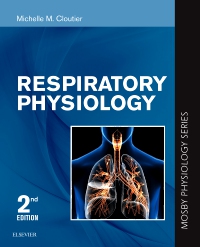
Respiratory Physiology, 2nd Edition
by Michelle M. Cloutier, MD
Elsevier eBook on VitalSource
ISBN:
9780323595810
Copyright:
2019
Publication Date:
09-18-2018
Page Count:
204
Imprint:
Elsevier
List Price:
$38.99
Was
$38.99
Now $37.04
Or $0.00 with a valid access code
Gain a foundational understanding of respiratory physiology and how the respiratory system functions in health and disease. Respiratory Physiology, a volume in the Mosby Physiology Series, explains the fundamentals of this complex subject in a clear and concise manner, while helping you bridge the gap between normal function and disease with pathophysiology content throughout the book.
-
- NEW! Nora AI - an AI-powered learning assistant exclusive to Elsevier ebooks on VitalSource's Bookshelf® platform - offers built-in AI learning support that provides personalized answers based on content from the Elsevier ebook
- Helps you easily master the material in a systems-based curriculum with learning objectives, Clinical Concept boxes, highlighted key words and concepts, chapter summaries, self-study questions, and a comprehensive exam.
- Keeps you current with recent advances in respiratory physiology, and includes a new chapter on new and emerging aspects of the lung.
- Includes nearly 150 clear, 2-color diagrams that simplify complex concepts.
- Features clinical commentaries that show you how to apply what you've learned to real-life clinical situations.
- Enhanced eBook version included with purchase. Your enhanced eBook allows you to access all of the text, figures, and references from the book on a variety of devices.
Complete the Mosby Physiology Series! Systems-based and portable, these titles are ideal for integrated programs.
- Blaustein, Kao, and Matteson: Cellular Physiology and Neurophysiology
- Johnson: Gastrointestinal Physiology
- Koeppen and Stanton: Renal Physiology
- Pappano and Weir: Cardiovascular Physiology
- White, Harrison, and Mehlmann: Endocrine and Reproductive Physiology
- Hudnall: Hematology: A Pathophysiologic Approach
-
-
 Respiratory PhysiologyPaperback
-
-
1. Overview of the respiratory system: Function and Structure
2. Mechanical Properties of the Lung and Chest Wall
3. Dynamic Lung Mechanics
4. Tests of Lung Function
5. Alveolar Ventilation
6. The Pulmonary Circulation
7. Ventilation (V̇), Perfusion (Q̇) & Relationships
8. Oxygen and Carbon Dioxide Transport
9. Pulmonary aspects of acid-base balance and arterial blood gas interpretation
10. Control of Respiration
11. Non-respiratory functions of the lung
12. The lung under special circumstances
APPENDIX
A. ANSWERS TO SELF-STUDY PROBLEMS
B. MULTIPLE-CHOICE EXAMINATION -
-
Ways of Reading
- The appearance of the text and page layout can be modified according to the capabilities of the reading system (font family and font size, spaces between paragraphs, sentences, words, and letters, as well as color of background and text)
- This e-publication is accessible to the full extent that the file format and types of content allow, on a specific reading device, by default, without necessarily including any additions such as textual descriptions of images or enhanced navigation
- No information about nonvisual reading is available
-
Conformance
- No information is available
-
Navigation
- Table of contents to all chapters of the text via links
- Page list to go to pages from the print source version
-
Rich Content
- No information is available
-
Hazards
- No information is available
-
Product Content
- No information is available
-
Legal Considerations
- No information is available
-
Additional Accessibility Information
- Page breaks included from the original print source
- For readers with color vision deficiency, use of color (e.g., in diagrams, graphics and charts, in prompts, or on buttons inviting a response) is not the sole means of graphical distinction or of conveying information
- E-publication includes basic navigation (usually less detailed than TOC-based navigation)
- Where links, controls or buttons are included in the content, the purpose or functionality of each link, control or button is apparent from the associated text alone - or where it is unclear, separate link, control or button descriptions are provided
- All (or substantially all) textual matter is arranged in a single logical reading order (including text that is visually presented as separate from the main text flow, e.g., in boxouts, captions, tables, footnotes, endnotes, citations, etc.). Non-textual content is also linked from within this logical reading order. (Purely decorative non-text content can be ignored).
- The language of the text has been specified (e.g., via the HTML or XML lang attribute) to optimise text-to-speech (and other alternative renderings), both at the whole document level and, where appropriate, for individual words, phrases or passages in a different language.
-
Ways of Reading
Was
$38.99
Now $37.04
Or $0.00 with a valid access code

 as described in our