ISBN:
9780323655477
Copyright:
2022
Publication Date:
12-21-2020
Page Count:
620
Imprint:
Elsevier
List Price:
$79.99

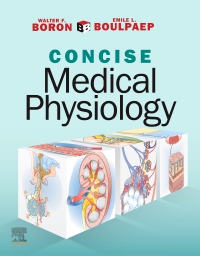
Boron & Boulpaep Concise Medical Physiology Elsevier eBook on Vitalsource, 1st Edition
by Walter F. Boron, MD, PhD and Emile L. Boulpaep, MD
Elsevier eBook on VitalSource
ISBN:
9780323655477
Copyright:
2022
Publication Date:
12-21-2020
Page Count:
620
Imprint:
Elsevier
List Price:
$79.99
Was
$79.99
Now $55.99
Or $0.00 with a valid access code
Medical students and faculty have long looked to Boron & Boulpaep’s Medical Physiology for an unparalleled, comprehensive understanding of complex human physiology. By popular demand, the new Boron & Boulpaep Concise Medical Physiology offers Boron & Boulpaep’s authoritative content in a condensed, entry-level presentation that is well-illustrated and student friendly. You’ll find the same trusted quality and attention to detail as the parent text, with a logically organized format, clear, instructive figures, and online animations—all focused on the essential information you need to know for a solid introduction or a quick review.
-
- Takes a strong molecular and cellular approach that relates these concepts to human physiology and disease
- Presents challenging material in a clear, concise, logically organized format to further facilitate understanding and retention
- Features simplified, didactic illustrations that clearly depict complex concepts
- Focuses on the essentials, making it ideal for programs and courses with limited hours for physiology coverage, or as a review companion to Boron & Boulpaep’s Medical Physiology
- Enhanced eBook version included with purchase. Your enhanced eBook allows you to access all of the text, figures, and references from the book on a variety of devices
-
1. Foundations of Physiology
2. Functional Organization of the Cell
3. Signal Transduction
4. Regulation of Gene Expression
5. Transport of Solutes and Water
6. Electrophysiology of the Cell Membrane
7. Electrical Excitability and Action Potentials
8. Synaptic Transmission and the Neuromuscular Junction
9. Cellular Physiology of Skeletal Muscle
10. Organization of the Nervous System
11. The Neuronal Microenvironment
12. Physiology of Neurons
13. Synaptic Transmission in the Nervous System
14. The Autonomic Nervous System
15. Sensory Transduction
16. Circuits of the Central Nervous System
17. Organization of the Cardiovascular System
18. Blood
19. Arteries and Veins
20. The Microcirculation
21. Cardiac Electrophysiology and the Electrocardiogram
22. The Heart as a Pump
23. Regulation of Arterial Pressure and Cardiac Output
24. Special Circulations
25. Integrated Control of the Cardiovascular System
26. Organization of the Respiratory System
27. Mechanics of Ventilation
28. Acid-Base Physiology
29. Transport of Oxygen and Carbon Dioxide in the Blood
30. Gas Exchange in the Lungs
31. Ventilation and Perfusion of the Lungs
32. Control of Ventilation
33. Organization of the Urinary System
34. Glomerular Filtration and Renal Blood
35. Transport of Sodium and Chloride
36. Transport of Urea Glucose, Other Solutes, Phospate, Calcium, and Magnesium
37. Transport of Potassium
38. Urine Concentration and Dilution
39. Transport of Acids and Bases
40. Integration of Salt and Water Balance
41. Organization of the Gastrointestinal System
42. Gastric Function
43. Pancreatic and Salivary Glands
44. Intestinal Fluid and Electrolyte Movement
45. Nutrient Digestion and Absorption
46. Hepatobiliary Function
47. Organization of Endocrine Control
48. Endocrine Regulation of Growth and Body Mass
49. The Thyroid Gland
50. The Adrenal Gland
51. The Endocrine Pancreas
52. The Parathyroid Glands and Vitamin D
53. Sexual Differentiation
54. The Male Reproductive System
55. The Female Reproductive System
56. Fertilization
57. Fetal and Neonatal Physiology
58. Metabolism
59. Regulation of Body Temperature
60. Exercise Physiology and Sports Science
61. Environmental Physiology
62. The Physiology of Aging -
-
Ways of Reading
- The appearance of the text and page layout can be modified according to the capabilities of the reading system (font family and font size, spaces between paragraphs, sentences, words, and letters, as well as color of background and text)
- This e-publication is accessible to the full extent that the file format and types of content allow, on a specific reading device, by default, without necessarily including any additions such as textual descriptions of images or enhanced navigation
- No information about nonvisual reading is available
-
Conformance
- No information is available
-
Navigation
- Table of contents to all chapters of the text via links
- Page list to go to pages from the print source version
-
Rich Content
- No information is available
-
Hazards
- No information is available
-
Product Content
- No information is available
-
Legal Considerations
- No information is available
-
Additional Accessibility Information
- Page breaks included from the original print source
- For readers with color vision deficiency, use of color (e.g., in diagrams, graphics and charts, in prompts, or on buttons inviting a response) is not the sole means of graphical distinction or of conveying information
- E-publication includes basic navigation (usually less detailed than TOC-based navigation)
- Where links, controls or buttons are included in the content, the purpose or functionality of each link, control or button is apparent from the associated text alone - or where it is unclear, separate link, control or button descriptions are provided
- All (or substantially all) textual matter is arranged in a single logical reading order (including text that is visually presented as separate from the main text flow, e.g., in boxouts, captions, tables, footnotes, endnotes, citations, etc.). Non-textual content is also linked from within this logical reading order. (Purely decorative non-text content can be ignored).
- The language of the text has been specified (e.g., via the HTML or XML lang attribute) to optimise text-to-speech (and other alternative renderings), both at the whole document level and, where appropriate, for individual words, phrases or passages in a different language.
-
Ways of Reading


Was
$79.99
Now $55.99
Or $0.00 with a valid access code

 as described in our