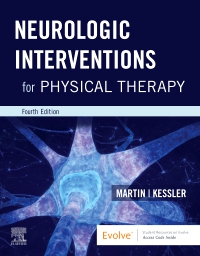

Neurologic Interventions for Physical Therapy - Elsevier eBook on VitalSource, 4th Edition
Elsevier eBook on VitalSource
Now $94.49
Whether your goal is to be a physical therapist or a physical therapist assistant, this book’s comprehensive content will give you in-depth knowledge on the role of neurologic rehabilitation in the treatment of adults and children with neuromuscular impairments and explores concepts in neuroanatomy, motor control and motor learning, and motor development. Neurologic Interventions for Physical Therapy, 4th Edition provides a current framework for neurologic practice and focuses on the precise links between the pathophysiology of neurologic conditions and possible interventions to improve movement outcomes. The text also includes a new chapter on Autism Spectrum Disorder. Helpful learning aids in each chapter include objectives and summaries, open-ended review questions, line drawings and photos, step-by-step illustrated intervention boxes, tables, and charts.
-
- UPDATED! Best evidence for interventions; clear, concise tables; graphics and pictures; and current literature engage you in the spectrum of neurologic conditions and interventions
- NEW! Autism Spectrum Disorder chapter covers clinical features, diagnosis, and intervention, with a special focus on using play and aquatics, to support the integral role of physical therapy in working with children and families with autism
- NEW! Common threads throughout the Children section focus on motor competence as a driving force in a child’s cognitive and language development and highlight how meaningful, fun activities with family and friends encourage children with disabilities to participate
- UPDATED! Neuroanatomy chapter provides a more comprehensive review on nervous system structures and their contributions to patient function and recovery after an injury or neurologic condition
- UPDATED! Adult chapters feature updated information on medical and pharmacological management
- NEW! The Core Set of Outcome Measures for Adults with Neurologic Conditions assists you in measuring common outcomes in the examination and evaluation of patients
- NEW! Emphasis on the evidence for locomotor training, dual-task training, and high intensity gait training are included in the intervention sections
-
- Comprehensive content on the role of neurologic rehabilitation focuses on the treatment of adults and children with neuromuscular impairments and explores concepts in neuroanatomy, motor control and motor learning, and motor development
- Open-ended review questions at the end of each chapter allow you to test your knowledge of material covered in the chapter
- Case studies include subjective and objective observation, assessment, planning, and critical decision-making components, and provide context for you regarding the patient examination and treatment process
- The text uses the language of the APTA Guide to Physical Therapist Practice to ensure you are complying with the APTA best practices
- Over 700 illustrations and photographs detailing anatomy, physiology, evaluation, pathology, and treatment enhance your learning resources
-
SECTION 1: FOUNDATIONS
1. The Roles of the Physical Therapist and Physical Therapist Assistant in Neurologic Rehabilitation
2. Neuroanatomy
3. Motor Control and Motor Learning
4. Motor Development
SECTION 2: CHILDREN
5. Positioning and Handling to Foster Motor Function
6. Cerebral Palsy
7. Myelomeningocele
8. Genetic Disorders
9. Autism Spectrum Disorder
SECTION 3: ADULTS
10. Proprioceptive Neuromuscular Facilitation
11. Stroke
12. Traumatic Brain Injuries
13. Spinal Cord Injuries
14. Other Neurologic Disorders -
-
Ways of Reading
- The appearance of the text and page layout can be modified according to the capabilities of the reading system (font family and font size, spaces between paragraphs, sentences, words, and letters, as well as color of background and text)
- This e-publication is accessible to the full extent that the file format and types of content allow, on a specific reading device, by default, without necessarily including any additions such as textual descriptions of images or enhanced navigation
- No information about nonvisual reading is available
-
Conformance
- No information is available
-
Navigation
- Table of contents to all chapters of the text via links
- Page list to go to pages from the print source version
-
Rich Content
- No information is available
-
Hazards
- No information is available
-
Product Content
- No information is available
-
Legal Considerations
- No information is available
-
Additional Accessibility Information
- Page breaks included from the original print source
- For readers with color vision deficiency, use of color (e.g., in diagrams, graphics and charts, in prompts, or on buttons inviting a response) is not the sole means of graphical distinction or of conveying information
- E-publication includes basic navigation (usually less detailed than TOC-based navigation)
- Where links, controls or buttons are included in the content, the purpose or functionality of each link, control or button is apparent from the associated text alone - or where it is unclear, separate link, control or button descriptions are provided
- All (or substantially all) textual matter is arranged in a single logical reading order (including text that is visually presented as separate from the main text flow, e.g., in boxouts, captions, tables, footnotes, endnotes, citations, etc.). Non-textual content is also linked from within this logical reading order. (Purely decorative non-text content can be ignored).
- The language of the text has been specified (e.g., via the HTML or XML lang attribute) to optimise text-to-speech (and other alternative renderings), both at the whole document level and, where appropriate, for individual words, phrases or passages in a different language.
-
Ways of Reading


 as described in our