
Manual Physical Therapy of the Spine - Elsevier eBook on VitalSource, 3rd Edition
Elsevier eBook on VitalSource
Now $66.49
**Selected for Doody’s Core Titles® 2024 in Physical Therapy**
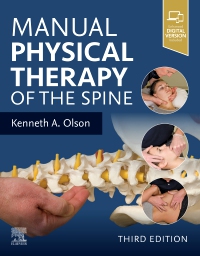
Build your skills in examination and manual therapy treatment techniques! Manual Physical Therapy of the Spine, 3rd Edition provides evidence-based guidelines to manipulation, evaluation, and treatment procedures of the spine and temporomandibular joint. A perfect blend of theory and practice, this text uses an impairment-based approach in showing how to reach an accurate diagnosis and develop an effective plan of care. The book’s photos and drawings — along with some 200 videos — demonstrate examination and manipulation procedures, including therapist hand placement, applied direction of force, and patient positioning. Written by clinician and educator Kenneth Olson, this comprehensive resource will help you improve your clinical reasoning and provide successful outcomes.
-
- NEW! Enhanced eBook version is included with print purchase, which allows students to access all of the text, figures, and references from the book on a variety of devices.
- NEW! Expanded content describes the impact of use of language, pain science education, and a psychologically informed approach in the management of complex musculoskeletal pain conditions.
- NEW! Coverage of clinical reasoning includes additional decision making tools relating to the biopsychosocial approach for spinal and temporomandibular conditions in musculoskeletal and manual physical therapy practice.
- NEW! Updated red flag screening content addresses serious spinal pathologies and assessment of central sensitization, pressure pain thresholds, and impaired sleep.
- Updated research evidence supports the examination/classification, diagnostic accuracy, and treatment of spinal and temporomandibular disorders including mobilization/manipulation and specific therapeutic exercises.
- Updated background information and instructional materials make it easier to integrate manipulation and manual physical therapy examination and treatment procedures into professional education and clinical practice.
-
- Approximately 200 video clips teach the skills needed to effectively implement evidence-based treatment recommendations related to manual therapy, manipulation, and therapeutic exercise.
- Descriptions of manual therapy techniques include evidence-based coverage of the examination and treatment of spine and TMJ disorders, along with discussions of alternative treatment methods and potential adverse effects and contraindications to manipulation.
- Guidelines for completing a comprehensive spinal examination include medical screening, the patient interview, disability assessment, and tests and measures, along with an evaluation of the examination findings and the principles involved in arriving at a diagnosis and plan of care.
- Impairment-based manual physical therapy approach includes a review of the evidence to support its use in evaluating and treating spinal and TMJ conditions.
- Full-color photographs show procedures from multiple angles, illustrating hand and body placement and direction of force.
- Case studies demonstrate the clinical reasoning used in manual physical therapy.
- Clear, consistent format for explaining techniques makes this reference easy to use in the classroom and in the clinical setting.
- Guide to Physical Therapist Practice terminology is used throughout the book for consistency and for easier understanding.
- Expert author Ken Olson is a highly respected international authority on the subject of spinal manipulation in physical therapy.
-
-
 Manual Physical Therapy of the SpinePaperback
-
-
Introduction
2. Spinal Examination and Diagnosis in Orthopaedic Manual Physical Therapy
3. Manipulation: Theory, Practice, and Education
4. Examination and Treatment of Lumbopelvic Spine Disorders
5. Examination and Treatment of Thoracic Spine Disorders
6. Examination and Treatment of Cervical Spine Disorders
7. Examination and Treatment of Temporomandibular Disorders
-
-
Ways of Reading
- The appearance of the text and page layout can be modified according to the capabilities of the reading system (font family and font size, spaces between paragraphs, sentences, words, and letters, as well as color of background and text)
- This e-publication is accessible to the full extent that the file format and types of content allow, on a specific reading device, by default, without necessarily including any additions such as textual descriptions of images or enhanced navigation
- No information about nonvisual reading is available
-
Conformance
- For detailed accessibility information, see Elsevier's website at https://www.elsevier.com/about/accessibility
- For queries regarding accessibility information, contact [email protected]
- The publication was certified on 18-11-2025
-
Navigation
- Table of contents to all chapters of the text via links
-
Rich Content
- No information is available
-
Hazards
- No information is available
-
Product Content
- No information is available
-
Legal Considerations
- No information is available
-
Additional Accessibility Information
- For readers with color vision deficiency, use of color (e.g., in diagrams, graphics and charts, in prompts, or on buttons inviting a response) is not the sole means of graphical distinction or of conveying information
- E-publication includes basic navigation (usually less detailed than TOC-based navigation)
- Where links, controls or buttons are included in the content, the purpose or functionality of each link, control or button is apparent from the associated text alone - or where it is unclear, separate link, control or button descriptions are provided
- All (or substantially all) textual matter is arranged in a single logical reading order (including text that is visually presented as separate from the main text flow, e.g., in boxouts, captions, tables, footnotes, endnotes, citations, etc.). Non-textual content is also linked from within this logical reading order. (Purely decorative non-text content can be ignored).
- The language of the text has been specified (e.g., via the HTML or XML lang attribute) to optimise text-to-speech (and other alternative renderings), both at the whole document level and, where appropriate, for individual words, phrases or passages in a different language.
-
Ways of Reading

 as described in our