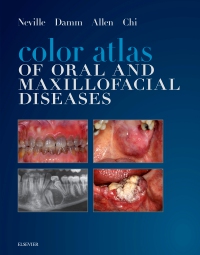

Color Atlas of Oral and Maxillofacial Diseases Elsevier eBook on VitalSource, 1st Edition
Elsevier eBook on VitalSource
Now $122.39
Introducing an essential new practical atlas for dental students and clinicians alike! The Color Atlas of Oral and Maxillofacial Diseases provides comprehensive, practical information on the most common oral and maxillofacial diseases and disorders. This new text uses a quick-access atlas format to help you easily look up clinical signs, diagnosis, and treatments. Nearly 750 high-quality images accompanied by brief narratives demonstrate exactly what clinical signs to look for – making an intervention as timely as possible. Written by four of the top dental authorities in the world, this concise resource is sure to become a clinical favorite. Expert Consult TM eBook version included with purchase. This enhanced eBook experience allows you to search all of the text, figures, and references from the book on a variety of devices
-
- NEW! Quick-access atlas format makes it easy to look up clinical signs, diagnosis, and treatment of oral and maxillofacial diseases
- NEW! Nearly 750 high-quality radiographs and color clinical photos facilitate the identification of lesions and diseases.
- NEW! Comprehensive, focused coverage highlight diseases that may affect the oral and maxillofacial regions.
- NEW! Full-color design and illustrations.
- NEW! Logical organization reflects the sequence in which content is generally presented to predoctoral students.
- NEW! Expert Consult TM eBook version included with purchase allows you to search all of the text, figures, and references from the book on a variety of devices
-
1. Developmental Defects of the Oral and Maxillofacial Region
2. Pathology of Teeth
3. Pulp and Periapical Disease
4. Periodontal Pathology
5. Bacterial Infections
6. Fungal and Protozoal Infections
7. Viral Infections
8. Physical and Chemical Injuries
9. Allergies and Immunologic Diseases
10. Epithelial Pathology
11. Salivary Gland Pathology
12. Soft Tissue Tumors
13. Hematologic Disorders
14. Bone Pathology
15. Odontogenic Cysts and Tumors
16. Dermatologic Diseases
17. Oral Manifestations of Systemic Disease -
-
Ways of Reading
- The appearance of the text and page layout can be modified according to the capabilities of the reading system (font family and font size, spaces between paragraphs, sentences, words, and letters, as well as color of background and text)
- This e-publication is accessible to the full extent that the file format and types of content allow, on a specific reading device, by default, without necessarily including any additions such as textual descriptions of images or enhanced navigation
- No information about nonvisual reading is available
-
Conformance
- No information is available
-
Navigation
- Table of contents to all chapters of the text via links
- Page list to go to pages from the print source version
-
Rich Content
- No information is available
-
Hazards
- No information is available
-
Product Content
- No information is available
-
Legal Considerations
- No information is available
-
Additional Accessibility Information
- Page breaks included from the original print source
- For readers with color vision deficiency, use of color (e.g., in diagrams, graphics and charts, in prompts, or on buttons inviting a response) is not the sole means of graphical distinction or of conveying information
- E-publication includes basic navigation (usually less detailed than TOC-based navigation)
- Where links, controls or buttons are included in the content, the purpose or functionality of each link, control or button is apparent from the associated text alone - or where it is unclear, separate link, control or button descriptions are provided
- All (or substantially all) textual matter is arranged in a single logical reading order (including text that is visually presented as separate from the main text flow, e.g., in boxouts, captions, tables, footnotes, endnotes, citations, etc.). Non-textual content is also linked from within this logical reading order. (Purely decorative non-text content can be ignored).
- The language of the text has been specified (e.g., via the HTML or XML lang attribute) to optimise text-to-speech (and other alternative renderings), both at the whole document level and, where appropriate, for individual words, phrases or passages in a different language.
-
Ways of Reading


 as described in our