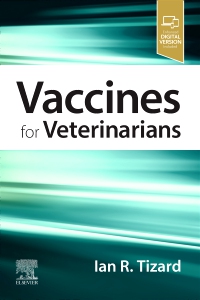

Vaccines for Veterinarians - Elsevier eBook on VitalSource, 1st Edition
Elsevier eBook on VitalSource
Now $70.69
**Selected for Doody’s Core Titles® 2024 in Veterinary Medicine**
Both a theoretical text and a practical handbook, Vaccines for Veterinarians is the first of its kind to bring the basic science of animal vaccination and the practical details of vaccine use together in one single volume. From the first chapter on the history of vaccination and the triumph of rinderpest eradication to the last chapter on the rapidly emerging field of cancer vaccines, this book offers a truly comprehensive grounding in established and emerging vaccines for both major and minor species. Specific topics include viral vectored vaccines, DNA-plasmid vaccines, RNA vaccines, reverse vaccinology, the complexities of adjuvant use, vaccine failures and adverse events, vaccine production and regulation, robotic vaccination machines, contraceptive and production-enhancing vaccines, and so much more. At a time when resistance to human vaccination is receiving much publicity, this evidence-based book is the ideal counter to ill-informed speculation — serving as a timely reminder that vaccination is essential for the control of infectious diseases in animals.
-
- Well-respected and experienced veterinary author, Ian Tizard, provides expert guidance on the topic of vaccinations and immunology in veterinary medicine.
- Expert Consult site offers an online version of the book, making it easy to search the entire book electronically.
- The latest information on viral vectored vaccines keeps you up-to-date on the topic as well as the properties and relative advantages of currently used vectors in animal vaccines.
- Survey of vaccine responses covers the different mechanisms by which the immune system responds to different types of vaccines.
- Inclusion of the latest vaccine technologies discusses the advantages and disadvantages of DNA-plasmid vaccines, RNA vaccines, and more.
- Coverage of adverse events and hypersensitivities includes the best ways to treat them and report them.
- Coverage of passive immunization discusses the growing use of therapeutic monoclonal antibodies in veterinary medicine.
- Coverage of immunotherapy includes recent improvements and new products in both active and passive immunotherapy against animal cancers.
-
-
 Vaccines for VeterinariansPaperback
-
-
1.A Brief History of Veterinary Vaccines
2.The Science Behind Vaccine Use
3.Nonliving Vaccines
4.Living Vaccines
5.Recombinant Vectored Vaccines
6.Nucleic Acid Vaccines and Reverse Vaccinology
7.Adjuvants and Adjuvanticity
8.The Administration of Vaccines
9.Failures in Vaccination
10.Adverse Consequences of Vaccination
11.Production, Assessment and Regulation of Vaccines
12.Passive Immunization
13.Canine Vaccines
14.Feline Vaccines
15.Equine Vaccines
16.Bovine Vaccines
17.Sheep and Goat Vaccines
18.Porcine Vaccines
19.Poultry Vaccines
20.Vaccination of Exotic and Wild Species
21.Fish Vaccines
22.Vaccines Against Parasites
23.Anticancer VaccinesIndex
-
-
Ways of Reading
- The appearance of the text and page layout can be modified according to the capabilities of the reading system (font family and font size, spaces between paragraphs, sentences, words, and letters, as well as color of background and text)
- This e-publication is accessible to the full extent that the file format and types of content allow, on a specific reading device, by default, without necessarily including any additions such as textual descriptions of images or enhanced navigation
- No information about nonvisual reading is available
-
Conformance
- No information is available
-
Navigation
- Table of contents to all chapters of the text via links
- Page list to go to pages from the print source version
-
Rich Content
- No information is available
-
Hazards
- No information is available
-
Product Content
- No information is available
-
Legal Considerations
- No information is available
-
Additional Accessibility Information
- Page breaks included from the original print source
- For readers with color vision deficiency, use of color (e.g., in diagrams, graphics and charts, in prompts, or on buttons inviting a response) is not the sole means of graphical distinction or of conveying information
- E-publication includes basic navigation (usually less detailed than TOC-based navigation)
- Where links, controls or buttons are included in the content, the purpose or functionality of each link, control or button is apparent from the associated text alone - or where it is unclear, separate link, control or button descriptions are provided
- All (or substantially all) textual matter is arranged in a single logical reading order (including text that is visually presented as separate from the main text flow, e.g., in boxouts, captions, tables, footnotes, endnotes, citations, etc.). Non-textual content is also linked from within this logical reading order. (Purely decorative non-text content can be ignored).
- The language of the text has been specified (e.g., via the HTML or XML lang attribute) to optimise text-to-speech (and other alternative renderings), both at the whole document level and, where appropriate, for individual words, phrases or passages in a different language.
-
Ways of Reading

 as described in our