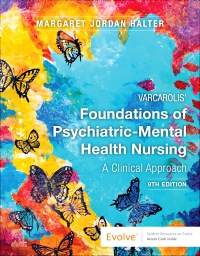

Varcarolis' Foundations of Psychiatric-Mental Health Nursing - Elsevier eBook on VitalSource, 9th Edition
Elsevier eBook on VitalSource
Now $96.29
**Selected for Doody’s Core Titles® 2024 with "Essential Purchase" designation in Psychiatric**
Prepare for psychiatric nursing care with this comprehensive, evidence-based text! Varcarolis' Foundations of Psychiatric-Mental Health Nursing: A Clinical Approach, 9th Edition makes it easy to understand the complexities of psychiatric disorders and how to provide quality mental and behavioral health care. Clinical chapters follow the nursing process framework and progress from theory to application, preparing you for practice with real-world examples. Other notable features include illustrated explanations of the neurobiology of disorders, DSM-5 criteria for major disorders, and nursing care plans. From clinical nurse specialist and lead author Dr. Margaret Jordan Halter, this bestselling text includes new Next Generation NCLEX® content to prepare you for success on your PMHN certification exam.
New Edition Expected Availability: 01-26-2026

Varcarolis' Foundations of Psychiatric-Mental Health Nursing - Elsevier eBook on VitalSource
-
- NEW! Next Generation NCLEX® (NGN) case studies and questions are provided at the end of each clinical chapter to support critical thinking and prepare you for your state board examination
- NEW! Updated screening tools and rating scales make it easier to quantify symptoms and assess the severity of a disorder
- NEW! Advanced practice treatment modalities are addressed separately from the nursing process in the categories of biological interventions (e.g., pharmacotherapy and brain stimulation therapies) and psychological therapies (e.g., cognitive-behavioral therapy and interpersonal therapy)
- NEW! Emphasis on adverse childhood experiences, trauma, and trauma-informed care addresses the near-universal experience of trauma in individuals with psychiatric disorders and conditions
- NEW! Order of clinical chapters mirrors that of the DSM-5, and many of the major disorders are accompanied by specific DSM-5 diagnostic criteria
- NEW! Health Policy boxes are updated to describe current legislation related to mental health
- NEW! The International Classification for Nursing Practice (ICNP), from the International Council of Nurses (ICN), provides straightforward nursing diagnoses that are easily translatable across settings and disciplines
-
- Case Study and Nursing Care Plan boxes include real-life vignettes of patients with specific psychiatric disorders
- Evidence-Based Practice boxes describe recent research studies and how their findings affect nursing practice
- Six-step nursing process is followed in clinical chapters, providing consistent guidelines for comprehensive assessment and intervention
- Learning features include key terms and concepts, key points to remember, critical thinking, and chapter reviews
- Conversational, mentor-like writing style reinforces important information and helps in applying textbook content to the clinical setting
- Coverage of therapeutic communication techniques and nontherapeutic communication provides tips to help you build patient interaction skills
- Assessment Guidelines summarize the steps of patient assessment for various disorders
- Considering Culture boxes discuss the importance of person-centered care in providing competent care to diverse populations in various clinical situations
- Patient and Family Teaching boxes focus on the nurse’s role in helping patients and families understand psychiatric disorders, treatments, complications, and medication side effects
-
-

-

-
 Elsevier Adaptive Quizzing for Halter Varcarolis' Foundations of Psychiatric-Mental Health NursingElsevier Adaptive Quizzing - Next Generation
 -

-
-
UNIT I: Foundations in Theory
1. Mental Health and Mental Illness
2. Theories and Therapies
3. Psychobiology and Psychopharmacology
UNIT II: Foundations for Practice
4. Treatment Settings
5. Cultural Implications
6. Legal and Ethical Considerations
UNIT III: Psychosocial Nursing Tools
7. The Nursing Process and Standards of Care
8. Therapeutic Relationships
9. Therapeutic Communication
10. Stress Responses and Stress Management
UNIT IV: Psychobiological Disorders
11. Childhood and Neurodevelopmental Disorders
12. Schizophrenia Spectrum Disorders
13. Bipolar and Related Disorders
14. Depressive Disorders
15. Anxiety and Obsessive-Compulsive Disorders
16. Trauma, Stressor-Related, and Dissociative Disorders
17. Somatic Symptom Disorders
18. Eating and Feeding Disorders
19. Sleep-Wake Disorders
20. Sexual Dysfunction, Gender Dysphoria, and Paraphilic Disorders
21. Impulse Control Disorders
22. Substance-Related and Addictive Disorders
23. Neurocognitive Disorders
24. Personality Disorders
UNIT V: Trauma Interventions
25. Suicide and Non-suicidal Self-Injury
26. Crisis and Disaster
27. Anger, Aggression, and Violence
28. Child, Older Adult, and Intimate Partner Violence
29. Sexual Assault
UNIT VI: Interventions for Special Populations
30. Dying, Death, and Grieving
31. Older Adults
32. Serious Mental Illness
33. Forensic Nursing
UNIT VII: Other Intervention Modalities
34. Therapeutic Groups
35. Family Interventions
36. Integrative Care -
-
Ways of Reading
- The appearance of the text and page layout can be modified according to the capabilities of the reading system (font family and font size, spaces between paragraphs, sentences, words, and letters, as well as color of background and text)
- This e-publication is accessible to the full extent that the file format and types of content allow, on a specific reading device, by default, without necessarily including any additions such as textual descriptions of images or enhanced navigation
- No information about nonvisual reading is available
-
Conformance
- For detailed accessibility information, see Elsevier's website at https://www.elsevier.com/about/accessibility
- For queries regarding accessibility information, contact [email protected]
- The publication was certified on 18-11-2025
-
Navigation
- Table of contents to all chapters of the text via links
-
Rich Content
- No information is available
-
Hazards
- No information is available
-
Product Content
- No information is available
-
Legal Considerations
- No information is available
-
Additional Accessibility Information
- For readers with color vision deficiency, use of color (e.g., in diagrams, graphics and charts, in prompts, or on buttons inviting a response) is not the sole means of graphical distinction or of conveying information
- E-publication includes basic navigation (usually less detailed than TOC-based navigation)
- Where links, controls or buttons are included in the content, the purpose or functionality of each link, control or button is apparent from the associated text alone - or where it is unclear, separate link, control or button descriptions are provided
- All (or substantially all) textual matter is arranged in a single logical reading order (including text that is visually presented as separate from the main text flow, e.g., in boxouts, captions, tables, footnotes, endnotes, citations, etc.). Non-textual content is also linked from within this logical reading order. (Purely decorative non-text content can be ignored).
- The language of the text has been specified (e.g., via the HTML or XML lang attribute) to optimise text-to-speech (and other alternative renderings), both at the whole document level and, where appropriate, for individual words, phrases or passages in a different language.
-
Ways of Reading

 as described in our