
ISBN:
9780323710626
Copyright:
2024
Publication Date:
03-02-2023
Page Count:
576
Imprint:
Mosby
List Price:
$74.99

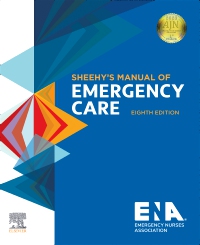
Sheehy's Manual of Emergency Care - Elsevier eBook on VitalSource, 8th Edition
by Emergency Nurses Association (ENA)
Elsevier eBook on VitalSource
ISBN:
9780323710626
Copyright:
2024
Publication Date:
03-02-2023
Page Count:
576
Imprint:
Mosby
List Price:
$74.99
Was
$74.99
Now $65.99
Or $0.00 with a valid access code
**American Journal of Nursing (AJN) Book of the Year Awards, 1st Place in Critical Care- Emergency Nursing, 2023**
**Selected for Doody’s Core Titles® 2024 in Emergency Care**
Sheehy's Manual of Emergency Care, 8th Edition offers complete, up-to-date coverage of the essentials emergency nurses need to know. Each condition commonly seen in the emergency setting is thoroughly addressed, from signs and symptoms, to diagnosis, treatment, developmental considerations, patient education, and more. Updated material and easy-to-reference contents make this resource a must-have for current practice.
-
- Quick-reference format is ideal for updating emergency nursing knowledge and improving patient care
- Detailed discussions for each condition include signs and symptoms, diagnosis/diagnostic testing, treatment/interventions, age/developmental considerations, and patient/family education/discharge instructions
- Authorship from the Emergency Nurses Association for more than 30 years ensures this book is a mainstay for best practices in emergency nursing
- Content presented in a bulleted format provides quick and easy access to vital information
- Practice points highlighted in special boxes offer quick reference to important content
-
- NEW! Restructured table of contents presents anatomically related medical and trauma chapters sequentially for quick reference
- NEW! Considerations for critical care in the ED
- NEW! Considerations for the transgender patient
- NEW! Section on human trafficking in the Interpersonal Violence and Abuse chapter.
- NEW! Section on violent risk assessment in the Workplace Violence chapter
- NEW! Color photos insert visually highlights and clarifies key content
- EXPANDED! Substance Abuse and Addiction Emergencies chapter covers methamphetamines, bath salts, marijuana edibles, opioid abuse/prescription drug abuse, heroin/Narcan, and substance abuse disorder
- EXPANDED! Chapter on end-of-life includes information on palliative care considerations
- UPDATED! Infectious Diseases chapter addresses coronavirus 19 (COVID-19), Ebola, and vector-borne malaria
-
SECTION 1 Basic Emergency Issues
1. Legal Considerations
2. Ethical Considerations
3. Workplace Violence
4. Patient Safety
5. Disaster Considerations
6. Infectious Diseases
7. Triage
8. Care of the Patient With Pain
9. Forensic Considerations
10. Patient Care Management
SECTION 2 Medical and Traumatic Emergencies
11. Respiratory Emergencies
12. Cardiovascular Emergencies
13. Cardiopulmonary Arrest
14. Chest Trauma
15. Shock Emergencies
16. Neurologic Emergencies
17. Head, Neck, and Vertebral Column Trauma
18. Facial, Ocular, ENT, and Dental Emergencies
19. Facial, Ocular, ENT, and Dental Trauma
20. Abdominal and Genitourinary Emergencies
21. Abdominal and Genitourinary Trauma
22. Obstetric and Gynecologic Emergencies
23. Obstetric and Gynecologic Trauma
24. Sexually Transmitted Infections
25. Musculoskeletal Trauma
26. Wound Management
27. Burn Trauma
28. Interpersonal Violence and Abuse
29. Sexual Assault
30. Environmental Emergencies
31. Bite and Sting Emergencies
32. Metabolic Emergencies
33. Hematologic, Oncologic, and Immunologic Emergencies
34. Toxicologic Emergencies
35. Substance Abuse and Addiction Emergencies
SECTION 3 Special Population Considerations
36. Critical Care in the Emergency Department
37. Palliative Care and End-of-Life Considerations
38. Pediatric Emergency and Trauma Considerations
39. Mental Health Emergencies
40. Considerations for the Patient With Morbid Obesity
41. Considerations for the Gender-Diverse Patient
42. Geriatric Emergency and Trauma Considerations -
-
Ways of Reading
- The appearance of the text and page layout can be modified according to the capabilities of the reading system (font family and font size, spaces between paragraphs, sentences, words, and letters, as well as color of background and text)
- This e-publication is accessible to the full extent that the file format and types of content allow, on a specific reading device, by default, without necessarily including any additions such as textual descriptions of images or enhanced navigation
- No information about nonvisual reading is available
-
Conformance
- For detailed accessibility information, see Elsevier's website at https://www.elsevier.com/about/accessibility
- For queries regarding accessibility information, contact [email protected]
- The publication was certified on 18-11-2025
-
Navigation
- Table of contents to all chapters of the text via links
-
Rich Content
- No information is available
-
Hazards
- No information is available
-
Product Content
- No information is available
-
Legal Considerations
- No information is available
-
Additional Accessibility Information
- For readers with color vision deficiency, use of color (e.g., in diagrams, graphics and charts, in prompts, or on buttons inviting a response) is not the sole means of graphical distinction or of conveying information
- E-publication includes basic navigation (usually less detailed than TOC-based navigation)
- Where links, controls or buttons are included in the content, the purpose or functionality of each link, control or button is apparent from the associated text alone - or where it is unclear, separate link, control or button descriptions are provided
- All (or substantially all) textual matter is arranged in a single logical reading order (including text that is visually presented as separate from the main text flow, e.g., in boxouts, captions, tables, footnotes, endnotes, citations, etc.). Non-textual content is also linked from within this logical reading order. (Purely decorative non-text content can be ignored).
- The language of the text has been specified (e.g., via the HTML or XML lang attribute) to optimise text-to-speech (and other alternative renderings), both at the whole document level and, where appropriate, for individual words, phrases or passages in a different language.
-
Ways of Reading
Was
$74.99
Now $65.99
Or $0.00 with a valid access code

 as described in our