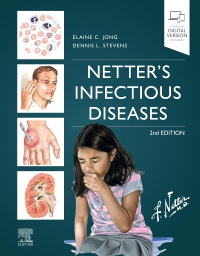

Netter's Infectious Diseases - Elsevier E-Book on VitalSource, 2nd Edition
Elsevier eBook on VitalSource
Now $62.99
**Selected for 2026 Doody's Core Titles as an Essential Purchase in Infectious Disease**
Widely used by students, residents, generalists, and specialists, Netter’s Infectious Diseases, 2nd Edition delivers must-know information on infectious diseases in a highly illustrated, easily accessible format. Concise visual overviews of essential topics provide a convenient, trustworthy way to review the basics of a given infectious disease or issue or to share with patients or staff. Drs. Elaine Jong and Dennis Stevens cover the wide spectrum of illness and disease in this complex field using memorable illustrations by world-renowned artist Frank H. Netter and others, offering a time-saving, authoritative look at infectious disease risk factors, clinical presentations, pathophysiology, and more.
-
- NEW! Nora AI - an AI-powered learning assistant exclusive to Elsevier ebooks on VitalSource's Bookshelf® platform - offers built-in AI learning support that provides personalized answers based on content from the Elsevier ebook
- Covers major conditions and problems such as vaccine-preventable diseases, drug-resistant staph, community acquired pneumonia, surgical infections, pyelonephritis, viral hepatitis, and sexually transmitted infections—and provides updated approaches to diagnosis, treatment, prevention, and standards of care
- Includes new clinical vignettes added to most chapters
- Provides updated and expanded coverage of emerging infectious diseases such as multidrug resistant tuberculosis (MDR-TB), neuroangiostrongyliasis (rat lungworm disease), Ebola virus, Severe Acute Respiratory Disease (SARS), Middle East Respiratory Syndrome (MERS), Coronavirus Infectious Disease-2019 (COVID-19), and novel influenza viruses including public health concerns
- Covers vector-borne diseases including malaria, yellow fever, Zika infections and congenital Zika syndrome, West Nile fever, Lyme disease, tick-borne encephalitis, and Chagas disease plus others
- New chapters on travelers’ diarrhea, cholera, and primary amebic meningoencephalitis debut in the section on international travel and outdoor activities
- Contains memorable parasite life cycles and unforgettable parasite infection clinical vignettes
- Features unparalleled illustrations by Drs. Frank H. Netter, Carlos Machado, and others, as well as radiologic images
- Provides 24 printable patient education brochures in the enhanced ebook
-
-
 Netter's Infectious DiseasesHardcover
-
-
Section 1: Vaccine-Preventable Diseases in Children and Adolescents
1. Introduction to Vaccine-Preventable Diseases in Children and Adolescents
2. Diphtheria and Tetanus
3. Bordetella pertussis and Pertussis (Whooping Cough)
4. Haemophilus influenzae Type b
5. Pneumococcal Disease: Infections Caused by Streptococcus pneumoniae
6. Infections Caused by Neisseria meningitidis
7. Poliomyelitis (Polio) and Polioviruses
8. Influenza
9. Rotavirus Infection
10. Measles
11. Mumps
12. Rubella
13. Varicella-Zoster Virus Infections
14. Hepatitis A Infection and Prevention
15. Hepatitis B Infection
16. Human Papillomavirus Infections and Prevention
Section 2: Skin and Soft-Tissue Infections
17. Introduction to Skin and Soft-Tissue Infections
18. Impetigo
19. Erysipelas and Cellulitis
20. Folliculitis, Furuncles, and Carbuncles
21. Life-Threatening Skin and Soft-Tissue Infections
22. Superficial Dermatophyte Infections of the Skin
23. Herpes Simplex Virus Infection
24. Nontuberculous Mycobacterial Skin and Soft-Tissue Infections
Section 3: Respiratory Tract Infections
25. Introduction to Respiratory Tract Infections
26. Community-Acquired Pneumonia, Bacterial
27. Hospital-Acquired Pneumonia
28. Atypical Pneumonia
29. Aspiration Pneumonia
30. Viral Respiratory Infections
31. Sinus Infections
32. Acute Otitis Media
33. Pharyngitis
34. Acute Exacerbations of Chronic Obstructive Pulmonary Disease
Section 4: Systemic Infections
35. Introduction to Systemic Infections
36. Endocarditis
37. Meningitis
38. Osteomyelitis
39. Urinary Tract Infections
40. Systemic Fungal Infections
Section 5: Surgical Infections
41. Surgical Infections: Introduction and Overview
42. Acute Appendicitis
43. Acute Ascending Cholangitis and Suppurative Toxic Cholangitis
44. Acute Diverticulitis
45. Hydatid Cyst Disease (Echinococcosis)
46. Intraabdominal Abscess
47. Liver Abscess: Pyogenic and Amebic Hepatic Abscess
48. Necrotizing Soft-Tissue Infections
49. Anorectal Abscess and Fistula in Ano
50. Peritonitis
51. Pyomyositis (Pyomyositis Tropicans)
52. Surgical Site Infections
Section 6: Sexually Transmitted Infections
53. Introduction to Sexually Transmitted Infections
54. Trichomonas vaginalis
55. Herpes Simplex Virus Genital Infection
56. Human Immunodeficiency Virus and Acquired Immunodeficiency Syndrome
57. Human Papillomavirus
58. Infections Caused by Chlamydia trachomatis, Including Lymphogranuloma Venereum
59. Infections With Neisseria gonorrhoeae
60. Syphilis (Treponema pallidum)
61. Bacterial Vaginosis, Related Syndromes, and Less Common Sexually Transmitted Diseases
Section 7: Infections Associated With International Travel and Outdoor Activities
62. Introduction to Infections Associated With International Travel and Outdoor Activities
63. Malaria
64. Yellow Fever
65. Travelers’ Diarrhea
66. Cholera
67. Enteric Fever: Typhoid and Paratyphoid Fever
68. Hepatitis A, B, C, D, and E: Focus on Adult Infections
69. Rabies
70. Arboviruses of Medical Importance
71. West Nile Virus Disease
72. Tick-Borne Encephalitis
73. Lyme Disease
74. Leptospirosis
75. Primary Amebic Meningoencephalitis
Section 8: Parasitic Diseases
76. Introduction to Parasitic Diseases
77. Amebiasis
78. Giardia, Cryptosporidium, Cyclospora, and Other Intestinal Protozoa
79. Soil-Transmitted Helminths and Other Intestinal Roundworms
80. Intestinal Cestodes (Tapeworms)
81. Cysticercosis
82. Food-Borne Trematodes: Liver, Lung, and Intestinal Flukes
83. Schistosomiasis
84. Filarial Diseases
85. Echinococcosis: Cystic and Alveolar Disease
86. Trichinellosis
87. Chagas Disease
Section 9: Emerging Infectious Diseases and Pandemics
88. Introduction to Emerging Infectious Diseases and Pandemics
89. Multidrug-Resistant Tuberculosis
90. Anthrax
91. Tularemia
92. Zika Virus Disease and Congenital Zika Virus Infection
93. Neuroangiostrongyliasis (Rat Lungworm Disease)
94. Ebola and Other Emerging Viral Hemorrhagic Fevers
95. Severe Acute Respiratory Syndrome and Coronavirus Disease 2019
96. Middle East Respiratory Syndrome Coronavirus
97. Influenza Virus: A Public Health Concern -
-
Ways of Reading
- The appearance of the text and page layout can be modified according to the capabilities of the reading system (font family and font size, spaces between paragraphs, sentences, words, and letters, as well as color of background and text)
- This e-publication is accessible to the full extent that the file format and types of content allow, on a specific reading device, by default, without necessarily including any additions such as textual descriptions of images or enhanced navigation
- No information about nonvisual reading is available
-
Conformance
- No information is available
-
Navigation
- Table of contents to all chapters of the text via links
- Page list to go to pages from the print source version
-
Rich Content
- No information is available
-
Hazards
- No information is available
-
Product Content
- No information is available
-
Legal Considerations
- No information is available
-
Additional Accessibility Information
- Page breaks included from the original print source
- For readers with color vision deficiency, use of color (e.g., in diagrams, graphics and charts, in prompts, or on buttons inviting a response) is not the sole means of graphical distinction or of conveying information
- E-publication includes basic navigation (usually less detailed than TOC-based navigation)
- Where links, controls or buttons are included in the content, the purpose or functionality of each link, control or button is apparent from the associated text alone - or where it is unclear, separate link, control or button descriptions are provided
- All (or substantially all) textual matter is arranged in a single logical reading order (including text that is visually presented as separate from the main text flow, e.g., in boxouts, captions, tables, footnotes, endnotes, citations, etc.). Non-textual content is also linked from within this logical reading order. (Purely decorative non-text content can be ignored).
- The language of the text has been specified (e.g., via the HTML or XML lang attribute) to optimise text-to-speech (and other alternative renderings), both at the whole document level and, where appropriate, for individual words, phrases or passages in a different language.
-
Ways of Reading

 as described in our