ISBN:
9780323825573
Copyright:
2023
Publication Date:
07-29-2022
Page Count:
448
Imprint:
Elsevier
List Price:
$209.99
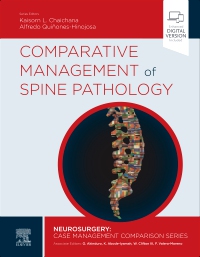
Comparative Management of Spine Pathology, 1st Edition
by Kaisorn Chaichana, MD and Alfredo Quinones-Hinojosa, MD, FAANS, FACS
Hardcover
ISBN:
9780323825573
Copyright:
2023
Publication Date:
07-29-2022
Page Count:
448
Imprint:
Elsevier
List Price:
$209.99
Was
$209.99
Now $188.99
Free Shipping!
In Stock
Unique in the field, Comparative Management of Spine Pathology presents commonly encountered spinal cases with side-by-side, case-by-case comparisons that clearly show how various experts would handle the same case. This second volume in the Neurosurgery: Case Management Comparison Series offers multiple opinions from international experts in both neurosurgery and orthopaedics, each of whom explains their preferred approach and management style for the same case. This format allows for quick and helpful comparisons of different ways to approach a lesion, advantages and disadvantages of each approach, and what each expert is looking for in how they would manage a particular case.
-
- Offers 4 expert opinions on each case in a templated format designed to help you quickly make side-by-side comparisons—an ideal learning tool for both trainee and practicing neurosurgeons and orthopaedic surgeons for board review and case preparation
- Helps you easily grasp different approaches to spine management with different expert approaches to the same case and summaries from the editors on the advantages and disadvantages to each approach
- Features a wide variety of management decisions, from preoperative studies to surgical approach, surgical adjuncts, and postoperative care, from experts in the field who specialize in different aspects of spine surgery
- Presents 70 cases in the areas of degenerative spine, traumatic spine, spinal deformity, spinal oncology, and miscellaneous topics such as epidural abscess, osteomyelitis, and post-instrumentation infection
- Enhanced eBook version included with purchase. Your enhanced eBook allows you to access all of the text and figures from the book on a variety of devices
-
1. Grade 1 spondylolisthesis without instability on flexion/extension and claudication
2. Grade 1 spondy with back pain only
3. Recurrent herniated disc at the same level in a young patient
4. Adjacent Segment Disease after Anterior Cervical Decompression and Fusion
5. Second herniated disc (same level) in a young patient
6. Recurrent Stenosis after Laminectomy
7. Multilevel cervical stenosis from ossified posterior longitudinal ligaments
8. Thoracic Disc Herniation
9. Cervical Spondylotic Radiculopathy and Myelopathy from Facet and Uncovertebral Hypertrophy
10. One level cervical radiculopathy from a herniated disc
11. Lumbar pseudoarthrosis
12. Anterior C1-C2 pannus
13. High lumbar stenosis (thoracolumbar junction)
14. Cervical stenosis with preservation of lordosis
15. Single level disc disease with back pain
16. Radiculopathy from foraminal stenosis (
17. Thoracic ligamentous hypertrophy causing stenosis
18. C1-C2 Facet Arthropathy
19. Migrated interbody
20. Cervical myelopathy
21. Failed Back Surgery Syndrome
22. Osteoporotic compression fracture
23. Hangman’s Fracture
24. Compression fracture with back pain
25. Burst fracture without PLC injury
26. Fracture after kyphoplasty
Section 2. Traumatic Spine
27. Pure Bone Thoracolumbar Chance Fracture
28. Central cord syndrome without instability
29. Penetrating Spine Trauma
30. C1 Fracture
31. Acute Spinal Cord Injury
32. Chronic L5 pars fractures with back pain and spondylolisthesis
33. Cervical jumped facets
34. Proximal Junctional Kyphosis after Deformity Surgery
35. Coronal Deformity
36. Coronal and sagittal deformity with back pain (adult idiopathic)
37. Adolescent idiopathic deformity
38. Flat back after fusion
Section 3. Spinal Deformity
39. Cervical kyphosis
40. Degenerative scoliosis with radiculopathy
41. Iatrogenic deformity after Harrington rod
42. Iatrogenic kyphoscoliosis
43. Broken rod after scoliosis correction with back pain
44. Spine metastasis
45. Diffuse Mets to Spine with Lumbar Stenosis
46. Spinal Chondrosarcoma
47. Intradural Extramedullary Tumor
48. Spinal Metastasis w/ kyphotic deformity
49. Multiple Spine Metastasis with One Level Symptomatic
Section 4. Spinal Oncology
50. Gordon Deen
51. Thoracic Spine Metastasis with Acute Myelopathy
52. Thoracic intramedullary lesions
53. Thoracolumbar Intradural Lesion
54. Cervico-Medullary Junction Lesion
55. Metastatic Lesion to the Cervico-Thoracic Junction
56. GBM
57. Foramen Magnum Meningioma
58. Thoracic Intradural Extramedullary Lesion
59. Cervical chordoma
60. Sacral chordoma
61. Spontaneous CSF Leak
62. Lumbar Osteomyelitis and Diskitis
63. Adult Basilar Invagination
64. Spinal Type I AVF
65. Cavernous Malformation
66. Spinal hemangioblastoma
67. Chiari malformation
Section 5. Other
68. Chiari Malformation with Recurrent Symptoms
69. Tethered cord
70. Chronic Adhesive Arachnoiditis with Spinal Cord Dysfunction -
No accessibility information is available for this product.
Was
$209.99
Now $188.99
Free Shipping!
In Stock

 as described in our