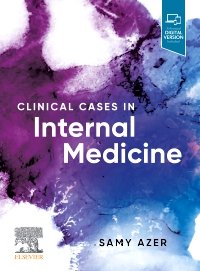

Clinical Cases in Internal Medicine Elsevier eBook on VitalSource, 1st Edition
Elsevier eBook on VitalSource
Now $24.29
The book of 50 clinical cases covers a large part of the internal medicine curriculum. It fills the gap between theoretical knowledge and clinical practice and allows students to practice their clinical diagnostic skills and the development of management plans. Each of the cases is discussed using logical and scientific approaches and provides model answers to questions. Take-home messages throughout outline key points for examination revision. The book will stimulate self-directed learning and a deeper understanding of internal medicine. Readers will be able to test their understanding and the ability to answer short answer questions and multiple-choice questions.
-
- More than 50 clinical cases, covering the core undergraduate medicine curriculum
- Case discussions using a logical and scientific approach to help students achieve their own diagnoses
- Model answers for comparison, to improve learning outcomes
- Summary of fundamental points for examination revision
- Useful up-to-date resources
- Short-answer and multiple-choice questions to test knowledge
- Diagrams and tables to deepen understanding and consolidate essential concepts
- Includes an Enhanced eBook version with purchase. The enhanced eBook allows the end user to access all of the text, figures, and references from the book on a variety of devices
-
-
 Clinical Cases in Internal MedicinePaperback
-
-
Section 1. Gastroenterology and Hepatobiliary Systems
Section 2. Cardiovascular and Respiratory Systems
Section 3. Nervous System
Section 4. Rheumatology and Immune System
Section 5. Endocrine System
Section 6. Haematology Ststem
Section 7. Renal SystemIndex of cases
1. Peptic ulcer
2. Malabsorption, coeliac disease
3. Colon cancer
4. Cirrhosis and portal hypertension
5. Inflammatory bowel disease
6. Hepatitis
7. Acute pancreatitis
8. Acute diarrhoea
9. Irritable bowl syndrome
10. Bronchial asthma
11. Pulmonary tuberculosis
12. Pneumonia
13. Chronic obstructive pulmonary disease
14. Pulmonary embolism
15. Myocardial infarction and atherosclerosis
16. Congestive heart failure and mitral stenosis
17. Aortic stenosis and syncope
18. Heart block and syncope
19. Lung cancer
20. Parkinson’s disease
21. Stroke
22. Disc prolapse
23. Meningitis
24. Myasthenia gravis
25. Heat stroke
26. Benign paroxysmal positional vertigo
27. Diabetic polyneuropathy
28. Rheumatoid arthritis
29. Osteoarthritis
30. Osteoporosis
31. Systemic lupus erythematosus
32. Reactive arthritis
33. Gout
34. Anaphylaxis
35. Acromegaly
36. Hyperthyroidism
37. Adrenal tumour
38. Metabolic syndrome, diabetes mellitus type 2
39. Diabetes mellitus, type 1
40. Addison’s disease
41. Iron deficiency anaemia
42. Multiple myeloma
43. Immune thrombocytopenic purpura
44. Chronic myeloid leukaemia.
45. Glucose-6-phosphate dehydrogenase deficiency-Haemolysis
46. Fever- Malaria
47. Acute renal failure
48. Nephrotic syndrome
49. Chronic renal failure
50. Urinary tract infection -
-
Ways of Reading
- The appearance of the text and page layout can be modified according to the capabilities of the reading system (font family and font size, spaces between paragraphs, sentences, words, and letters, as well as color of background and text)
- This e-publication is accessible to the full extent that the file format and types of content allow, on a specific reading device, by default, without necessarily including any additions such as textual descriptions of images or enhanced navigation
- No information about nonvisual reading is available
-
Conformance
- No information is available
-
Navigation
- Table of contents to all chapters of the text via links
- Page list to go to pages from the print source version
-
Rich Content
- No information is available
-
Hazards
- No information is available
-
Product Content
- No information is available
-
Legal Considerations
- No information is available
-
Additional Accessibility Information
- Page breaks included from the original print source
- For readers with color vision deficiency, use of color (e.g., in diagrams, graphics and charts, in prompts, or on buttons inviting a response) is not the sole means of graphical distinction or of conveying information
- E-publication includes basic navigation (usually less detailed than TOC-based navigation)
- Where links, controls or buttons are included in the content, the purpose or functionality of each link, control or button is apparent from the associated text alone - or where it is unclear, separate link, control or button descriptions are provided
- All (or substantially all) textual matter is arranged in a single logical reading order (including text that is visually presented as separate from the main text flow, e.g., in boxouts, captions, tables, footnotes, endnotes, citations, etc.). Non-textual content is also linked from within this logical reading order. (Purely decorative non-text content can be ignored).
- The language of the text has been specified (e.g., via the HTML or XML lang attribute) to optimise text-to-speech (and other alternative renderings), both at the whole document level and, where appropriate, for individual words, phrases or passages in a different language.
-
Ways of Reading

 as described in our