ISBN:
9780323930802
Copyright:
2025
Publication Date:
02-22-2024
Page Count:
640
Imprint:
Elsevier
List Price:
$58.99

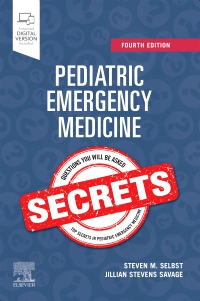
Pediatric Emergency Medicine Secrets - Elsevier E-Book on VitalSource, 4th Edition
by Steven M. Selbst, MD, FAAP, FACEP and Jillian S. Savage DO FAAP, DO, FAAP
Elsevier eBook on VitalSource
ISBN:
9780323930802
Copyright:
2025
Publication Date:
02-22-2024
Page Count:
640
Imprint:
Elsevier
List Price:
$58.99
Was
$58.99
Now $41.29
Or $0.00 with a valid access code
For more than 30 years, the highly regarded Secrets Series® has provided students and practitioners in all areas of health care with concise, focused, and engaging resources for quick reference and review. Pediatric Emergency Medicine Secrets, 4th Edition, offers practical, up-to-date coverage of the full range of essential topics in this dynamic field. This highly regarded resource features the Secrets’ popular question-and-answer format that also includes lists, tables, pearls, memory aids, and an easy-to-read style – making inquiry, reference, and review quick, easy, and enjoyable.
-
- The proven Secrets Series® format gives you the most return for your time – succinct, easy to read, engaging, and highly effective
- Fully revised and updated throughout, making it an excellent resource for understanding both common and unusual pediatric emergency conditions
- New chapters on High Altitude Illness; Disaster Preparedness; Risk Management and Legal Issues; and Point-of-Care Ultrasound
- Top 100 Secrets and Key Points boxes provide a fast overview of the secrets you must know for success in practice and in your coursework
- Bulleted lists, mnemonics, practical tips from global leaders in the field – all providing a concise overview of important content
- Portable size makes it easy to carry with you for quick reference or review anywhere, anytime
- An eBook version is included with purchase. The eBook allows you to access all of the text, figures, and references, with the ability to search, customize your content, make notes and highlights, and have content read aloud
-
-
 Pediatric Emergency Medicine SecretsPaperback
-
-
I. Advanced Life Support
1. Childhood resuscitation
2. Neonatal resuscitation
3. Respiratory failure
4. Shock
II. Chief Complaints
5. Abdominal pain
6. Altered mental status
7. Apnea, sudden infant death syndrome, and brief resolved unexplained events
8. Chest pain
9. Cough
10. Crying and irritability in the young child
11. Diarrhea
12. Ear pain
13. Fever
14. Foreign bodies in children
15. Headache
16. Hematuria and dysuria
17. Hypertension
18. Jaundice
19. Limp
20. Neck masses
21. Pediatric rashes
22. Scrotal pain
23. Sore throat
24. Stiff neck
25. Stridor
26. Syncope
27. Vaginal bleeding/discharge
28. Vomiting
III. Medical Emergencies
29. Anaphylaxis
30. Cardiac emergencies
31. Central nervous system emergencies
32. Endocrine disorders
33. Fluids and electrolytes
34. Gastrointestinal emergencies
35. Gynecologic emergencies
36. Hematologic and oncologic emergencies
37. Infectious disease emergencies
38. Ophthalmologic emergencies
39. Poisonings
40. Psychiatric emergencies
41. Respiratory emergencies
42. Technology-assisted children-acute care
IV. Surgical Emergencies
43. Dental/periodontal emergencies
44. General surgery emergencies
45. Neurosurgical emergencies
46. Orthopedic emergencies
47. Otorhinolaryngology emergencies
48. Urologic emergencies
V. Trauma
49. Abdominal trauma
50. Burns and smoke inhalation
51. Child abuse
52. Sexual assault
53. Dental injuries
54. Extremity injuries
55. Eye injuries
56. Head trauma
57. Minor trauma
58. Multiple trauma
59. Neck and cervical spine trauma
60. Pelvic trauma and genitourinary injury
61.thoracic trauma
VI. Environmental Emergencies
62. Bites and stings
63. Drowning
64. Electrical and lightning injuries
65. Hypothermia and hyperthermia
66. High-altitude illness
VII. Special Topics
67. Chemical and biological terrorism
68. Disaster preparedness
69. Emergency medical services and transport medicine
70. Patient safety and quality improvement
71. Risk management and legal issues
72. Sedation and analgesia
73. Point-of-care ultrasound -
-
Ways of Reading
- The appearance of the text and page layout can be modified according to the capabilities of the reading system (font family and font size, spaces between paragraphs, sentences, words, and letters, as well as color of background and text)
- This e-publication is accessible to the full extent that the file format and types of content allow, on a specific reading device, by default, without necessarily including any additions such as textual descriptions of images or enhanced navigation
- No information about nonvisual reading is available
-
Conformance
- No information is available
-
Navigation
- Table of contents to all chapters of the text via links
- Page list to go to pages from the print source version
-
Rich Content
- No information is available
-
Hazards
- No information is available
-
Product Content
- No information is available
-
Legal Considerations
- No information is available
-
Additional Accessibility Information
- Content is enhanced with ARIA roles to optimize organization and facilitate navigation
- Page breaks included from the original print source
- For readers with color vision deficiency, use of color (e.g., in diagrams, graphics and charts, in prompts, or on buttons inviting a response) is not the sole means of graphical distinction or of conveying information
- E-publication includes basic navigation (usually less detailed than TOC-based navigation)
- Where links, controls or buttons are included in the content, the purpose or functionality of each link, control or button is apparent from the associated text alone - or where it is unclear, separate link, control or button descriptions are provided
- All (or substantially all) textual matter is arranged in a single logical reading order (including text that is visually presented as separate from the main text flow, e.g., in boxouts, captions, tables, footnotes, endnotes, citations, etc.). Non-textual content is also linked from within this logical reading order. (Purely decorative non-text content can be ignored).
- The language of the text has been specified (e.g., via the HTML or XML lang attribute) to optimise text-to-speech (and other alternative renderings), both at the whole document level and, where appropriate, for individual words, phrases or passages in a different language.
-
Ways of Reading
Was
$58.99
Now $41.29
Or $0.00 with a valid access code

 as described in our