
ISBN:
9780443106491
Copyright:
2025
Publication Date:
01-18-2024
Page Count:
320
Imprint:
Saunders
List Price:
$38.99

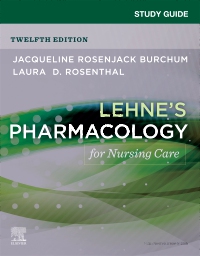
Study Guide for Lehne's Pharmacology for Nursing Care - Elsevier eBook on VitalSource, 12th Edition
by Jacqueline Rosenjack Burchum, DNSc, FNP-BC, CNE and Laura D. Rosenthal, DNP, RN, ACNP-BC, FAANP
Elsevier eBook on VitalSource
ISBN:
9780443106491
Copyright:
2025
Publication Date:
01-18-2024
Page Count:
320
Imprint:
Saunders
List Price:
$38.99
Was
$38.99
Now $34.31
Or $0.00 with a valid access code
Master nursing pharmacology with this practical study guide that incorporates the latest NCLEX® item types! Corresponding to the chapters in Lehne's Pharmacology for Nursing Care, 12th Edition, this comprehensive workbook provides a thorough review of the most important textbook content. Clinical judgment and study questions help you apply your drug knowledge to nursing care, prioritize tasks, and develop clinical decision-making skills; patient teaching scenarios help you learn effective patient education. With a Case Study for the Next-Generation NCLEX® Exam (NGN) in each unit, this study guide provides an excellent review for the NGN and for safe clinical practice.
-
-
 Lehne's Pharmacology for Nursing Care - Elsevier e-Book on VitalSourceElsevier eBook on VitalSource
 -
 Lehne's Pharmacology for Nursing CarePaperback
-
-
- Reinforcement of key textbook content equips you for success on the Next-Generation NCLEX® Exam (NGN) and for patient safety in clinical practice
- NCLEX® Examination–style questions in each chapter include multiple-choice, multiple-select, and alternate-item formats, preparing you for success on the NGN and for safe clinical practice
- Dosage Calculation questions in every clinical chapter provide important practice in applying drug information and providing medication safety
- Focus on implications of drugs and drug classes on patient care includes activities and questions that are designed for you to answer "How do the drugs work in the body?" and "How do these drug actions impact patient care?"
- Answer key with rationales is included in the back of the book for immediate feedback and remediation
-
- NEW! Updated content ensures that information is consistent with the Lehne's Pharmacology for Nursing Care, 12th Edition textbook, and reflects the latest FDA drug approvals, withdrawals, and therapeutic uses
- NEW! A standalone case study for the Next-Generation NCLEX® (NGN) is included in every unit
-
UNIT ONE Introduction
1. Orientation to Pharmacology
2. Application of Pharmacology in Nursing Practice
3. Drug Regulation, Development, Names, and Information
UNIT TWO Basic Principles of Pharmacology
4. Pharmacokinetics
5. Pharmacodynamics
6. Drug Interactions
7. Adverse Drug Reactions and Medication Errors
8. Individual Variation to Drug Responses
9. Genetic and Genomic Considerations
10. Introduction to Immunomodulators
UNIT THREE Drug Therapy Across the Life Span
11. Drug Therapy During Pregnancy and Breastfeeding
12. Drug Therapy in Pediatric Patients
13. Drug Therapy in Older Adult Patients
UNIT FOUR Peripheral Nervous System Drugs
Section 1 Introduction
14. Basic Principles of Neuropharmacology
15. Physiology of the Peripheral Nervous System
Section 2 Cholinergic Drugs
16. Muscarinic Agonists
17. Muscarinic Antagonists
18. Cholinesterase Inhibitors and Their Use in Myasthenia Gravis
19. Drugs That Block Nicotinic Cholinergic Transmission
Section 3 Adrenergic Drugs
20. Adrenergic Agonists
21. Adrenergic Antagonists
22. Indirect-Acting Antiadrenergic Agents
UNIT FIVE Central Nervous System Drugs
Section 4 Introduction
23. Introduction to Central Nervous System Pharmacology
Section 5 Drugs for Neurodegenerative Disorders
24. Drugs for Parkinson Disease
25. Drugs for Alzheimer Disease
26. Drugs for Multiple Sclerosis
Section 6 Neurologic Drugs
27. Drugs for Seizure Disorders
28. Drugs for Muscle Spasm and Spasticity
Section 7 Drugs for Pain
29. Local Anesthetics
30. General Anesthetics
31. Opioid Analgesics, Opioid Antagonists, and Nonopioid Centrally Acting Analgesics
32. Pain Management in Patients With Cancer
33. Drugs for Headache
Section 8 Psychotherapeutic Drugs
34. Antipsychotic Agents and Their Use in Schizophrenia
35. Antidepressants
36. Drugs for Bipolar Disorder
37. Sedative-Hypnotic Drugs
38. Management of Anxiety Disorders
39. Central Nervous System Stimulants and Attention-Deficit/Hyperactivity Disorder
Section 9 Substance Use Disorders
40. Substance Use Disorders I: Basic Considerations
41. Substance Use Disorders II: Alcohol
42. Substance Use Disorders III: Nicotine
43. Substance Use Disorders IV: Major Drugs of Abuse Other Than Alcohol and Nicotine
UNIT SIX Drugs That Affect Fluid and Electrolyte Balance
44. Diuretics
45. Agents Affecting the Volume and Ion Content of Body Fluids
UNIT SEVEN Drugs That Affect the Heart, Blood Vessels, and Blood
46. Review of Hemodynamics
47. Drugs Acting on the Renin-Angiotensin-Aldosterone System
48. Calcium Channel Blockers
49. Vasodilators
50. Drugs for Hypertension
51. Drugs for Heart Failure
52. Antidysrhythmic Drugs
53. Drugs That Help Normalize Cholesterol and Triglyceride Levels
54. Drugs for Angina Pectoris
55. Anticoagulant, Antiplatelet, and Thrombolytic Drugs
56. Management of ST-Elevation Myocardial Infarction
57. Drugs for Hemophilia
58. Drugs for Deficiency Anemias
59. Hematopoietic Agents
UNIT EIGHT Drugs for Endocrine Disorders
60. Drugs for Diabetes Mellitus
61. Drugs for Thyroid Disorders
62. Drugs Related to Hypothalamic and Pituitary Function
63. Drugs for Disorders of the Adrenal Cortex
UNIT NINE Reproductive Health
64. Estrogens and Progestins: Basic Pharmacology and Noncontraceptive Applications
65. Birth Control
66. Drug Therapy for Infertility
67. Drugs That Affect Uterine Function
68. Androgens
69. Drugs for Erectile Dysfunction and Benign Prostatic Hyperplasia
70. Transgender Health
UNIT TEN Anti-inflammatory, Antiallergic, and Immunologic Drugs
71. Review of the Immune System
72. Childhood Immunization
73. Immunosuppressants
74. Antihistamines
75. Cyclooxygenase Inhibitors: Nonsteroidal Antiinflammatory Drugs and Acetaminophen
76. Glucocorticoids in Nonendocrine Disorders
UNIT ELEVEN Drugs for Bone and Joint Disorders
77. Drug Therapy for Rheumatoid Arthritis
78. Drug Therapy for Gout
79. Drugs Affecting Calcium Levels and Bone Mineralization
UNIT TWELVE Respiratory Tract Drugs
80. Drugs for Asthma and Chronic Obstructive Pulmonary Disease
81. Drugs for Allergic Rhinitis, Cough, and Colds
UNIT THIRTEEN Gastrointestinal Drugs
82. Drugs for Peptic Ulcer Disease
83. Laxatives
84. Other Gastrointestinal Drugs
UNIT FOURTEEN Nutrition and Complementary Therapy
85. Vitamins
86. Drugs for Weight Loss
87. Complementary and Alternative Therapy
UNIT FIFTEEN Therapy of Infectious Diseases
88. Basic Principles of Antimicrobial Therapy
89. Drugs That Weaken the Bacterial Cell Wall I: Penicillins
90. Drugs That Weaken the Bacterial Cell Wall II: Other Drugs
91. Bacteriostatic Inhibitors of Protein Synthesis: Tetracyclines, Macrolides, and Others
92. Aminoglycosides: Bactericidal Inhibitors of Protein Synthesis
93. Sulfonamide Antibiotics and Trimethoprim
94. Drug Therapy for Urinary Tract Infections
95. Antimycobacterial Agents: Drugs for Tuberculosis
96. Miscellaneous Antibacterial Drugs: Fluoroquinolones, Metronidazole, Daptomycin, Rifampin, Rifaximin, and Fidaxomicin
97. Antifungal Agents
98. Antiviral Agents I: Drugs for Non-HIV Viral Infections
99. Antiviral Agents II: Drugs for HIV Infection and Related Opportunistic Infections
100. Drug Therapy for Sexually Transmitted Infections
101. Antiseptics and Disinfectants
UNIT SIXTEEN Chemotherapy of Parasitic Diseases
102. Anthelmintics
103. Antiprotozoal Drugs I: Antimalarial Agents
104. Antiprotozoal Drugs II: Miscellaneous Agents
105. Ectoparasiticides
UNIT SEVENTEEN Cancer Chemotherapy
106. Basic Principles of Cancer Chemotherapy
107. Anticancer Drugs I: Cytotoxic Agents
108. Anticancer Drugs II: Hormonal Agents, Targeted Drugs, and Other Noncytotoxic Anticancer Drugs
UNIT EIGHTEEN Miscellaneous Drugs and Therapies
109. Drugs for Eye Conditions and Diseases
110. Drugs for Skin Conditions
111. Drugs for Ear Conditions
UNIT NINETEEN Toxicology
112. Management of Poisoning
113. Potential Weapons of Biologic, Radiologic, and Chemical Terrorism
Answer Key -
-
Ways of Reading
- The appearance of the text and page layout can be modified according to the capabilities of the reading system (font family and font size, spaces between paragraphs, sentences, words, and letters, as well as color of background and text)
- This e-publication is accessible to the full extent that the file format and types of content allow, on a specific reading device, by default, without necessarily including any additions such as textual descriptions of images or enhanced navigation
- All content can be read as read aloud speech or dynamic braille
- Has alternative text descriptions for images
-
Conformance
- The publication contains a conformance statement that it meets the EPUB Accessibility 1.1, WCAG 2.1, Level AA standard. Please see https://bornaccessible.benetech.org/certified-publishers/ for further details of our compatibility testing.
- The certifier's credential is https://bornaccessible.benetech.org/certified-publishers/
- For detailed accessibility information, see Elsevier's website at https://www.elsevier.com/about/accessibility
- For queries regarding accessibility information, contact [email protected]
- The publication was certified on 14-02-2026
-
Navigation
- Table of contents to all chapters of the text via links
- Elements such as headings, tables, etc. for structured navigation
- Page list to go to pages from the print source version
-
Rich Content
- Information-rich images are described by extended descriptions
-
Hazards
- The publication contains no hazards
-
Product Content
- The primary content is text.
- Content includes a significant number of actionable (clickable) web links to external content, downloadable resources, supplementary material, etc.
- Content includes a significant number of actionable (clickable) cross-references, hyperlinked notes and annotations, or with other actionable links between largely textual elements (e.g., quiz/test questions, 'choose your own ending', etc.).
- Content includes figures, diagrams, charts and/or graphs, including other 'mechanical' (i.e. non-photographic) illustrations.
-
Legal Considerations
- No information is available
-
Additional Accessibility Information
- Content is enhanced with ARIA roles to optimize organization and facilitate navigation
- Page breaks included from the original print source
- For readers with color vision deficiency, use of color (e.g., in diagrams, graphics and charts, in prompts, or on buttons inviting a response) is not the sole means of graphical distinction or of conveying information
- The body text is presented with a contrast ratio of at least 4.5:1 (or 3:1 for large/heading text)
- Ultra-high contrast between text and background
- E-publication includes basic navigation (usually less detailed than TOC-based navigation)
- Where links, controls or buttons are included in the content, the purpose or functionality of each link, control or button is apparent from the associated text alone - or where it is unclear, separate link, control or button descriptions are provided
- All (or substantially all) textual matter is arranged in a single logical reading order (including text that is visually presented as separate from the main text flow, e.g., in boxouts, captions, tables, footnotes, endnotes, citations, etc.). Non-textual content is also linked from within this logical reading order. (Purely decorative non-text content can be ignored).
- Content provides explanations for unusual words, abbreviations, acronyms, idioms, jargon in an accessible form, such as glossaries, scripted pop-ups.
- Where interactive content is included in the product, controls are provided (e.g., for speed, pause and resume, reset) and labelled to make their use clear.
- The language of the text has been specified (e.g., via the HTML or XML lang attribute) to optimise text-to-speech (and other alternative renderings), both at the whole document level and, where appropriate, for individual words, phrases or passages in a different language.
-
Ways of Reading
Was
$38.99
Now $34.31
Or $0.00 with a valid access code

 as described in our