ISBN:
9780443119415
Copyright:
2027
Publication Date:
01-12-2026
Page Count:
992
Imprint:
Elsevier
List Price:
$129.99
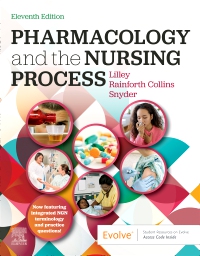
Pharmacology and the Nursing Process, 11th Edition
by Linda Lane Lilley, PhD, RN, Shelly Rainforth Collins, PharmD, BCGP and Julie S. Snyder, MSN, RN, MEDSURG-BC
Paperback
ISBN:
9780443119415
Copyright:
2027
Publication Date:
01-12-2026
Page Count:
992
Imprint:
Elsevier
List Price:
$129.99
In Stock
Most review copies are eBooks – how fast!
A review copy request is most likely to be fulfilled as an eBook on VitalSource rather than a print product, unless no eBook is available. eBooks become available in as little as a few hours. Print products will take between 7 and 10 days to arrive. To request a print copy, please contact us through the Evolve Support Center for further assistance or contact your Elsevier Sales Rep.
**Selected for 2026 Doody's Core Titles in Pharmacology**
Provide students with the pharmacology knowledge and skills needed to administer medications safely! Pharmacology and the Nursing Process, 11th Edition, provides practical, easy-to-use pharmacology information, emphasizing the application of the nursing process, the NCSBN Clinical Judgment Measurement Model, and prioritization throughout the book. Coverage begins with pharmacology basics, then discusses drugs by body systems and drug functions. Hundreds of full-color illustrations show how drugs work in the body and depict key steps in medication administration. Written by pharmacology experts Linda Lane Lilley, Shelly Rainforth Collins, and Julie S. Snyder, this bestselling textbook makes it easy to understand and apply pharmacology concepts and provide safe, quality nursing care.
Provide students with the pharmacology knowledge and skills needed to administer medications safely! Pharmacology and the Nursing Process, 11th Edition, provides practical, easy-to-use pharmacology information, emphasizing the application of the nursing process, the NCSBN Clinical Judgment Measurement Model, and prioritization throughout the book. Coverage begins with pharmacology basics, then discusses drugs by body systems and drug functions. Hundreds of full-color illustrations show how drugs work in the body and depict key steps in medication administration. Written by pharmacology experts Linda Lane Lilley, Shelly Rainforth Collins, and Julie S. Snyder, this bestselling textbook makes it easy to understand and apply pharmacology concepts and provide safe, quality nursing care.
-
- UPDATED! Content reflects the latest FDA drug approvals and therapeutic uses
- NEW! The 6 cognitive skills of NCSBN’s Clinical Judgment Measurement Model (CJMM) are now identified in headings along with the corresponding steps of the nursing process
- NEW! Integration of International Classification of Nursing Practice (ICNP) nursing diagnoses instead of the less-widely-used Human Needs Statements
- UPDATED! Culture content reflects a greater sensitivity to issues of cultural humility, diversity, and inclusion
- NEW! Enhanced emphasis on nursing self-care and health equity (including new Social Determinants of Health boxes) reflects greater alignment with the 2021 AACN Essentials and the 2020-2030 Future of Nursing report
- NEW! Clinical judgment exercises are now incorporated into the textbook for enhanced preparation for the Next-Generation NCLEX® Exam (NGN)
- EXPANDED! Additional NGN-style questions are now provided on the Evolve companion website
-
- UPDATED! Content reflects the latest FDA drug approvals and therapeutic uses
- NEW! The 6 cognitive skills of NCSBN’s Clinical Judgment Measurement Model (CJMM) are now identified in headings along with the corresponding steps of the nursing process
- NEW! Integration of International Classification of Nursing Practice (ICNP) nursing diagnoses instead of the less-widely-used Human Needs Statements
- UPDATED! Culture content reflects a greater sensitivity to issues of cultural humility, diversity, and inclusion
- NEW! Enhanced emphasis on nursing self-care and health equity (including new Social Determinants of Health boxes) reflects greater alignment with the 2021 AACN Essentials and the 2020-2030 Future of Nursing report
- NEW! Clinical judgment exercises are now incorporated into the textbook for enhanced preparation for the Next-Generation NCLEX® Exam (NGN)
- EXPANDED! Additional NGN-style questions are now provided for both students and faculty on the Evolve companion website
- UNIQUE! Key drug approach focuses on need-to-know drug content and related nursing care for the drugs that nurses will most commonly encounter in clinical practice
- The Nursing Process is applied to each category of drugs, ensuring that students are equipped to administer medications accurately and safely
- Emphasis on drug classes describes key similarities and differences among the drugs in each class, making it easier for students to understand how individual drugs work in the body and to incorporate new drug information into their knowledge base as new drugs are approved
- Consistent presentation of each drug group includes the mechanism of action, indications, contraindications, adverse effects, interactions, and dosages, concluding with drug profiles of individual drugs in the class or group
- High-alert drug icons identify medications that pose a greater risk to patient safety
- Focus on prioritization includes prioritized patient problems, along with a corresponding prioritization of goals and outcomes, to help students learn to connect patient problems with goals and outcomes of drug therapy
- Practical focus on medication safety includes discussions of what nurses may encounter during drug administration in a variety of health care settings, providing accounts of real-life medication errors and tips for avoiding those errors
- UNIQUE! Photo atlas of drug administration features more than 100 drawings and photographs showing drug administration techniques
- Ease of readability makes pharmacology content more understandable
- Dosages tables summarize generic and trade names, pharmacologic classes, normal dosage ranges, and indications for drugs
- Learning features at the beginning of each chapter include objectives and key terms
- Learning features at the end of each chapter include key points, clinical judgment exercises, and review questions
- Focus on quality and safety includes case studies that feature collaboration and teamwork content, as well as Preventing Medication Errors boxes
- This title is also available in Sherpath! Sold separately, this innovative teaching and learning technology offers interactive course content and resources that streamline class preparation and assessment and give students personalized help to reach their learning goals. Sherpath fully includes the ebook of this title for all-in-one digital course delivery
-
-
 Pharmacology and the Nursing Process - Elsevier E-Book on VitalSourceElsevier eBook on VitalSource
-
-
PART 1 Pharmacology Basics
1. The Nursing Process and Drug Therapy
2. Pharmacologic Principles
3. Lifespan Considerations
4. Cultural, Legal, and Ethical Considerations
5. Medication Errors: Preventing and Responding
6. Patient Education and Drug Therapy
7. Over-the-Counter Drugs and Herbal and Dietary Supplements
8. Gene Therapy and Pharmacogenomics
9. Photo Atlas of Drug Administration
PART 2 Drugs Affecting the Central Nervous System
10. Analgesic Drugs
11. General and Local Anesthetics
12. Central Nervous System Depressants and Muscle Relaxants
13. Central Nervous System Stimulants, Antimigraine Drugs, and Related Drugs
14. Antiepileptic Drugs
15. Antiparkinson Drugs
16. Psychotherapeutic Drugs
17. Substance Use Disorder
PART 3 Drugs Affecting the Autonomic Nervous System
18. Adrenergic Drugs
19. Adrenergic-Blocking Drugs
20. Cholinergic Drugs
21. Cholinergic-Blocking Drugs
PART 4 Drugs Affecting the Cardiovascular and Renal Systems
22. Antihypertensive Drugs
23. Antianginal Drugs
24. Heart Failure Drugs
25. Antidysrhythmic Drugs
26. Coagulation Modifier Drugs
27. Antilipemic Drugs
28. Diuretic Drugs
29. Fluids and Electrolytes
PART 5 Drugs Affecting the Endocrine and Reproductive Systems
30. Pituitary Drugs
31. Thyroid and Antithyroid Drugs
32. Diabetes Drugs
33. Adrenal Drugs
34. Women’s Health Drugs
35. Men’s Health Drugs
PART 6 Drugs Affecting the Respiratory System
36. Antihistamines, Decongestants, Antitussives, and Expectorants
37. Respiratory Drugs
PART 7 Antiinfective and Antiinflammatory Drugs
38. Antibiotics Part 1
39. Antibiotics Part 2
40. Antiviral Drugs
41. Antitubercular Drugs
42. Antifungal Drugs
43. Antimalarial, Antiprotozoal, and Anthelmintic Drugs
44. Antiinflammatory and Antigout Drugs
PART 8 Chemotherapeutic Drugs and Biologic and Immune Modifiers
45. Antineoplastic Drugs Part 1: Cancer Overview and Cell Cycle–Specific Drugs
46. Antineoplastic Drugs Part 2: Cell Cycle–Nonspecific and Miscellaneous Drugs
47. Biologic Response–Modifying and Antirheumatic Drugs
48. Immunosuppressant Drugs
49. Immunizing Drugs
PART 9 Drugs Affecting the Gastrointestinal System and Nutrition
50. Acid-Controlling Drugs
51. Bowel Disorder Drugs
52. Antiemetic and Antinausea Drugs
53. Vitamins and Minerals
54. Anemia Drugs
55. Nutritional Supplements
PART 10 Dermatologic, Ophthalmic, and Otic Drugs
56. Dermatologic Drugs
57. Ophthalmic Drugs
58. Otic Drugs -
No accessibility information is available for this product.
In Stock
Most review copies are eBooks – how fast!
A review copy request is most likely to be fulfilled as an eBook on VitalSource rather than a print product, unless no eBook is available. eBooks become available in as little as a few hours. Print products will take between 7 and 10 days to arrive. To request a print copy, please contact us through the Evolve Support Center for further assistance or contact your Elsevier Sales Rep.

 as described in our