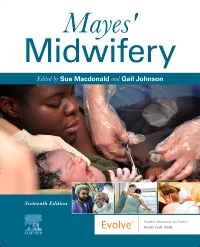
Part 1: The midwife in context 1. Global midwifery - an international perspective 2. An introduction to midwifery history in the United Kingdom 3. The regulation of midwives 4. Clinical governance and the midwife 5. Learning, being, and developing as a midwife 6. Being a student midwife 7. Evidence-based practice and research for practice 8. Leadership and management in midwifery 9. An introduction to ethics for midwifery practice 10. Law and the midwife 11. Pharmacology and the midwife
Part 2: Childbirth in context 12. Sociocultural and spiritual context of childbearing 13. Psychological context of childbirth 14. Sex, gender, sexuality, and childbearing 15. National Health Service policy and midwifery 16. Maternity service provision 17. Legal frameworks for the care of the child
Part 3: Public health, health promotion in the context of childbirth 18. Epidemiology 19. Infection prevention and control in maternity care 20. Nutrition for a healthy pregnancy 21. Complementary therapies and natural remedies in pregnancy and birth 22. Public health, health promotion, and education 23. Preconception care 24. Education for parenthood 25. Physical preparation for childbirth and beyond 26. Vulnerable women and families
Part 4 The anatomy and physiology of fertility, conception and pregnancy 27. Anatomy of male and female reproduction 28. Female reproductive physiology - cyclical changes in the ovaries, uterus, and mammary gland, across the infertile cycle 29. Genetics and genomics 30. Fertility and its control 31. Infertility and assisted conception 32. From fertilisation to feto-placental development 33. The fetal skull
Part 5 Pregnancy 34. Maternal cardiovascular, respiratory, haemodynamic, uterine, and gastrointestinal-mammary adaptations to the fertile cycle 35. Antenatal care 36. Antenatal investigations 37. The choice and personalisation agenda
Part 6 Labour and birth 38. Neuroendocrinology of parenting: from nocturnal uterine activation to suckling-lactation and emotional connectivity between parents and infant 39. Care in the first stage of labour 40. Care in the second stage of labour 41. Supporting choices in reducing pain and fear during labour 42. Care in the third stage of labour 43. The pelvic floor
Part 7 Postnatal care and the care of the newborn baby 44. Women and family-centred postnatal care 45. Physiology, assessment, and care of the newborn 46. Thermoregulation 47. Infant feeding and relationship building
Part 8 Women and babies with complex needs 48. The preterm baby and the small baby 49. Respiratory and cardiac disorders in the neonate 50. Neonatal jaundice 51. Neonatal infection 52. Congenital anomalies and metabolic and endocrine disorders 53. Pregnancy loss and baby deaths 54. Nausea and vomiting 55. Bleeding in pregnancy 56. Hypertensive and medical disorders in pregnancy 57. Sexually transmitted infections 58. Abnormalities and anomalies of the genital tract 59. Multiple pregnancy and birth 60. Preterm labour and birth 61. Induction of labour and post-term pregnancy 62. Presentation and prolapse of the umbilical cord 63. Rhythmic variations of labour 64. Malpositions and malpresentations 65. Obstructed labour and uterine rupture 66. Obstetric interventions 67. Shoulder dystocia 68. Complications related to the third stage of labour 69. Maternal morbidity following childbirth 70. Mental health and well being in pregnancy and childbirth 71. Pregnancy loss and the death of a baby 72. Midwifery - practising in a complex world
Sue Macdonald, MSc PGCEA ADM RM RN FETC FRCM (Hon), Midwife Consultant and Educationalist; Formerly Education and Research Manager and Lead Midwife for Education, Royal College of Midwives, London, UK and Gail Johnson, MA, DPSM, PGDip Adult Education, RM, RN, Professional Advisor Education, Royal College of Midwives, London, UK
We use cookies that are necessary to make our site work. We may also use additional cookies to analyze, improve, and personalize our content and your digital experience. You can manage your cookie preferences using theCookie settings link. For more information, see our
Your Opt Out Preference Signal is Honored
Cookie Preference Center
We use cookies which are necessary to make our site work. We may also use additional cookies to analyse, improve and personalise our content and your digital experience. For more information, see our Cookie Policy and the list of Google Ad-Tech Vendors.
You may choose not to allow some types of cookies. However, blocking some types may impact your experience of our site and the services we are able to offer. See the different category headings below to find out more or change your settings.
You may also be able to exercise your privacy choices as described in our Privacy Policy
Manage Consent Preferences
Strictly Necessary Cookies
Always active
These cookies are necessary for the website to function and cannot be switched off in our systems. They are usually only set in response to actions made by you which amount to a request for services, such as setting your privacy preferences, logging in or filling in forms. You can set your browser to block or alert you about these cookies, but some parts of the site will not then work.
Functional Cookies
These cookies enable the website to provide enhanced functionality and personalisation. They may be set by us or by third party providers whose services we have added to our pages. If you do not allow these cookies then some or all of these services may not function properly.
Performance Cookies
These cookies allow us to count visits and traffic sources so we can measure and improve the performance of our site. They help us to know which pages are the most and least popular and see how visitors move around the site.
Targeting Cookies
These cookies may be set through our site by our advertising partners. They may be used by those companies to build a profile of your interests and show you relevant adverts on other sites. If you do not allow these cookies, you will experience less targeted advertising.
