ISBN:
9780443287060
Copyright:
2027
Publication Date:
06-01-2026
Page Count:
946
Imprint:
Elsevier
List Price:
$89.99

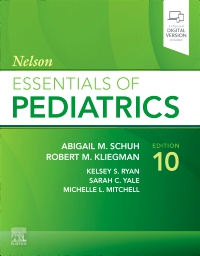
Nelson Essentials of Pediatrics - Elsevier E-Book on VitalSource, 10th Edition
by Abigail Schuh, MD, Robert Kliegman, MD, Kelsey Ryan, MD, Sarah Yale, MD and Michelle Mitchell, MD
Elsevier eBook on VitalSource
ISBN:
9780443287060
Copyright:
2027
Publication Date:
06-01-2026
Page Count:
946
Imprint:
Elsevier
List Price:
$89.99
Most review copies are eBooks – how fast!
A review copy request is most likely to be fulfilled as an eBook on VitalSource rather than a print product, unless no eBook is available. eBooks become available in as little as a few hours. Print products will take between 7 and 10 days to arrive. To request a print copy, please contact us through the Evolve Support Center for further assistance or contact your Elsevier Sales Rep.
The essential information students need in pediatrics comes from the renowned Nelson family of references. Nelson Essentials of Pediatrics, 10th Edition, is concise, readable, and up to date—perfect for clinical rotations, coursework, and exam preparation. This comprehensive, trusted reference is ideal for medical students, pediatric residents, PAs, attendings, and advanced practice providers (APPs), offering a full-color format; high-yield, targeted chapters; and thorough content updates that ensure strong coverage of core knowledge as well as recent advances in the field.
-
- Covers normal childhood growth and development, as well as the diagnosis, management, and prevention of common pediatric diseases and disorders
- Contains expanded coverage of social determinants of health, mental and behavioral health, social media, telehealth, and challenges of EHR and adolescent confidentiality, as well as a new chapter on hemophagocytic lymphohistiocytois (HLH)
- Offers new multiple choice questions online for self-assessment and review
- Includes Pearls for Practitioners at the end of each section, as well as updated immunization schedules and an expanded discussion of trauma-informed care
- Features well written, high-yield coverage throughout, following COMSEP curriculum guidelines relevant to pediatric clerkships or rotations
- Uses a full-color format with images and numerous new tables throughout, so readers can easily visualize complex information
- Provides real-world insights from chapter authors who are also Clerkship Directors, helping students gain the knowledge and skills necessary to succeed both in caring for patients and in preparing for clerkship or in-service examinations
- An eBook version is included with purchase. The eBook allows access to all of the text and figures, with the ability to search, customize content, make notes and highlights, and have content read aloud
-
-

-
 Nelson Essentials of PediatricsPaperback
-
-
SECTION 1 THE PROFESSION OF PEDIATRICS
1. Population and Culture: The Care of Children in Society
2. Professionalism
3. Ethics and Legal Issues
4. Palliative Care and End-of-Life Issues
SECTION 2 GROWTH AND DEVELOPMENT
5. Normal Growth
6. Disorders of Growth
7. Normal Development
8. Disorders of Development
9. Evaluation of the Well Child
10. Evaluation of the Child With Special Needs
SECTION 3 BEHAVIORAL DISORDERS
11. Crying and Colic
12. Temper Tantrums
13. Attention-Deficit/Hyperactivity Disorder
14. Control of Elimination
15. Normal Sleep and Pediatric Sleep Disorders
SECTION 4 PSYCHIATRIC DISORDERS
16. Somatic Symptom and Related Disorders
17. Anxiety and Phobias
18. Depression and Bipolar Disorders
19. Obsessive-Compulsive Disorder
20. Pervasive Developmental Disorders and Psychoses
SECTION 5 PSYCHOSOCIAL ISSUES
21. Child Abuse and Neglect
22. Family Structure and Function
23. Violence
24. Divorce, Separation, and Bereavement
SECTION 6 PEDIATRIC NUTRITION AND NUTRITIONAL DISORDERS
25. Diet of the Healthy Infant
26. Diet of the Healthy Child and Adolescent
27. Children With Obesity
28. Pediatric Undernutrition
29. Vitamin and Mineral Deficiencies
30. Growth Faltering
SECTION 7 FLUIDS AND ELECTROLYTES
31. Maintenance Fluid Therapy
32. Dehydration and Replacement Therapy
33. Parenteral Nutrition
34. Sodium Disorders
35. Potassium Disorders
36. Acid-Base Disorders
SECTION 8 THE ACUTELY ILL OR INJURED CHILD
37. Assessment and Resuscitation
38. Respiratory Failure
39. Shock
40. Injury Prevention
41. Major Trauma
42. Drowning
43. Burns
44. Poisoning
45. Sedation and Analgesia
SECTION 9 HUMAN GENETICS AND DYSMORPHOLOGY
46. Patterns of Inheritance
47. Genetic Assessment and Diagnosis
48. Chromosomal Disorders
49. The Approach to the Dysmorphic Child
SECTION 10 METABOLIC DISORDERS
50. Metabolic Assessment
51. Carbohydrate Disorders
52. Amino Acid Disorders
53. Organic Acid Disorders
54. Fatty Acid Oxidation Disorders
55. Lysosomal and Peroxisomal Disorders
56. Mitochondrial Disorders
SECTION 11 FETAL AND NEONATAL MEDICINE
57. Assessment of the Birth Parent, Fetus, and Newborn
58. Birth Parent Diseases Affecting the Newborn
59. Diseases of the Fetus
60. Respiratory Diseases of the Newborn
61. Anemia and Hyperbilirubinemia
62. Necrotizing Enterocolitis
63. Neurologic Conditions: Seizures, Intracranial Hemorrhage, and Hypoxic-Ischemic Encephalopathy
64. Sepsis and Meningitis
65. Congenital Infections
SECTION 12 ADOLESCENT MEDICINE
66. Overview and Assessment of Adolescents
67. Adolescent Well Care
68. Adolescent Gynecology
69. Eating Disorders
70. Substance Use
71. Sexuality and Gender Identity
SECTION 13 IMMUNOLOGY
72. Immunologic Assessment
73. Lymphocyte Disorders
74. Neutrophil Disorders
75. Complement System
76. Hematopoietic Stem Cell Transplantation
77. Hemophagocytic Lymphohistiocytosis
SECTION 14 ALLERGY
78. Allergy Assessment
79. Asthma
80. Allergic Rhinitis
81. Atopic Dermatitis
82. Urticaria, Angioedema, and Anaphylaxis
83. Serum Sickness
84. Insect Allergies
85. Adverse Reactions to Foods
86. Adverse Reactions to Drugs
SECTION 15 RHEUMATIC DISEASES OF CHILDHOOD
87. Rheumatic Assessment
88. Immunoglobulin A Vasculitis
89. Kawasaki Disease
90. Juvenile Idiopathic Arthritis
91. Childhood-Onset Systemic Lupus Erythematosus
92. Juvenile Dermatomyositis
93. Musculoskeletal Pain Syndromes
SECTION 16 INFECTIOUS DISEASES
94. Infectious Disease Assessment
95. Immunization and Prophylaxis
96. Antimicrobial Therapy
97. Fever Without a Focus
98. Infections Characterized by Fever and Rash
99. Cutaneous Infections
100. Lymphadenopathy
101. Meningitis
102. Encephalitis
103. The Common Cold
104. Pharyngitis
105. Sinusitis
106. Otitis Media
107. Otitis Externa
108. Croup (Laryngotracheobronchitis)
109. Pertussis
110. Bronchiolitis
111. Pneumonia
112. Infective Endocarditis
113. Acute Gastroenteritis
114. Viral Hepatitis
115. Urinary Tract Infection
116. Vulvovaginitis
117. Sexually Transmitted Infections
118. Osteomyelitis
119. Infectious Arthritis
120. Ocular Infections
121. Infection in the Immunocompromised Person
122. Health Care–Associated Infections
123. Zoonoses and Vector-Borne Infections
124. Parasitic Diseases
125. Tuberculosis
126. Human Immunodeficiency Virus and Acquired Immunodeficiency Syndrome
SECTION 17 THE DIGESTIVE SYSTEM
127. Digestive System Assessment
128. Oral Cavity
129. Esophagus and Stomach
130. Intestinal Tract
131. Liver Disease
132. Pancreatic Disease
133. Peritonitis
SECTION 18 THE RESPIRATORY SYSTEM
134. Respiratory System Assessment
135. Control of Breathing
136. Upper Airway Obstruction
137. Lower Airway, Parenchymal, and Pulmonary Vascular Diseases
138. Cystic Fibrosis
139. Chest Wall and Pleura
SECTION 19 THE CARDIOVASCULAR SYSTEM
140. Cardiovascular System Assessment
141. Syncope
142. Chest Pain
143. Dysrhythmias
144. Acyanotic Congenital Heart Disease
145. Cyanotic Congenital Heart Disease
146. Heart Failure
147. Rheumatic Fever
148. Cardiomyopathies
149. Pericarditis
SECTION 20 HEMATOLOGY
150. Hematology Assessment
151. Anemia
152. Hemostatic Disorders
153. Blood Component Therapy
SECTION 21 ONCOLOGY
154. Oncology Assessment
155. Principles of Cancer Treatment
156. Leukemia
157. Lymphoma
158. Central Nervous System Tumors
159. Neuroblastoma
160. Wilms Tumor
161. Sarcomas
SECTION 22 NEPHROLOGY AND UROLOGY
162. Nephrology and Urology Assessment
163. Nephrotic Syndrome and Proteinuria
164. Glomerulonephritis and Hematuria
165. Hemolytic Uremic Syndrome
166. Acute Kidney Injury and Chronic Kidney Disease
167. Hypertension
168. Vesicoureteral Reflux
169. Congenital and Developmental Abnormalities of the Urinary Tract
170. Other Urinary Tract and Genital Disorders
SECTION 23 ENDOCRINOLOGY
171. Endocrinology Assessment
172. Diabetes Mellitus
173. Hypoglycemia
174. Short Stature
175. Disorders of Puberty
176. Thyroid Disease
177. Disorders of Parathyroid Bone and Mineral Endocrinology
178. Disorders of Sexual Differentiation
179. Adrenal Gland Dysfunction
SECTION 24 NEUROLOGY
180. Neurology Assessment
181. Headache and Migraine
182. Seizures
183. Weakness and Hypotonia
184. Ataxia and Movement Disorders
185. Altered Mental Status
186. Neurodegenerative Disorders
187. Neurocutaneous Disorders
188. Congenital Malformations of the Central Nervous System
SECTION 25 DERMATOLOGY
189. Dermatology Assessment
190. Acne Vulgaris
191. Atopic Dermatitis
192. Contact Dermatitis
193. Seborrheic Dermatitis
194. Pigmented Lesions
195. Vascular Anomalies
196. Erythema Multiforme, Reactive Infectious Mucocutaneous Eruption, Stevens-Johnson Syndrome, and Toxic Epidermal Necrolysis
197. Cutaneous Infestations
SECTION 26 ORTHOPEDICS
198. Orthopedic Assessment
199. Fractures
200. Hip
201. Lower Extremity and Knee
202. Foot
203. Spine
204. Upper Extremity
205. Benign Bone Tumors and Cystic Lesions -
-
Ways of Reading
- The appearance of the text and page layout can be modified according to the capabilities of the reading system (font family and font size, spaces between paragraphs, sentences, words, and letters, as well as color of background and text)
- This e-publication is accessible to the full extent that the file format and types of content allow, on a specific reading device, by default, without necessarily including any additions such as textual descriptions of images or enhanced navigation
- All content can be read as read aloud speech or dynamic braille
- Has alternative text descriptions for images
-
Conformance
- The certifier's credential is https://bornaccessible.benetech.org/certified-publishers/
- For detailed accessibility information, see Elsevier's website at https://www.elsevier.com/about/accessibility
- For queries regarding accessibility information, contact [email protected]
- The publication was certified on 19-06-2026
-
Navigation
- Table of contents to all chapters of the text via links
- Elements such as headings, tables, etc. for structured navigation
- Page list to go to pages from the print source version
-
Rich Content
- Math formulas in accessible format (MathML)
- Information-rich images are described by extended descriptions
-
Hazards
- The publication contains no hazards
-
Product Content
- Content includes any type of illustrations.
- The primary content is text.
- Content includes a significant number of actionable (clickable) cross-references, hyperlinked notes and annotations, or with other actionable links between largely textual elements (e.g., quiz/test questions, 'choose your own ending', etc.).
- Content includes additional textual content such as an interview, feature article, essay, bibliography, quiz/test, other background material, or text that is not included in a primary or 'unenhanced' version.
- Content includes photographs, whether in a plate section / insert or not.
- Content includes figures, diagrams, charts and/or graphs, including other 'mechanical' (i.e. non-photographic) illustrations.
- Content includes mathematical notations, formulae.
-
Legal Considerations
- No information is available
-
Additional Accessibility Information
- Content is enhanced with ARIA roles to optimize organization and facilitate navigation
- Page breaks included from the original print source
- For readers with color vision deficiency, use of color (e.g., in diagrams, graphics and charts, in prompts, or on buttons inviting a response) is not the sole means of graphical distinction or of conveying information
- The body text is presented with a contrast ratio of at least 4.5:1 (or 3:1 for large/heading text)
- Text-to-speech has been optimized through provision of PLS lexicons, SSML or CSS Speech synthesis hints or other speech synthesis markup languages or hinting
- Ultra-high contrast between text and background
- E-publication includes basic navigation (usually less detailed than TOC-based navigation)
- Where links, controls or buttons are included in the content, the purpose or functionality of each link, control or button is apparent from the associated text alone - or where it is unclear, separate link, control or button descriptions are provided
- All (or substantially all) textual matter is arranged in a single logical reading order (including text that is visually presented as separate from the main text flow, e.g., in boxouts, captions, tables, footnotes, endnotes, citations, etc.). Non-textual content is also linked from within this logical reading order. (Purely decorative non-text content can be ignored).
- Content provides explanations for unusual words, abbreviations, acronyms, idioms, jargon in an accessible form, such as glossaries, scripted pop-ups.
- Where interactive content is included in the product, controls are provided (e.g., for speed, pause and resume, reset) and labelled to make their use clear.
- The language of the text has been specified (e.g., via the HTML or XML lang attribute) to optimise text-to-speech (and other alternative renderings), both at the whole document level and, where appropriate, for individual words, phrases or passages in a different language.
-
Ways of Reading
Most review copies are eBooks – how fast!
A review copy request is most likely to be fulfilled as an eBook on VitalSource rather than a print product, unless no eBook is available. eBooks become available in as little as a few hours. Print products will take between 7 and 10 days to arrive. To request a print copy, please contact us through the Evolve Support Center for further assistance or contact your Elsevier Sales Rep.

 as described in our