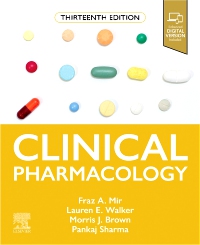

Clinical Pharmacology - Elsevier E-Book on VitalSource, 13th Edition
Elsevier eBook on VitalSource
Now $39.19
This highly trusted guide to drug therapy covers the key elements of therapeutic pharmacology, including health technology assessment, drug regulation, dependence and toxicology, as well as polypharmacy. The essentials of clinical pharmacology are discussed by body system, balancing science with practice to support good prescribing.
The thirteenth edition of Clinical Pharmacology has been fully updated to suit today’s context and therapeutic settings.
-
- NEW! Nora AI - an AI-powered learning assistant exclusive to Elsevier ebooks on VitalSource's Bookshelf® platform - offers built-in AI learning support that provides personalized answers based on content from the Elsevier ebook
- An ideal study guide for medical students sitting the PSA exams and pharmacy students sitting MPharm exams
- Fully updated to encompass contemporary issues such as comorbidities and polypharmacy
- Provides the evidence base for drug therapy and good prescribing in modern therapeutic settings
- Easy to navigate - covers all major therapeutic topics by body system
- Chapter synopses, definitions, tips and brief explanation boxes assist with learning and revision
- Covers resource poor situations with a focus on practical prescribing and health technology assessment
- Includes case studies, interesting histories, etymologies and provenances of terms throughout
-
-
 Clinical PharmacologyPaperback
-
-
Section 1: General
Clinical pharmacology
Topics in drug therapy
Discovery and development of drugs
Evaluation of drugs in humans
Health technology assessment for pharmaceutical products
Regulation of medicines
Classification and naming of drugs
Polypharmacy and medicines optimisation
Section 2: From pharmacology to toxicology
General pharmacology
Unwanted effects and adverse drug reactions
Poisoning, overdose, antidotes
Drug dependence
Section 3: Infection and inflammation
Chemotherapy of infections
Antibacterial drugs
Chemotherapy of bacterial infections
Viral, fungal, protozoal and helminthic infections
Therapeutics for COVID-19
Drugs for inflammation and joint disease
Drugs and the skin
Section 4: Nervous system
Pain and analgesics
Anesthesia and neuromuscular block
Psychotropic drugs
Neurological disorders – epilepsy, Parkinson’s disease and multiple sclerosis
Section 5: Cardiorespiratory and renal systems
Cholinergic and antimuscarinic (anticholinergic) mechanisms and drugs
Adrenergic mechanisms and drugs
Cardiovascular disease and heart failure
Cardiac arrhythmias
Hyperlipidaemias
Kidney and genitourinary tract
Respiratory system
Section 6: Blood and neoplastic disease
Drugs and haemostasis
Red blood cell disorders
Neoplastic disease and immunosuppression
Section 7: Gastrointestinal system
Oesophagus, stomach and duodenum
Intestines
Liver and biliary tract
Section 8: Endocrine system, metabolic conditions
Adrenal corticosteroids, antagonists, corticotropin
Diabetes mellitus and obesity
Thyroid hormones, antithyroid drugs
Hypothalamic, pituitary and sex hormones
Vitamins, calcium and bone -
-
Ways of Reading
- The appearance of the text and page layout can be modified according to the capabilities of the reading system (font family and font size, spaces between paragraphs, sentences, words, and letters, as well as color of background and text)
- This e-publication is accessible to the full extent that the file format and types of content allow, on a specific reading device, by default, without necessarily including any additions such as textual descriptions of images or enhanced navigation
- All content can be read as read aloud speech or dynamic braille
-
Conformance
- The certifier's credential is https://bornaccessible.benetech.org/certified-publishers/
- For detailed accessibility information, see Elsevier's website at https://www.elsevier.com/about/accessibility
- For queries regarding accessibility information, contact [email protected]
- The publication was certified on 22-12-2025
-
Navigation
- Table of contents to all chapters of the text via links
- Page list to go to pages from the print source version
-
Rich Content
- No information is available
-
Hazards
- No information is available
-
Product Content
- No information is available
-
Legal Considerations
- No information is available
-
Additional Accessibility Information
- Content is enhanced with ARIA roles to optimize organization and facilitate navigation
- Page breaks included from the original print source
- For readers with color vision deficiency, use of color (e.g., in diagrams, graphics and charts, in prompts, or on buttons inviting a response) is not the sole means of graphical distinction or of conveying information
- The body text is presented with a contrast ratio of at least 4.5:1 (or 3:1 for large/heading text)
- Ultra-high contrast between text and background
- E-publication includes basic navigation (usually less detailed than TOC-based navigation)
- Where links, controls or buttons are included in the content, the purpose or functionality of each link, control or button is apparent from the associated text alone - or where it is unclear, separate link, control or button descriptions are provided
- All (or substantially all) textual matter is arranged in a single logical reading order (including text that is visually presented as separate from the main text flow, e.g., in boxouts, captions, tables, footnotes, endnotes, citations, etc.). Non-textual content is also linked from within this logical reading order. (Purely decorative non-text content can be ignored).
- Where interactive content is included in the product, controls are provided (e.g., for speed, pause and resume, reset) and labelled to make their use clear.
- The language of the text has been specified (e.g., via the HTML or XML lang attribute) to optimise text-to-speech (and other alternative renderings), both at the whole document level and, where appropriate, for individual words, phrases or passages in a different language.
-
Ways of Reading

 as described in our