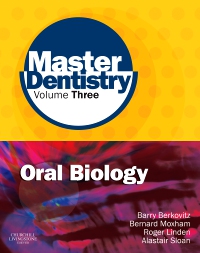

Master Dentistry Volume 3 Oral Biology - Elsevier eBook on VitalSource, 1st Edition
Elsevier eBook on VitalSource
Now $35.09
Master Dentistry: Oral Biology is designed as a revision guide for dental students and offers the ‘curriculum essentials’ in an easy-to-digest format. Each section is fully illustrated throughout and is supported by extensive self-assessment questions which allow the reader to assess their own knowledge of the topic and perfect their exam techniques.
New to the Master Dentistry series, this volume addresses oral anatomy and its related histology, physiology and biochemistry and is perfect for both undergraduate students and post-graduates preparing for the MJDF.
-
- Quick reference revision aid for dental students – ideal for exam preparation!
- Covers the ‘essentials’ of the subject to a level that is expected with the GDC’s curriculum outlined in the First Five Years document.
- Each chapter provides a brief overview of the topic and lists the essential learning objectives for that area of study.
- Presents key anatomical, biochemical and physiological material in a useful, integrated, clinically relevant format.
- Includes extensive self-testing material – true false questions, extended matching questions, picture questions, and essay questions – enabling readers to assess their knowledge and perfect exam techniques.
- Contains unique, ‘mind-map’ summary sheets to provide crucial information in a pictorial format to further promote learning.
-
1. The anatomy of the oral cavity and the jaws
2. Temporomandibular (craniomandibular) joint
3. The human dentition-tooth morphology and occlusion
4. The oro-facial musculature, mastication and swallowing
5. The tongue, flavour and thermoreception, speech
6. The vasculature, lymphatics and innervation of the oro-dental tissues
7. Salivary glands, saliva and salivation
8. Investing organic layers on enamel surfaces
9. Development of the craniofacial complex
10. Early tooth development, root development (including cementogenesis) and tooth eruption
11. Mechanisms of mineralisation
12. The dental tissues I. Enamel (structure, composition and development)
13. Dental tissues II. The dentine/pulp complex(structure, composition, development and oral pain)
14. The dental tissues III. Cementum (structure and composition)
15. The periodontal ligament (including oral and periodontal mechanoreception and the tooth support mechanism)
16. Alveolar bone (structure and composition)
17. The oral mucosa and gingival crevicular fluid (structure and composition)
-
-
Ways of Reading
- The appearance of the text and page layout can be modified according to the capabilities of the reading system (font family and font size, spaces between paragraphs, sentences, words, and letters, as well as color of background and text)
- This e-publication is accessible to the full extent that the file format and types of content allow, on a specific reading device, by default, without necessarily including any additions such as textual descriptions of images or enhanced navigation
- All content can be read as read aloud speech or dynamic braille
-
Conformance
- For detailed accessibility information, see Elsevier's website at https://www.elsevier.com/about/accessibility
- For queries regarding accessibility information, contact [email protected]
- The publication was certified on 07-04-2026
-
Navigation
- Table of contents to all chapters of the text via links
- Page list to go to pages from the print source version
-
Rich Content
- No information is available
-
Hazards
- No information is available
-
Product Content
- No information is available
-
Legal Considerations
- Elsevier is committed to making our eBooks accessible and complying with applicable laws. Given our vast library of titles, there are some cases where making an eBook fully accessible presents unique challenges, and including full features could transform its nature to no longer serve its primary purpose or result in a disproportionate burden for the publisher. As a result this eBook may have limited accessibility. See more at https://www.elsevier.com/en-gb/about/accessibility.
- Please refer to our disproportionate burden or fundamental modification statements.
-
Additional Accessibility Information
- Page breaks included from the original print source
- E-publication includes basic navigation (usually less detailed than TOC-based navigation)
- All (or substantially all) textual matter is arranged in a single logical reading order (including text that is visually presented as separate from the main text flow, e.g., in boxouts, captions, tables, footnotes, endnotes, citations, etc.). Non-textual content is also linked from within this logical reading order. (Purely decorative non-text content can be ignored).
- The language of the text has been specified (e.g., via the HTML or XML lang attribute) to optimise text-to-speech (and other alternative renderings), both at the whole document level and, where appropriate, for individual words, phrases or passages in a different language.
-
Ways of Reading

 as described in our