ISBN:
9780702067464
Copyright:
2018
Publication Date:
09-01-2018
Page Count:
476
Imprint:
Elsevier
List Price:
$37.99

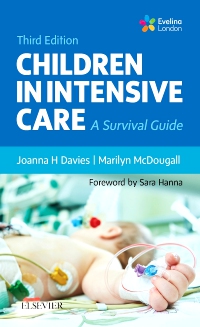
Children in Intensive Care - Elsevier eBook on VitalSource, 3rd Edition
by Joanna H. Davies, BSc (Hons) MSc RGN RSCN ENB 415 and Marilyn McDougall, MBChB (UCT, SA), DCH(SA), FCPaed (SA), MRCPCH
Elsevier eBook on VitalSource
ISBN:
9780702067464
Copyright:
2018
Publication Date:
09-01-2018
Page Count:
476
Imprint:
Elsevier
List Price:
$37.99
Not Yet Available
Most review copies are eBooks – how fast!
A review copy request is most likely to be fulfilled as an eBook on VitalSource rather than a print product, unless no eBook is available. eBooks become available in as little as a few hours. Print products will take between 7 and 10 days to arrive. To request a print copy, please contact us through the Evolve Support Center for further assistance or contact your Elsevier Sales Rep.
Children in Intensive Care fulfils a unique role in supporting clinical staff during the day-to-day management of the sick child. Presented in quick reference format, and in plain English, the book offers a unique guide to the wide variety of situations that a practitioner is likely to encounter during daily practice. Rich with reference tables, algorithms, artworks and ‘Alert’ boxes, the book offers a wealth of information which ranges from physiology to drug dosage calculation, drug compatibility lists, reference ranges, and X-ray interpretation. New chapters include oncologic emergencies, pain management and sedation, together with the latest information on the management of sepsis, the collapsed child, and care of the child following spinal surgery.
-
- Information presented in quick reference format, with accompanying reference tables, to facilitate on-the-spot usage
- Advanced Life Support Group algorithms provide safe and easy-to-follow protocols to the management of emergency situations
- Contains input from a broad range of paediatric specialists – intensivists, anaesthetists, haematologists, oncologists, air ambulance physicians and retrieval nurses, pharmacists, specialist dieticians, and respiratory physiotherapists – to ensure full coverage and accuracy of information
- Contains helpful ‘Quick Guide’ and ‘Warning’ boxes to provide key information at a glance, while helpful mnemonics assist with learning
- Contains chapters on normal child development, safe-guarding children and young people, and patient transport
- Perfect for use on the wards, theatres, high-dependency units and intensive care units as well as during retrieval and A&E
- Ideal for newcomers and experienced staff alike, whether they be junior doctors or nursing staff
-
-
 Children in Intensive CarePaperback
-
-
1. All about resuscitation
2. Airway and breathing: Including common respiratory problems and blood gas interpretation
3. Cardiac care
4. The kidneys and renal replacement
5. Liver function and failure
6. Neurology – Assessment and management
7. Oncology emergency
8. Fluids and nutrition
9. Blood and electrolytes: normal values, special tests and transfusion
10. Drugs – inotropes, vasodilators, sedatives, analgesics and muscle relaxants
11. Pain and sedation
12. Handy hints for various conditions
13. Transport of critically ill infants and children – intra and interhospital transport
14. Safeguarding children and young people
15. Death of a child
16. Child development
17. Quick reference to syndromes
Abbreviations -
-
Ways of Reading
- The appearance of the text and page layout can be modified according to the capabilities of the reading system (font family and font size, spaces between paragraphs, sentences, words, and letters, as well as color of background and text)
- This e-publication is accessible to the full extent that the file format and types of content allow, on a specific reading device, by default, without necessarily including any additions such as textual descriptions of images or enhanced navigation
- No information about nonvisual reading is available
-
Conformance
- No information is available
-
Navigation
- Table of contents to all chapters of the text via links
- Page list to go to pages from the print source version
-
Rich Content
- No information is available
-
Hazards
- No information is available
-
Product Content
- No information is available
-
Legal Considerations
- No information is available
-
Additional Accessibility Information
- Page breaks included from the original print source
- For readers with color vision deficiency, use of color (e.g., in diagrams, graphics and charts, in prompts, or on buttons inviting a response) is not the sole means of graphical distinction or of conveying information
- E-publication includes basic navigation (usually less detailed than TOC-based navigation)
- Where links, controls or buttons are included in the content, the purpose or functionality of each link, control or button is apparent from the associated text alone - or where it is unclear, separate link, control or button descriptions are provided
- All (or substantially all) textual matter is arranged in a single logical reading order (including text that is visually presented as separate from the main text flow, e.g., in boxouts, captions, tables, footnotes, endnotes, citations, etc.). Non-textual content is also linked from within this logical reading order. (Purely decorative non-text content can be ignored).
- The language of the text has been specified (e.g., via the HTML or XML lang attribute) to optimise text-to-speech (and other alternative renderings), both at the whole document level and, where appropriate, for individual words, phrases or passages in a different language.
-
Ways of Reading
Not Yet Available
Most review copies are eBooks – how fast!
A review copy request is most likely to be fulfilled as an eBook on VitalSource rather than a print product, unless no eBook is available. eBooks become available in as little as a few hours. Print products will take between 7 and 10 days to arrive. To request a print copy, please contact us through the Evolve Support Center for further assistance or contact your Elsevier Sales Rep.

 as described in our