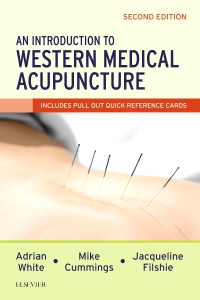

An Introduction to Western Medical Acupuncture - Elsevier eBook on VitalSource, 2nd Edition
Elsevier eBook on VitalSource
Now $46.79
Now in its Second Edition, An Introduction to Western Medical Acupuncture provides a broad evidence-based approach to acupuncture when used as part of modern medicine. Illustrated throughout it gives the practitioner an essential guide for deciding where and how to treat conditions with acupuncture, and how to avoid known risks associated with it. Ultimately, it provides the practitioner with a tool to develop safe and effective practice. For this edition the text has been revised, updated and extensively re-written. A new chapter brings together the understanding of how pain is recognised by the nervous system, and how acupuncture can influence these pathways. This is followed by six chapters providing detailed explanations of the effects and mechanisms of acupuncture, organised according to three recognised treatment approaches – needling to produce local changes, to generate effects at the level of the spinal segment, and to modify the overall function of the nervous system. The chapters on the evidence from research have been also updated.
-
- An explanation of the various mechanisms of acupuncture linked to how they can best be activated by needling
- Learn the principles of treatment rather than any 'cook-book' approach
- Clear and objective discussion of the evidence for the effectiveness and the risks of acupuncture
- Thorough and detailed description of all aspects of clinical practice
- Reference section for quickly reminding the practitioner of the best approach to treating many problems
-
-
Ways of Reading
- The appearance of the text and page layout can be modified according to the capabilities of the reading system (font family and font size, spaces between paragraphs, sentences, words, and letters, as well as color of background and text)
- This e-publication is accessible to the full extent that the file format and types of content allow, on a specific reading device, by default, without necessarily including any additions such as textual descriptions of images or enhanced navigation
- No information about nonvisual reading is available
-
Conformance
- No information is available
-
Navigation
- Table of contents to all chapters of the text via links
- Page list to go to pages from the print source version
-
Rich Content
- No information is available
-
Hazards
- No information is available
-
Product Content
- No information is available
-
Legal Considerations
- No information is available
-
Additional Accessibility Information
- Page breaks included from the original print source
- For readers with color vision deficiency, use of color (e.g., in diagrams, graphics and charts, in prompts, or on buttons inviting a response) is not the sole means of graphical distinction or of conveying information
- E-publication includes basic navigation (usually less detailed than TOC-based navigation)
- Where links, controls or buttons are included in the content, the purpose or functionality of each link, control or button is apparent from the associated text alone - or where it is unclear, separate link, control or button descriptions are provided
- All (or substantially all) textual matter is arranged in a single logical reading order (including text that is visually presented as separate from the main text flow, e.g., in boxouts, captions, tables, footnotes, endnotes, citations, etc.). Non-textual content is also linked from within this logical reading order. (Purely decorative non-text content can be ignored).
- The language of the text has been specified (e.g., via the HTML or XML lang attribute) to optimise text-to-speech (and other alternative renderings), both at the whole document level and, where appropriate, for individual words, phrases or passages in a different language.
-
Ways of Reading


 as described in our