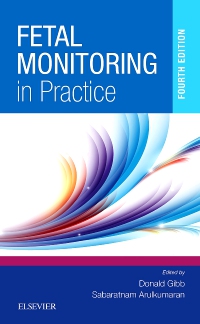

Fetal Monitoring in Practice Elsevier eBook on VitalSource, 4th Edition
Elsevier eBook on VitalSource
Now $32.89
Prepared by editors of international renown, the latest edition of Fetal Monitoring in Practice has been fully updated throughout and now presents the latest information in colour! Retaining the features that characterised the success of previous editions – an accessible writing style, basic CTG interpretation, use of correct terminology, common pitfalls associated with equipment usage, underlying pathophysiology, clinical trial data and relevant clinical scenarios – new features include an expanded author team to provide an international perspective, the latest guidelines from NICE and FIGO, new and expanded information on clinical assessment and medical litigation, and a new chapter on competency testing in CTG interpretation prior to practice.
New Edition Expected Availability: 07-03-2023

Fetal Monitoring in Practice - Elsevier E-Book on VitalSource
-
- NEW! Nora AI - an AI-powered learning assistant exclusive to Elsevier ebooks on VitalSource's Bookshelf® platform - offers built-in AI learning support that provides personalized answers based on content from the Elsevier ebook
- Clear and friendly writing style makes a potentially challenging subject straightforward and accessible
- Explains the correct use of terminology to help ensure safe and accurate communication
- Emphasizes the importance of using monitoring techniques within the context of detailed clinical assessment
- Explains the basics of interpretation including the influence of drugs used for pain relief
- Explains common pitfalls associated with equipment usage and provides practical advice on how to avoid them
- Explains the underlying pathophysiology associated with abnormal changes seen on the CTG
- Explains and contextualizes relevant clinical trial data
- Clinical scenarios demonstrate common presentations such as breech birth, twin pregnancies, brow presentation, hypertension, and eclampsia
- Real CTG traces demonstrate more complex presentations such as prolonged deceleration, placental abruption, and fetal bleeding
- Perfect for candidates undertaking the Advanced Training Skills Module of the RCOGs 'Advanced Labour Ward Practice'
-
1. Introduction
2. Clinical assessment and recording
3. Auscultation of the fetal heart rate
4. Electronic fetal monitoring – terminology and interpretation
5. Pathophysiology of fetal heart rate (FHR)
6. NICE and FIGO guidelines for interpretation of FHR patterns
7. Antepartum fetal surveillance
8. The admission test by cardiotocography or by auscultation
9. Assessment of uterine contractions
10. Oxytocin and fetal heart rate changes
11. Meconium, infection, anaemia, bleeding
12. Cardiotocographic interpretation: additional clinical scenarios
13. Cardiotocographic interpretation: more difficult problems
14. Fetal scalp blood sampling pH and lactate
15. Fetal ECG waveform analysis
16. Medico legal issues with CTG and current strategies to reduce litigation
17. Competency testing in CTG interpretation prior to practice -
-
Ways of Reading
- The appearance of the text and page layout can be modified according to the capabilities of the reading system (font family and font size, spaces between paragraphs, sentences, words, and letters, as well as color of background and text)
- This e-publication is accessible to the full extent that the file format and types of content allow, on a specific reading device, by default, without necessarily including any additions such as textual descriptions of images or enhanced navigation
- No information about nonvisual reading is available
-
Conformance
- No information is available
-
Navigation
- Table of contents to all chapters of the text via links
- Page list to go to pages from the print source version
-
Rich Content
- No information is available
-
Hazards
- No information is available
-
Product Content
- No information is available
-
Legal Considerations
- No information is available
-
Additional Accessibility Information
- Page breaks included from the original print source
- For readers with color vision deficiency, use of color (e.g., in diagrams, graphics and charts, in prompts, or on buttons inviting a response) is not the sole means of graphical distinction or of conveying information
- E-publication includes basic navigation (usually less detailed than TOC-based navigation)
- Where links, controls or buttons are included in the content, the purpose or functionality of each link, control or button is apparent from the associated text alone - or where it is unclear, separate link, control or button descriptions are provided
- All (or substantially all) textual matter is arranged in a single logical reading order (including text that is visually presented as separate from the main text flow, e.g., in boxouts, captions, tables, footnotes, endnotes, citations, etc.). Non-textual content is also linked from within this logical reading order. (Purely decorative non-text content can be ignored).
- The language of the text has been specified (e.g., via the HTML or XML lang attribute) to optimise text-to-speech (and other alternative renderings), both at the whole document level and, where appropriate, for individual words, phrases or passages in a different language.
-
Ways of Reading

 as described in our