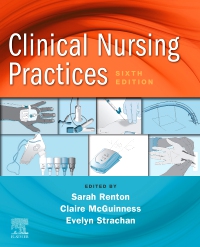

Clinical Nursing Practices Elsevier eBook on VitalSource, 6th Edition
Elsevier eBook on VitalSource
Now $32.39
The new edition of Clinical Nursing Practices reflects the many changes in nurse education and practice. A team of clinical and education experts has updated the core practices contained within this text, while to ensure continuity the previous editors have acted as consultants in the development of this edition.
To reflect the continuing evolution of nursing and nursing practice, this new 6th edition emphasizes the importance of evidence-based practice, values-based care, person centred care, health and social care integration and interprofessional education.
To encourage reflective practice, self-assessment questions remain at the end of each chapter for some of the practices. Where appropriate, certain practices are evidenced mainly by National Guidelines and Standards such as Cardio Pulmonary Resuscitation, Infection Control and Blood Transfusion; consequently, the presentation of the skill or procedure reflects this.
The updated text addresses the wider issues which impact on everyday nursing and healthcare practice and is specially written to meet the needs of nurses today. The core philosophy of book, however, remains the same: to encourage its readers to deliver the highest quality care to each individual patient, safely and effectively.
-
- Simple and straightforward step-by-step account of the key clinical procedures with clear learning outcomes
- For nurses learning procedures for the first time, for newly qualified nurses needing to check their knowledge or for nurses returning to work needing an update or refresher
- Equips readers to deliver high quality, safe and effective care to patients
-
-
 Clinical Nursing PracticesPaperback
-
-
1. Frameworks for Practice
2. Administration of Medicines
3. Blood gases and profiles
4. Blood Glucose Monitoring
5. Pulse and Blood Pressure
6. Blood Transfusion
7. Body Temperature
8. Cardiopulmonary Resuscitation and Anaphylaxis
9. Care after death
10. Catheterisation: Urinary
11. Cardiovascular risk assessment
12. Chest auscultation
13. Chest Drainage: Underwater Seal
14. Diagnostic Investigations
15. ECG: set up and recording
16. Administration of Suppositories and Enema
17. Eye Care and Administration of Eye Drops
18. First Aid: physical
19. Fundamental Care
20. Skin Integrity
21. Infection prevention and management
22. Intravenous therapy/devices
23. Lumbar Puncture
24. Mental Health
25. Mouth Care/Oral Hygiene
26. Neurological Assessment and seizure management
27. Nutrition
28. Oxygen Therapy and humidification of gases
29. Patient Admission, Transfer and Discharge
30. Preoperative Nursing Care
31. Postoperative Nursing Care
32. Pulse Oximetry
33. Rectal Examination and manual evacuation
34. Recognizing and responding to signs of abuse
35. Respiration, including nebulisers and inhalers
36. Stoma Care
37. Tracheostomy Care
38. Care of the Patient with Impaired Consciousness
39. Venepuncture
40. Wound Care -
-
Ways of Reading
- The appearance of the text and page layout can be modified according to the capabilities of the reading system (font family and font size, spaces between paragraphs, sentences, words, and letters, as well as color of background and text)
- This e-publication is accessible to the full extent that the file format and types of content allow, on a specific reading device, by default, without necessarily including any additions such as textual descriptions of images or enhanced navigation
- No information about nonvisual reading is available
-
Conformance
- No information is available
-
Navigation
- Table of contents to all chapters of the text via links
- Page list to go to pages from the print source version
-
Rich Content
- No information is available
-
Hazards
- No information is available
-
Product Content
- No information is available
-
Legal Considerations
- No information is available
-
Additional Accessibility Information
- Page breaks included from the original print source
- For readers with color vision deficiency, use of color (e.g., in diagrams, graphics and charts, in prompts, or on buttons inviting a response) is not the sole means of graphical distinction or of conveying information
- E-publication includes basic navigation (usually less detailed than TOC-based navigation)
- Where links, controls or buttons are included in the content, the purpose or functionality of each link, control or button is apparent from the associated text alone - or where it is unclear, separate link, control or button descriptions are provided
- All (or substantially all) textual matter is arranged in a single logical reading order (including text that is visually presented as separate from the main text flow, e.g., in boxouts, captions, tables, footnotes, endnotes, citations, etc.). Non-textual content is also linked from within this logical reading order. (Purely decorative non-text content can be ignored).
- The language of the text has been specified (e.g., via the HTML or XML lang attribute) to optimise text-to-speech (and other alternative renderings), both at the whole document level and, where appropriate, for individual words, phrases or passages in a different language.
-
Ways of Reading

 as described in our