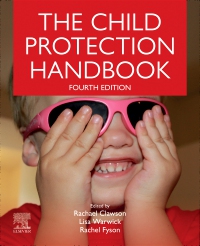

The Child Protection Handbook - Elsevier eBook on VitalSource, 4th Edition
Elsevier eBook on VitalSource
Now $34.29
The Child Protection Handbook, Fourth Edition explains how to recognise abuse and how to protect children and young people at risk of abuse. The book is aimed at students and practitioners in safeguarding roles, including those working in social care, health, criminal justice, education, sport and leisure.
Since the last edition in 2007, the Handbook has been fully revised and updated to reflect not only the current legal and policy frameworks that govern statutory child protection intervention in the UK but also the impacts of new technology. It offers a comprehensive overview of the contexts which frame child protection – including organisational issues, children’s rights, the needs of those from diverse backgrounds and the impacts of the Covid-19 pandemic on child protection work – as well as explaining how to stay alert to the various forms of abuse and maltreatment which children and young people may experience.
With accessible, up-to-date information presented in an easy-to-navigate format, the Handbook is ideal for all those wanting to improve outcomes for children, young people and their families. All concepts are explained in straightforward, jargon-free language and the Handbook is equally effective when read cover-to-cover or used as a reference book.
-
Key chapter features
- NEW! Nora AI - an AI-powered learning assistant exclusive to Elsevier ebooks on VitalSource's Bookshelf® platform - offers built-in AI learning support that provides personalized answers based on content from the Elsevier ebook
- Illustrative boxes drawing on practice examples to highlight issues and dilemmas
- Key points to encourage the reader to think about their practice and apply new knowledge
- Reflective questions to check understanding and explore concepts further
- Links to resources and further reading
- Supporting social workers in child protection practice
- Poverty and child protection
- ‘New’ forms of child abuse, including: technology-assisted child sexual abuse; child sexual exploitation; gangs and criminal exploitation; radicalisation; forced marriage of children and young people; female genital mutilation; and faith-based abuse
- Focus on teenagers, including: child protection in adolescence; leaving care; safeguarding children in conflict with the law; children and young people who display harmful sexual behaviour; and child-to-parent violence and abuse
- Safeguarding in sport and leisure
- Working with parents at risk of repeat removal of children through care proceedings
-
-
 The Child Protection HandbookPaperback
-
-
PART 1 The Context for Child Safeguarding
1. From relationships and community to risk and compliance: reflections on fifty years of protecting children
2. The rights of the child
3. Humane practice in child protection: the story of one project
4. Poverty and child protection
5. Child protection and the family court: an introduction to legislation, policy and practice
6. Inter-agency practice in safeguarding children
7. Supporting social workers: the role of supervision
PART 2 Key Issues in Child Safeguarding
8. Cumulative risk of harm
9. Enduring forms of child abuse (neglect, sexual, physical, emotional and future harm)
10. ‘new’ forms of child abuse (editors’ introduction)
10a. Technology-assisted child sexual abuse: as a frame through which to develop and broaden understandings of abuse involving technologies and the online
10b. Child sexual exploitation
10c. Gangs and child criminal exploitation
10d. Radicalisation
10e. Forced marriage of children and young people
10f. Female genital mutilation
10g. Child abuse linked to faith or belief
11. Characteristics that accentuate vulnerability (editors’ introduction)
11a. Disabled child protection – evidence for improved practice in the uk
11b. Being a looked after child
11c. Being a refugee or asylum seeker
11d. Being a young carer
12. From 10s to teens: working with young people (editors introduction)
12a. Child protection in adolescence
12b. Leaving care
12c. Safeguarding and children in conflict with the law
12d. Children and young people who sexually harm others
12e. Child to parent violence and abuse
PART 3 Child Protection Practices
13. Culturally sensitive child protection practice
14. Models of child protection practice
15. Safeguarding children: the assessment challenges
16. Child protection legislation in emergency situations
17. Child protection and the criminal justice system
18. Direct work with children
19. Working with parents (editor’s introduction)
19a. Working with parents with learning disabilities
19b. Working with parents experiencing mental distress
19c. Young parents
19d. Compassionate and effective practice with parents at risk of repeat removal of their children through care proceedings
20. Safeguarding in educational settings
21. Safeguarding children in healthcare contexts
22. Safeguarding in sport and leisure
23. Editors’ final thoughts: child protection beyond the pandemic -
-
Ways of Reading
- The appearance of the text and page layout can be modified according to the capabilities of the reading system (font family and font size, spaces between paragraphs, sentences, words, and letters, as well as color of background and text)
- This e-publication is accessible to the full extent that the file format and types of content allow, on a specific reading device, by default, without necessarily including any additions such as textual descriptions of images or enhanced navigation
- No information about nonvisual reading is available
-
Conformance
- No information is available
-
Navigation
- Table of contents to all chapters of the text via links
- Page list to go to pages from the print source version
-
Rich Content
- No information is available
-
Hazards
- No information is available
-
Product Content
- No information is available
-
Legal Considerations
- No information is available
-
Additional Accessibility Information
- Content is enhanced with ARIA roles to optimize organization and facilitate navigation
- Page breaks included from the original print source
- For readers with color vision deficiency, use of color (e.g., in diagrams, graphics and charts, in prompts, or on buttons inviting a response) is not the sole means of graphical distinction or of conveying information
- E-publication includes basic navigation (usually less detailed than TOC-based navigation)
- Where links, controls or buttons are included in the content, the purpose or functionality of each link, control or button is apparent from the associated text alone - or where it is unclear, separate link, control or button descriptions are provided
- All (or substantially all) textual matter is arranged in a single logical reading order (including text that is visually presented as separate from the main text flow, e.g., in boxouts, captions, tables, footnotes, endnotes, citations, etc.). Non-textual content is also linked from within this logical reading order. (Purely decorative non-text content can be ignored).
- The language of the text has been specified (e.g., via the HTML or XML lang attribute) to optimise text-to-speech (and other alternative renderings), both at the whole document level and, where appropriate, for individual words, phrases or passages in a different language.
-
Ways of Reading

 as described in our