ISBN:
9780702083921
Copyright:
2023
Publication Date:
05-20-2022
Page Count:
356
Imprint:
Elsevier
List Price:
$37.99

Psychiatric Drugs Explained,Elsevier E-Book on VitalSource, 7th Edition
by David Healy, MD, FRCPsych
Elsevier eBook on VitalSource
ISBN:
9780702083921
Copyright:
2023
Publication Date:
05-20-2022
Page Count:
356
Imprint:
Elsevier
List Price:
$37.99
Was
$37.99
Now $26.59
Or $0.00 with a valid access code
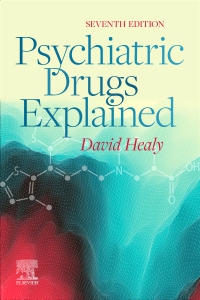
Psychiatric Drugs Explained offers a wealth of evidence-based information on psychiatric drugs in an easy-to-use format that can be quickly referenced in the clinical setting. Written by internationally recognised author Dr David Healy, the book provides a comprehensive review of drug effects, action and side-effects. There is an emphasis on the lived experience of patients, providing the reader with a sense of what the adverse effects of drugs might feel like to those who use them. A reader-friendly approach and clear layout, with information organised by disorder, make this popular title accessible and useful not only to nursing staff, but to all members of the multidisciplinary team.
-
- NEW! Nora AI - an AI-powered learning assistant exclusive to Elsevier ebooks on VitalSource's Bookshelf® platform - offers built-in AI learning support that provides personalized answers based on content from the Elsevier ebook
- Quick reference guide suitable for all members of the multidisciplinary team
- Helpful boxes on user issues make potential complications easy to spot
- Distinctive, reader-friendly style helps the reader understand the benefits and impacts of psychotropic drugs
- New topics include management of dependence disorders, stimulants and drugs for children, cognitive impairment and sleep disorders
- The only book with detailed coverage of the sexual side effects of psychiatric drugs and the abusive prescribing of prescription drugs
-
-
 Psychiatric Drugs ExplainedPaperback
-
-
Section 1 Management of the psychoses
1 The antipsychotics
2. Antipsychotic side effects and their management
Section 2 Management of depression
3. The antidepressants
4. Side effects of antidepressants
Section 3 Management of bipolar disorders
5. Management of acute bipolar disorder
6. Mood-stabilisers
Section 4 Stimulants & Drugs for children
7. Stimulants & Drugs for children
Section 5 Management of anxiety
8. The anxiety disorders
10. Benzodiazepine anxiolytics
11. Anxiolysis and the serotonin system
12. Beta-blockers and anxiety
Section 6 Management of sleep disorders and insomnia
13. Sleep disorders and insomnia
14. Non-pharmacological management of insomnia
15. Hypnotics
16. Sedatives
Section 7 Management of cognitive impairment
17. Cognitive enhancement and the dementias
18. Cognitive enhancement and neuroprotection
Section 8 Management of sexual difficulties
19. The range of sexual difficulties
20. Effects of drugs on aspects of sexual functioning
Section 9 Management of dependence and withdrawal
21. Dependence & Withdrawal
22. Dependence & Craving
23. Dependence & Protracted Withdrawal
Section 10 Consent, abuse and liability
24. Consent
25. Pharmacological abuse
Section 11 The marketing of tranquillity
26. The ethical industry
27. Evidence-biased care
28. Marketing & Risk
29. From healthcare to pharmageddon -
-
Ways of Reading
- The appearance of the text and page layout can be modified according to the capabilities of the reading system (font family and font size, spaces between paragraphs, sentences, words, and letters, as well as color of background and text)
- This e-publication is accessible to the full extent that the file format and types of content allow, on a specific reading device, by default, without necessarily including any additions such as textual descriptions of images or enhanced navigation
- No information about nonvisual reading is available
-
Conformance
- No information is available
-
Navigation
- Table of contents to all chapters of the text via links
- Page list to go to pages from the print source version
-
Rich Content
- No information is available
-
Hazards
- No information is available
-
Product Content
- No information is available
-
Legal Considerations
- No information is available
-
Additional Accessibility Information
- Page breaks included from the original print source
- For readers with color vision deficiency, use of color (e.g., in diagrams, graphics and charts, in prompts, or on buttons inviting a response) is not the sole means of graphical distinction or of conveying information
- E-publication includes basic navigation (usually less detailed than TOC-based navigation)
- Where links, controls or buttons are included in the content, the purpose or functionality of each link, control or button is apparent from the associated text alone - or where it is unclear, separate link, control or button descriptions are provided
- All (or substantially all) textual matter is arranged in a single logical reading order (including text that is visually presented as separate from the main text flow, e.g., in boxouts, captions, tables, footnotes, endnotes, citations, etc.). Non-textual content is also linked from within this logical reading order. (Purely decorative non-text content can be ignored).
- The language of the text has been specified (e.g., via the HTML or XML lang attribute) to optimise text-to-speech (and other alternative renderings), both at the whole document level and, where appropriate, for individual words, phrases or passages in a different language.
-
Ways of Reading
Was
$37.99
Now $26.59
Or $0.00 with a valid access code

 as described in our