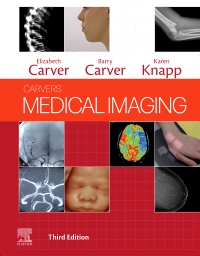

Carvers' Medical Imaging Elsevier eBook on VitalSource, 3rd Edition
Elsevier eBook on VitalSource
Now $122.39
The third edition of Carvers’ Medical Imaging supports radiography students to take a reflective, evidence-based approach that will enhance their practice.
This important textbook comprehensively covers the full range of medical imaging methods and techniques in one volume, and discusses them in relation to imaging principles, radiation dose, patient condition, body area and pathologies. It encourages the student to critically analyse their work rather than simply carrying out tasks.
The book has been updated by an impressive team of contributors to align with developments in both radiographic techniques and the role of the radiographer. It is an essential companion for students of BSc (Hons) diagnostic radiography, those undertaking a foundation degree in radiographic practice or bachelor of medicine, and postgraduates alike.
-
- Comprehensive, fully illustrated and well referenced discussion of all imaging techniques
- Full image evaluation for radiographic examinations, including common errors
- New material on potential impact of errors on accuracy of the radiographic report
- New sections on preliminary clinical evaluation for projection radiography examinations, which prepares students for UK professional standards
- Section on cross infection implications (relevant post COVID-19)
- Includes imaging of children with suspected physical abuse
-
-

-
 Carvers' Medical ImagingHardcover
-
-
1. Digital Imaging
2. Image Quality and Dose
3. Introduction to general radiography and preliminary clinical evaluation
4. Fingers, hand and wrist
5. Forearm, elbow, humerus, shoulder girdle
6. Foot, toes, ankle, tibia and fibula
7. Knee and femur
8. Pelvis and hips
9. Cervical and thoracic spine
10. Lumbar spine, sacrum and coccyx
11. Principles of radiography of the head
12. Cranial vault and specialised projections of the head
13. Facial Bones and Paranasal Sinuses
14. Dental radiography
15. Chest and thoracic skeleton
16. Abdomen
17. Emergency Department
18. Principles of theatre and mobile radiography
19. Paediatric imaging in general radiography
20. Contrast media
21. Gastrointestinal imaging
22. Genitourinary contrast imaging
23. Vascular imaging
24. Interventional and therapeutic procedures
25. Breast imaging
26. Computed tomography
27. Magnetic resonance imaging
28. Radionuclide imaging
29. Ultrasound
30. Dual Energy X-ray Absorptiometry -
-
Ways of Reading
- The appearance of the text and page layout can be modified according to the capabilities of the reading system (font family and font size, spaces between paragraphs, sentences, words, and letters, as well as color of background and text)
- This e-publication is accessible to the full extent that the file format and types of content allow, on a specific reading device, by default, without necessarily including any additions such as textual descriptions of images or enhanced navigation
- No information about nonvisual reading is available
-
Conformance
- No information is available
-
Navigation
- Table of contents to all chapters of the text via links
- Page list to go to pages from the print source version
-
Rich Content
- No information is available
-
Hazards
- No information is available
-
Product Content
- No information is available
-
Legal Considerations
- No information is available
-
Additional Accessibility Information
- Content is enhanced with ARIA roles to optimize organization and facilitate navigation
- Page breaks included from the original print source
- For readers with color vision deficiency, use of color (e.g., in diagrams, graphics and charts, in prompts, or on buttons inviting a response) is not the sole means of graphical distinction or of conveying information
- E-publication includes basic navigation (usually less detailed than TOC-based navigation)
- Where links, controls or buttons are included in the content, the purpose or functionality of each link, control or button is apparent from the associated text alone - or where it is unclear, separate link, control or button descriptions are provided
- All (or substantially all) textual matter is arranged in a single logical reading order (including text that is visually presented as separate from the main text flow, e.g., in boxouts, captions, tables, footnotes, endnotes, citations, etc.). Non-textual content is also linked from within this logical reading order. (Purely decorative non-text content can be ignored).
- The language of the text has been specified (e.g., via the HTML or XML lang attribute) to optimise text-to-speech (and other alternative renderings), both at the whole document level and, where appropriate, for individual words, phrases or passages in a different language.
-
Ways of Reading

 as described in our