
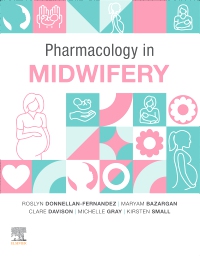

Pharmacology in Midwifery - E-Book VBK, 1st Edition
Elsevier eBook on VitalSource
Now $42.23
Pharmacology in Midwifery has been written specifically for midwives in Australia and New Zealand and focuses on medications and their management – a core subject of the nursing curriculum and an integral part of practice.
Written by highly respected experts in both pharmacology and midwifery, the textbook takes the reader through essential information about drugs and their therapeutic effects. It then explores pharmacology in the midwifery scope of practice, considering pregnancy, labour, birth, the postpartum period and neonatal care, both for normal and low risk pregnancies and women with complex needs.
This book is a useful foundation text for midwifery students as well as for practising midwives wishing to refresh or augment their skills as prescribers.
-
- Relevant for midwifery students and midwives in Australia and New Zealand
- Draws on trusted content from the highly respected Pharmacology for Health Professionals (Knights et al)
- Covers pharmacological considerations across pregnancy, labour, birth, the postpartum period and neonatal care
- Case studies and accompanying review questions in each chapter relate theory to real life
- Supports midwives to refine and apply critical thinking, clinical judgement and decision-making skills
- Covers adverse drug reactions and interactions
- Includes pharmacological considerations for women with complex needs throughout the childbearing continuum, such as diabetes, thyroid, mental health, epilepsy, drugs of addiction and substance dependence
- Aligns with ANMAC Standards, National Prescribing Framework and NSQHSS
Student and Instructor resources on Evolve:
- Additional case studies
-
Part 1: Introduction to Pharmacology
1. Drugs and Medicines
2. Clinical, Ethical and Legal Foundations of Pharmacotherapy
Part 2: Principles of Pharmacology
3. Molecular Drug targets and Pharmacodynamics
4. Drug Absorption, Distribution, Metabolism and Excretion
5. Pharmacokinetics and Dosing Regimen
6. Adverse Drug Reactions and Drug interactions
Part 3: Pharmacology across the childbearing continuum
7. Pregnancy
8. Labour and Birth
9. Post Partum
10. Newborn and Lactation
11. Vaccination
Part 4: Pharmacology for special considerations
12. Infection and Sepsis
13. Diabetes
14. Thyroid
15. Hypertension
16. Blood and blood clotting
17. Pre term labour
18. Asthma
19. Mental health
20. Epilepsy
21. Drugs of addiction/substance dependence
22. Role of the Midwife -
-
Ways of Reading
- The appearance of the text and page layout can be modified according to the capabilities of the reading system (font family and font size, spaces between paragraphs, sentences, words, and letters, as well as color of background and text)
- This e-publication is accessible to the full extent that the file format and types of content allow, on a specific reading device, by default, without necessarily including any additions such as textual descriptions of images or enhanced navigation
- No information about nonvisual reading is available
-
Conformance
- No information is available
-
Navigation
- Table of contents to all chapters of the text via links
- Page list to go to pages from the print source version
-
Rich Content
- No information is available
-
Hazards
- No information is available
-
Product Content
- No information is available
-
Legal Considerations
- No information is available
-
Additional Accessibility Information
- Content is enhanced with ARIA roles to optimize organization and facilitate navigation
- Page breaks included from the original print source
- For readers with color vision deficiency, use of color (e.g., in diagrams, graphics and charts, in prompts, or on buttons inviting a response) is not the sole means of graphical distinction or of conveying information
- E-publication includes basic navigation (usually less detailed than TOC-based navigation)
- Where links, controls or buttons are included in the content, the purpose or functionality of each link, control or button is apparent from the associated text alone - or where it is unclear, separate link, control or button descriptions are provided
- All (or substantially all) textual matter is arranged in a single logical reading order (including text that is visually presented as separate from the main text flow, e.g., in boxouts, captions, tables, footnotes, endnotes, citations, etc.). Non-textual content is also linked from within this logical reading order. (Purely decorative non-text content can be ignored).
- The language of the text has been specified (e.g., via the HTML or XML lang attribute) to optimise text-to-speech (and other alternative renderings), both at the whole document level and, where appropriate, for individual words, phrases or passages in a different language.
-
Ways of Reading

 as described in our