ISBN:
9781416069522
Copyright:
2009
Publication Date:
01-29-2008
Page Count:
528
Imprint:
Saunders
List Price:
$89.99

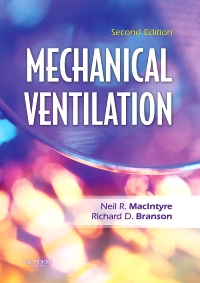
Mechanical Ventilation - Elsevier eBook on VitalSource, 2nd Edition
by Neil R. MacIntyre, MD and Richard D. Branson, MSc, RRT
Elsevier eBook on VitalSource
ISBN:
9781416069522
Copyright:
2009
Publication Date:
01-29-2008
Page Count:
528
Imprint:
Saunders
List Price:
$89.99
Was
$89.99
Now $80.99
Or $0.00 with a valid access code
With cutting-edge and clinically relevant information, MECHANICAL VENTILATION, 2nd Edition takes a practical, clinical approach to the principles and practice of mechanical ventilation. This informative resource explains mechanical ventilation decisions and procedures in real-world terms so information is easy to understand and apply. This thoroughly updated edition includes one new chapter, four completely updated chapters, and a wealth of new user-friendly features.
-
- Chapter Objectives, Key Point Summaries, and Assessment Questions reinforce basic concepts from each chapter.
- New chapter on Unique Patient Populations highlights the mechanical ventilation issues of traumatic brain injury, neuromuscular disease, lung transplantation, burn injury, and perioperative patient populations.
- Expanded glossary includes relevant terminology and key terms to help you easily find unfamiliar terminology.
-
- Detailed, clinically focused coverage of the application of mechanical ventilation to the most common respiratory diseases, provides practical answers to real life problems.
- UNIQUE! Sections of chapters on Special Techniques and Future Therapies include information on the newest techniques for treating patients in respiratory distress.
- A separate appendix of case studies helps you apply what you’ve learned to realistic situations.
- Well-known and respected authors, Neil MacIntyre and Rich Branson, share their vast expertise and accurate, cutting-edge information.
-
-

-
 Mechanical VentilationPaperback
-
-
Section I: Technical Aspects
1. Classification of Mechanical Ventilators
2. Modes of Ventilator Operation
3. The Patient-Ventilator Interface: Ventilator Circuit, Airway Care, and Suctioning
4. Humidification and Aerosol Therapy
5. Ventilator Monitors and Displays
Section II: Physiology
6. Respiratory System Mechanics
7. Alveolar-Capillary Gas Transport
8. Patient-Ventilator Interactions
9. Cardiopulmonary Interactions
10. Ventilator Induced Lung Injury
Section III: Adjunctive Therapy
11. Nutrition
12. Sedation, Analgesia, and Neuromuscular Blockade
13. Patient Positioning
14. Ventilator Associated Pneumonia
Section IV: Clinical Applications
15. Management of Parenchymal Lung Injury
16. Management of Obstructive Airway Disease
17. Unique Patient Populations NEW!
18. Discontinuing Mechanical Support
19. Prolonged Mechanical Ventilation
20. Transport and Resuscitation
21. Non-invasive Ventilation
Section V: Special Techniques and Future Therapies
22. Modifications on Conventional Ventilation Techniques
23. High-Frequency Ventilation
24. Extracorporeal Techniques for Cardiopulmonary Support
25. Heliox and Inhaled Nitric Oxide
Appendices
Case Studies
Assessment Question Answers
Glossary -
-
Ways of Reading
- The appearance of the text and page layout can be modified according to the capabilities of the reading system (font family and font size, spaces between paragraphs, sentences, words, and letters, as well as color of background and text)
- This e-publication is accessible to the full extent that the file format and types of content allow, on a specific reading device, by default, without necessarily including any additions such as textual descriptions of images or enhanced navigation
- No information about nonvisual reading is available
-
Conformance
- No information is available
-
Navigation
- Table of contents to all chapters of the text via links
- Page list to go to pages from the print source version
-
Rich Content
- No information is available
-
Hazards
- No information is available
-
Product Content
- No information is available
-
Legal Considerations
- No information is available
-
Additional Accessibility Information
- Content is enhanced with ARIA roles to optimize organization and facilitate navigation
- Page breaks included from the original print source
- For readers with color vision deficiency, use of color (e.g., in diagrams, graphics and charts, in prompts, or on buttons inviting a response) is not the sole means of graphical distinction or of conveying information
- E-publication includes basic navigation (usually less detailed than TOC-based navigation)
- Where links, controls or buttons are included in the content, the purpose or functionality of each link, control or button is apparent from the associated text alone - or where it is unclear, separate link, control or button descriptions are provided
- All (or substantially all) textual matter is arranged in a single logical reading order (including text that is visually presented as separate from the main text flow, e.g., in boxouts, captions, tables, footnotes, endnotes, citations, etc.). Non-textual content is also linked from within this logical reading order. (Purely decorative non-text content can be ignored).
- The language of the text has been specified (e.g., via the HTML or XML lang attribute) to optimise text-to-speech (and other alternative renderings), both at the whole document level and, where appropriate, for individual words, phrases or passages in a different language.
-
Ways of Reading
Was
$89.99
Now $80.99
Or $0.00 with a valid access code

 as described in our